Project Overview
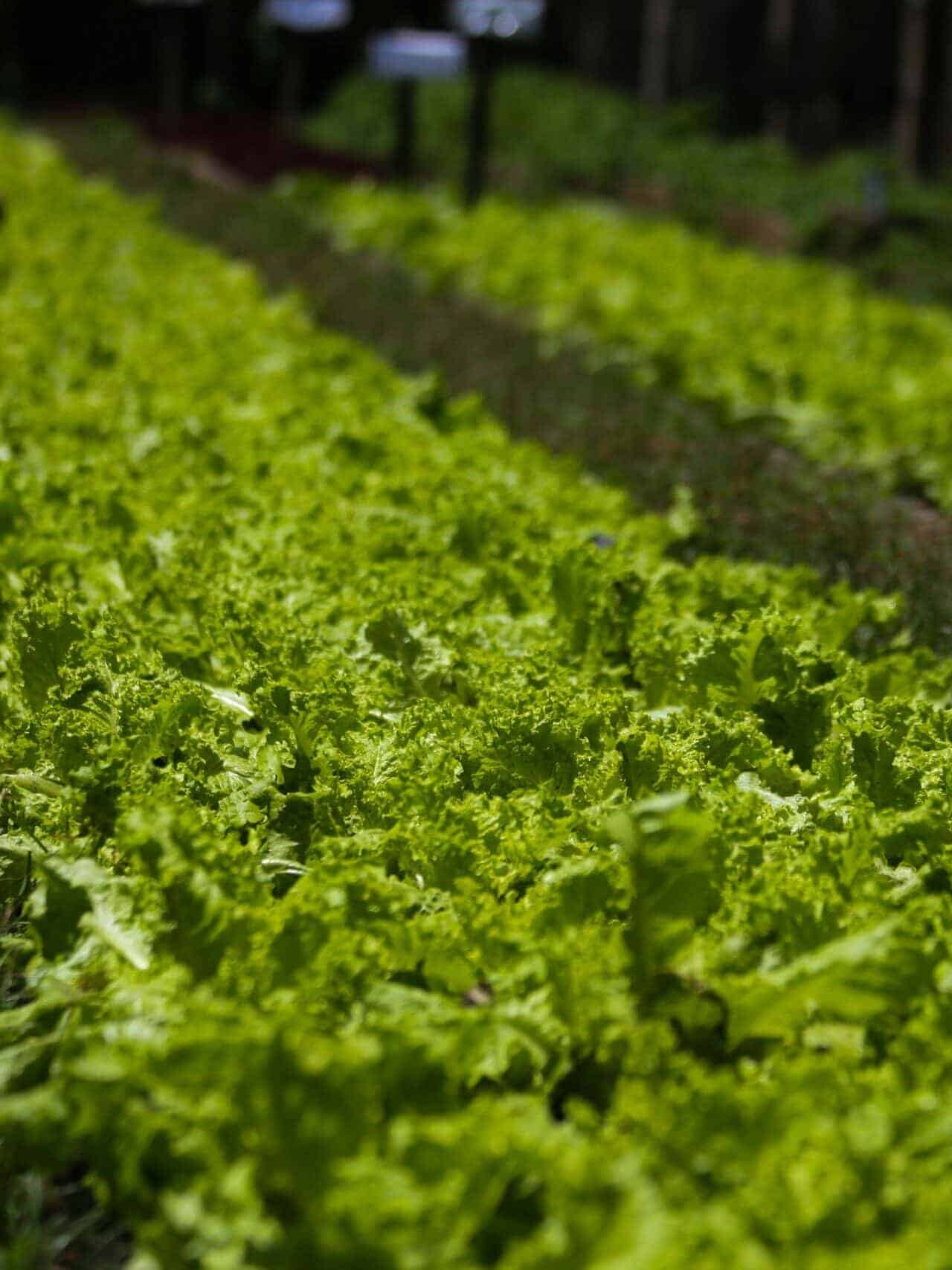
Iceberg lettuce is a widely-cultivated leafy vegetable with high nutrient requirements, especially during the heading stage, when large quantities of plant-available nitrogen are required to support rapid vegetative growth and leaf development. One of the challenges that organic iceberg lettuce producers face is synchronizing the release of organic nitrogen with crop nutrient uptake at these critical growth stages.
Biostimulants, defined as “substances and/or microorganisms whose function when applied to plants or the rhizosphere is to stimulate natural processes to enhance nutrient uptake, nutrient use efficiency, tolerance to abiotic stress, and/or crop quality” have gained attention as a potential solution to the nutrient-synchronization challenge faced by many organic vegetable producers. However, evidence supporting biostimulants’ consistent effectiveness remains limited, especially under organic and arid production systems.
This study, conducted at the University of Arizona (Yuma, AZ), investigated the effects of biostimulant application on crop growth, development, and yield of iceberg lettuce under organic and conventional production systems using a subsurface drip irrigation.
Farmer Takeaways
- Biostimulants may not significantly impact iceberg lettuce height or yield in organic or conventional production systems, although marginal (non-significant) improvements to both crop characteristics were observed in some of the treatments.
- Biostimulants may perform better (enhance soil nutrient availability/uptake) in organic production systems when applied together with sensor-based irrigation practices. Additional research is needed to better understand the interactive effects of production system type, irrigation type, and biostimulant application on crop performance in arid conditions.
Project Objectives and Approach
To evaluate the effects of biostimulant applications on the growth, development, and yield of iceberg lettuce under organic and conventional production systems using a subsurface drip irrigation system
- Field experiments were established at the University of Arizona Yuma Agricultural Center on a 1-acre research field, divided equally into two production systems: (1) conventional and (2) organic.
-
- The conventional system plot received a pre-plant application of 200 lbs/acre synthetic N fertilizer. The organic system plot received a pre-plant application of 2,000 lbs/acre chicken manure pellets (4-4-2), followed by an in-season application of 1,800 lbs/acre organic fertilizer (9-6-1).
-
- Subplot treatments included two types of irrigation: (1) sensor-based irrigation (which utilized real-time soil moisture data to guide irrigation decisions); and (2) traditional irrigation (which was based on local growers’ standard practices), with or without a biostimulant application.
-
- The biostimulant used in this study included multiple components, including micronutrients, sugars, and a concentrated extract of plant-active soil organic matter components. The biostimulant was applied through subsurface drip irrigation.
-
- Throughout the growing season, plant height was measured bi-weekly. At harvest, samples from each treatment were hand-harvested, and fresh weight was calculated.
Key Findings
Plant Height
- In the organic production system, all treatments – with or without biostimulants – showed similar plant growth patterns and reached similar final heights by the end of the growing season. This suggests that biostimulants may not have a strong effect on iceberg lettuce height in organic production systems.
- In the conventional production system, the tallest lettuce plants were observed in the treatments that received a biostimulant. However, these height differences were not statistically significant, indicating that biostimulants may not have a strong effect on iceberg lettuce height in conventional production systems.
Iceberg Lettuce Yield
- Biostimulant applications marginally improved iceberg lettuce yield in both production systems; however, these differences were not statistically significant, suggesting that biostimulants alone may not have a strong effect on iceberg lettuce yield.
- Among the organic treatments, the treatment utilizing both sensor-based irrigation and a biostimulant produced the highest lettuce yield (~16.7 tons/acre). Yields for the three other organic treatments were slightly lower, ranging from 13.9-15.4 tons/acre. This suggests that applying a biostimulant in conjunction with sensor-based irrigation may enhance the benefits of the biostimulant and boost organic iceberg lettuce yield, although these findings were not statistically significant.
- Lettuce yields were consistently higher for all conventional treatments than for the organic treatments.
Resources
Mohammed, A. T., Duarte, S. D., Masson, R., Saber, M. N., Clark, J., Meza, G., & Gallardo, A. J. (2025). Evaluating Biostimulant Effects on Growth and Yield of Iceberg Lettuce in Organic and Conventional Systems Under Subsurface Drip Irrigation in Yuma, AZ. University of Arizona Cooperative Extension.
Read MoreLocation
ArizonaCollaborators
Samuel Discua Duarte, University of Arizona
Robert Masson, University of Arizona
Mazin Saber, University of Arizona
Josett Clark, University of Arizona
Gerardo Meza, University of Arizona
Anthony Gallardo, University of Arizona
Region
West/Southwest
Topic
Soil Health, Crop Nutrient Management
Category
Vegetables/Fruits
Year Published
2025