Project Overview
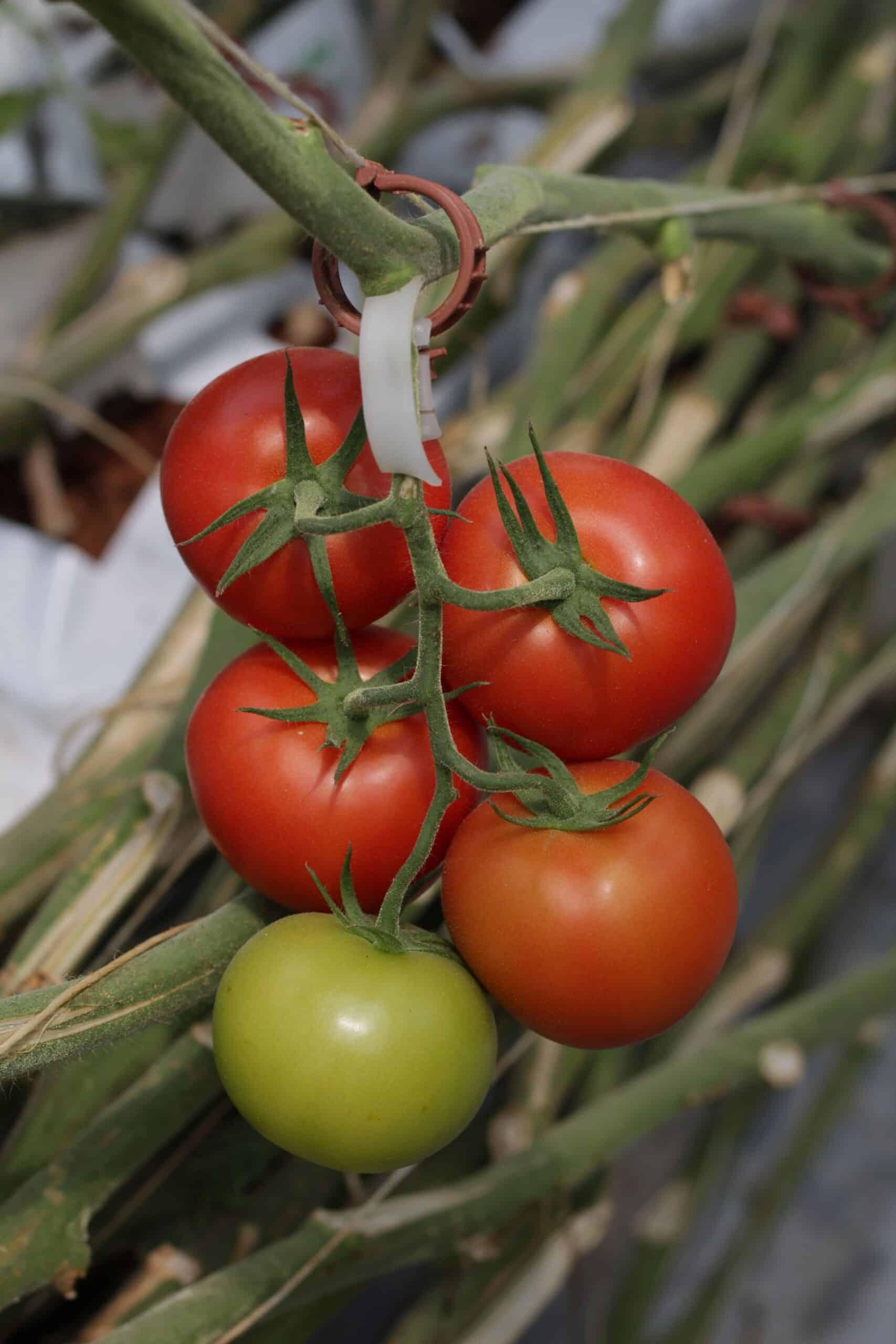
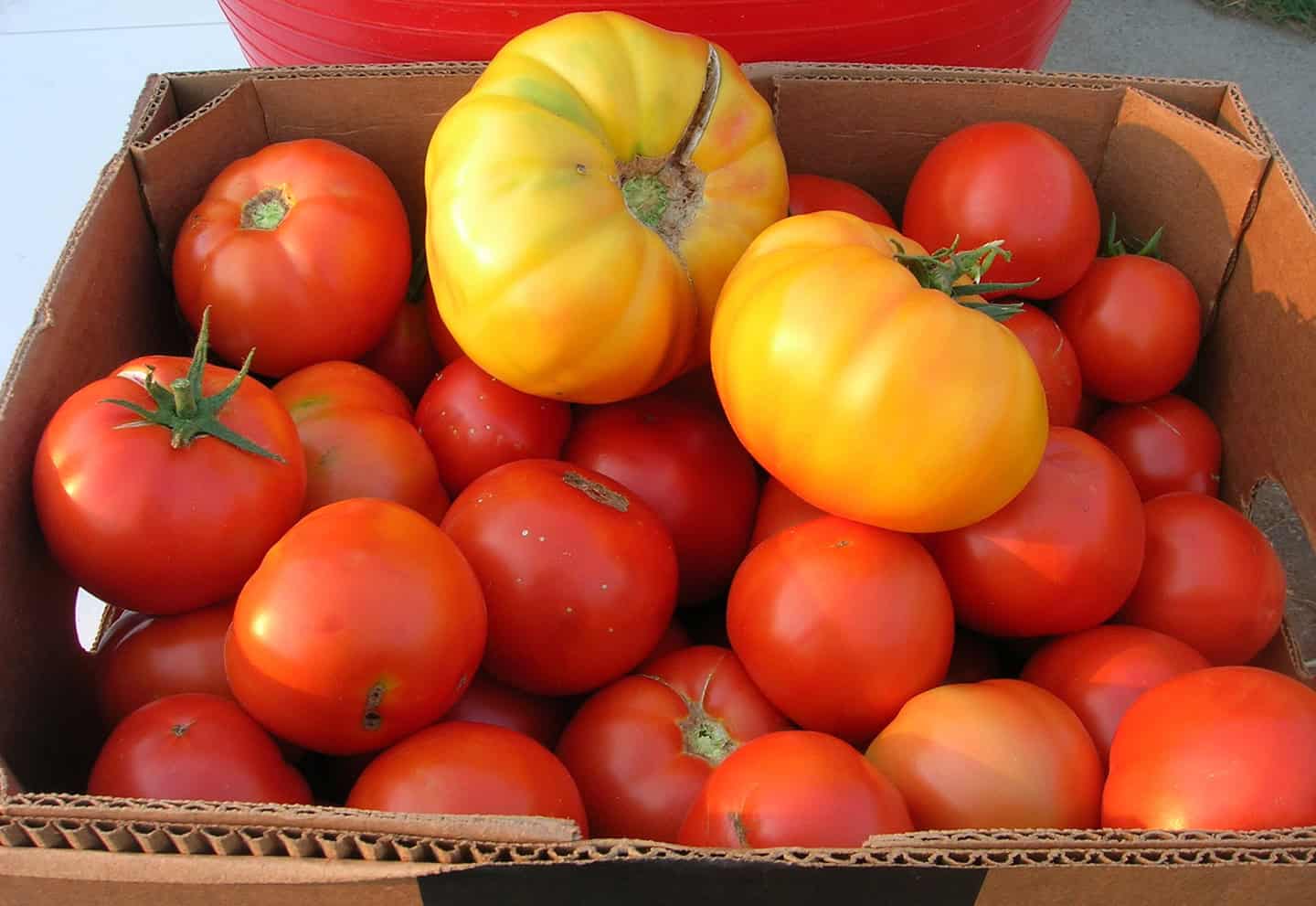
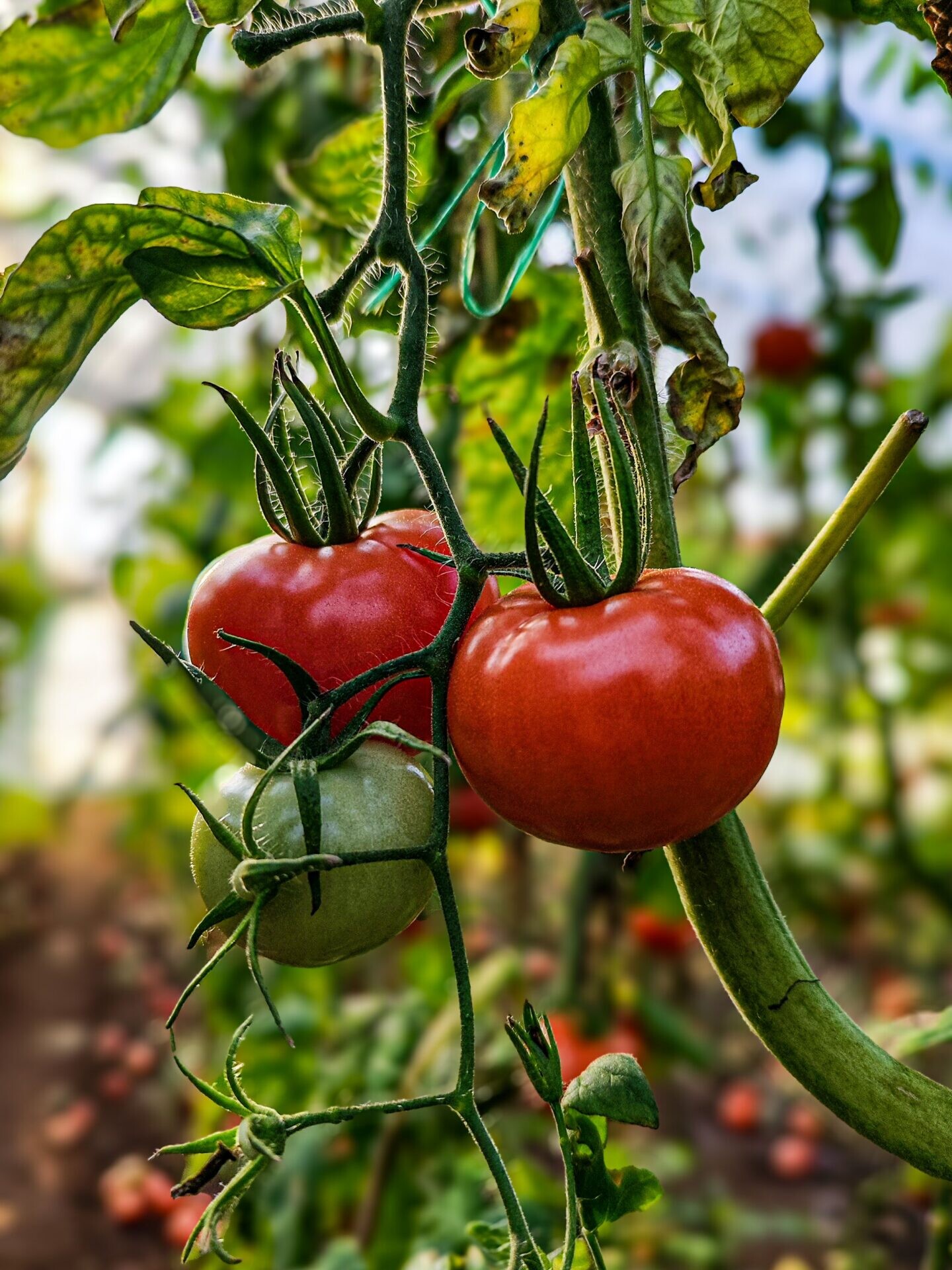
Dry farming is defined as crop production without irrigation throughout a dry growing season in areas receiving over 20 inches of annual precipitation. Tomatoes are among the most popular dry-farmed crops, widely recognized for their smaller size, thicker skins, and concentrated flavor profile. Dry-farmed tomato has been shown to be susceptible to a number of blemishes, including blossom-end rot (BER), yellow shoulders, sunscald, and cracking. While calcium deficiency is thought to play a role in the incidence of BER, another theory, referred to herein as the stress hypothesis, suggests that drought (and other abiotic stressors) could be a factor in inducing BER in dry-farmed tomato. Under the stress hypothesis, calcium ions could influence BER because they serve as a secondary messenger in plant stress response pathways.
In this study, researchers at Oregon State University set up experiments on a research farm to test different management practices, like trellising or wind breaks, that might expose tomatoes to different levels of stress that may lead to blossom-end rot. They also set up field trials on organically-managed farms to test blossom-end rot in response to increasing rates of nitrogen (N), supplied by organic fertilizer.
Farmer Takeaways
- Blossom-end rot was not affected by management practices designed to expose tomato plants to different levels of stress, such as windbreak plantings, trellising, and decreased in-row spacing.
- The overall trend across experimental sites was toward increased incidence of blossom-end rot and smaller fruit size with increasing nitrogen fertilizer application.
- Reducing fertilizer application rates may provide benefits for tomato fruit size and blossom-end rot management, but with potential tradeoffs for yellow shoulder management and tomato fruit flavor.
Project Objectives and Approach
Assess the impact of tomato plant stress on blossom-end rot incidence in dry-farmed tomatoes
- In a small-plot experiment established in 2023 at the Oregon State University Vegetable Research Farm (VRF), tomato plants were grown under several management practices, designed to either increase (Treatments 1-3) or decrease (Treatments 4-5) stressors previously associated with blossom-end rot. Treatments included:
- Reduced Amendment: fertilizer rates were reduced (50 lbs N/acre, instead of 100 lbs N/acre) to inhibit/slow early-season growth
- No Amendment: no fertilizer was applied
- Reduced In-Row Spacing: tomatoes were planted closer together (20″ in-row spacing, instead of 30″) to reduce/slow early-season growth
- Trellising: tomato plants were trellised
- Sheltering: tomato plants were planted between corn windbreaks to provide shelter from wind
- All of the treatments above were compared to a control treatment with a baseline fertilizer rate of 100 lbs N/acre, in-row spacing of 30″, no sheltering, and no trellising.
- Tomato fruits were harvested weekly for 8 weeks, beginning in early August and ending in late September. At harvest, researchers collected tomato fruit counts and weights for unblemished fruit and fruit affected by blossom-end rot, sun scald, and yellow shoulder.
- Tomato juice from harvested tomatoes was analyzed for soluble solids concentration and titratable acidity, both of which are associated with tomato fruit flavor and sweetness.
Evaluate the impact of organic fertilizer application rate on blossom-end rot incidence in dry-farmed tomatoes
- In a separate experiment, researchers from Oregon State University established field trials at six organically-managed farms around the Willamette Valley. Fertilizer treatments included:
- Control: No fertilizer
- Low-Dose Processed Poultry Manure: 50 lbs N/acre; equivalent to ~1250 lbs poultry manure
- High-Dose Processed Poultry Manure: 100 lbs N/acre; equivalent to ~2500 lbs poultry manure
- Fertilizer treatments were applied to a tilled field about two weeks before hybrid tomato seedlings were transplanted. Throughout the growing season, tomatoes did not receive irrigation.
- Tomato yield, fruit weight, and quality were evaluated (see above).
Key Findings
Plant stress treatments did not significantly impact blossom-end rot incidence in dry-farmed tomatoes, although trellising may provide several other benefits
- Trellising, sheltering (between corn windbreaks), and reducing plant spacing did not affect blossom-end rot incidence, total yield, soluble solids content, or titratable acidity. These findings indicate several possibilities: first, that the differences in physiological stress experienced by tomato plants in each treatment were not large enough to induce yield/quality differences at harvest; or, that stress may not play as strong of a role in blossom-end rot incidence as previously documented. Additional research is needed.
- Trellising reduced sun scald rates by 57% and increased unblemished tomato fruit yield by 25% compared to the control.
Decreasing fertilizer application rates may reduce blossom-end rot incidence and improve fruit size in dry-farmed tomato production systems
- In the Vegetable Research Farm (VRF) trial, blossom-end rot was 55% lower in the reduced amendment treatment (which received 50 lbs N/acre) than in the 100 lbs N/acre control. In the Willamette Valley farm trials, there was no statistical difference between fertilizer treatments on blossom-end rot incidence, but when analyzed as a continuous variable, blossom-end rot incidence increased as N fertilizer concentrations increased.
- These results indicate that lower fertilizer application rates may correspond with lower incidences of blossom-end rot in dry-farmed tomatoes, but that additional research is necessary to understand which other external factors may influence this dynamic.
- Interestingly, in the Willamette Valley farm trials, yellow shoulder incidence was significantly lower in the high-dose poultry manure treatment (100 lbs N/acre) when compared to the control (0 lbs N/acre), suggesting that fertilizer application rate may impact distinct tomato crop physiological disorders differently.
- Higher fertilizer rates led to increased soluble solids content and decreased fruit size, highlighting complex tradeoffs between fertilization and tomato quality.
Resources
Davis, M., Nebert, L., Selman, L., Moran, T., & Myers, J. (2025). Evaluating Management Practices for Controlling Blossom-end Rot and Other Blemishes in Dry-farmed Tomato.
Read MoreLocation
OregonCollaborators
Lucas Nebert, Oregon State University
Lane Selman, Oregon State University
Teagan Moran, Oregon State University
James Myers, Oregon State University
Region
Northwest
Topic
Crop Nutrient Management, Disease Management, Post-Harvest Quality and Safety
Category
Vegetables/Fruits
Year Published
2025