Project Overview
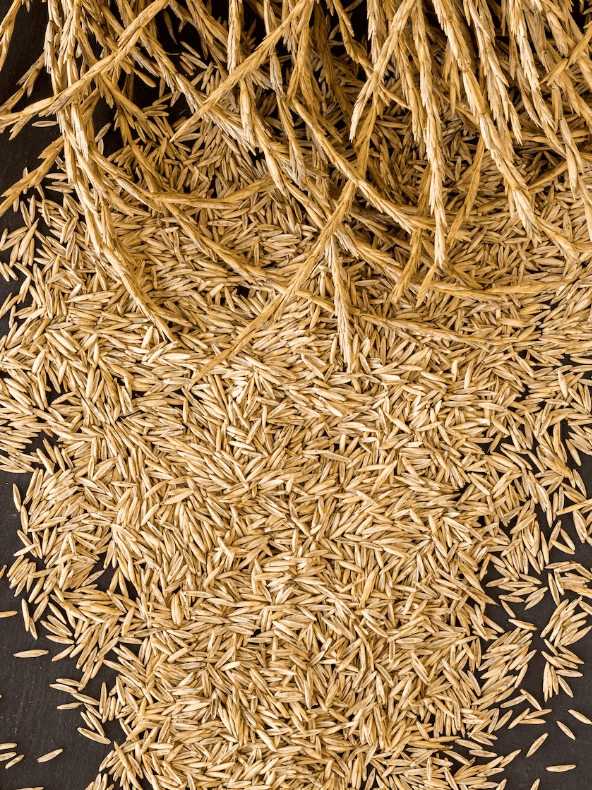
Kernza, also known as intermediate wheatgrass, is an emerging perennial grain crop. Not only are perennial crops beneficial for long-term soil health, but Kernza – as a dual-purpose grain and forage crop – has the potential to diversify farm income. However, Kernza is still a relatively new commercial crop, and many producers have struggled to obtain yields comparable to annual grain crops. Finding ways to boost Kernza’s productivity will be essential to ensuring that Kernza remains an economically-competitive crop.
In this study, researchers from seven states (spanning the Great Plains, Midwest, and Northeast regions of the U.S) assessed the impacts of Kernza forage harvest strategy and timing on Kernza forage and grain yield.
Farmer Takeaways
- Regardless of forage harvest treatment, Kernza grain yields decreased steadily at all sites after the first year of production, consistent with previous long-term Kernza studies. Declining grain yields remains a significant challenge for this perennial crop.
- Forage yields were more consistent than grain yields, supporting the use of Kernza as a dual-purpose crop.
- Forage harvest strategy (timing and frequency) during the first year of production can impact grain yields. Cutting forage in the spring may reduce summer grain yields, whereas cutting forage once in the summer or twice (in the summer and fall) may increase grain yields.
Project Objectives and Approach
Evaluate the impact of Kernza forage harvest strategy, timing, and frequency on overall Kernza forage and grain performance across a wide range of environments
- Researchers established Kernza field trials at nine sites within the Great Plains, Upper Midwest, and Northeastern regions of the United States. Sites were selected to represent a range of geographic growing conditions under which Kernza has historically been produced. Sites included:
-
- Great Plains: Kansas (1 site); Colorado (1 site); Alberta, Canada (1 site)
- Upper Midwest: Minnesota (1 site); Wisconsin (1 site); Iowa (1 site); Ohio (2 sites)
- Northeast: New York (1 site)
-
- At each site, Kernza was established in the fall and grown/monitored for three consecutive years.
- Forage harvest treatments included:
-
- Control: No forage was harvested. Grain was harvested in the summer, and threshed chaff was left in the plots.
- 1x Forage Cutting (Summer): Forage was cut/harvested once in the summer, immediately following the summer grain harvest.
- 2x Forage Cutting (Spring + Summer): Forage was cut/harvested twice, once in the spring before the crop reached first palpable node (E1), and again in the summer immediately after the summer grain harvest.
- 2x Forage Cutting (Summer + Fall): Forage was cut/harvested twice, once in the summer immediately after the summer grain harvest, and once in the fall before first frost.
-
- In the summer(s), grain samples were harvested, and data were collected from random quadrats per plot on plant height, total number of spikes*, and spike weight. Spikes were sent to The Land Institute (Salina, KS), where seeds were threshed, cleaned, and weighed again.
-
- *Spikes: the elongated, grain-bearing seed heads of a grain crop
-
- At forage harvest (in the spring/summer/fall, depending on treatment), aboveground Kernza biomass from random quadrats per plot were cut/harvested 10cm above the soil surface, dried, and weighed.
- Harvest index measurements were calculated as the ratio of Kernza grain yield to aboveground forage mass at summer grain harvest.
Key Findings
Kernza grain yield decreased steadily over the three years of the study
- Regardless of forage harvest treatment, Kernza grain yields decreased steadily after Year 1 across all nine sites, averaging 666, 264, and 198 lbs/acre in Years 1, 2, and 3, respectively.
- Year (stand age) was the single biggest predictor of grain yield. These findings align with yield observations from previous Kernza studies, and highlight an important challenge/limitation for Kernza production. Additional research is needed to understand whether certain management practices, Kernza varieties, or environmental conditions can prevent this decline in grain yield over time.
Summer and fall forage cuttings increased grain yield in the second year of production
- Kernza grain yields during the second year of production were higher in plots that received either 1x summer or 2x summer/fall forage cuttings. In some cases, grain yields for these plots were more than twice that of the no-forage control.
-
- Grain yields in the third year of production were unaffected by summer and summer/fall forage harvest cuttings.
-
- Spring forage cuttings consistently resulted in a grain yield penalty.
- These findings indicate that Kernza forage harvest strategy (timing and frequency) during the first year of production can impact same- or next-year grain yields, either positively or negatively. However, these impacts are inconsistent and vary by year (stand age); as such, additional research is needed to understand multi-year Kernza growth patterns.
Forage yields were more consistent across years and treatments
- Average forage yields were between 2 tons per acre to 2.67 tons per acre.
- Forage yield did not have the same year-over-year decline that was observed with grain yield.
- Forage nutritive values were highest in the spring and lowest in the summer.
Resources
Culman, S., Pinto, P., Pugliese, J., Crews, T., DeHaan, L., Jungers, J., Larsen, J., Ryan, M., Schipanski, M., Sulc, M., Wayman, S., Wiedenhoeft, M., Stoltenberg, D., & Picasso, V. (2023). Forage harvest management impacts “Kernza” intermediate wheatgrass productivity across North America. Agronomy Journal, 115(5), 2424–2438.
Read MoreLocation
Colorado, Kansas, Iowa, Minnesota, Wisconsin, Ohio, New YorkCollaborators
Priscila Pinto, University of Wisconsin-Madison
Jennie Pugliese, USDA-ARS Columbus, Ohio
Timothy Crews, The Land Institute
Lee DeHaan, The Land Institute
Jake Jungers, University of Minnesota
Jamie Larsen, Agriculture and Agri-Food Canada
Matthew Ryan, Cornell University
Meagan Schipanski, Colorado State University
Mark Sulc, Ohio State University
Sandra Wayman, Cornell University
Mary Wiedenhoeft, Iowa State University
David Stoltenberg, University of Wisconsin-Madison
Valentin Picasso, University of Wisconsin-Madison
Region
Midwest, Northeast/Mid-Atlantic, Northwest, Plains
Topic
Soil Health, Crop Nutrient Management, Cropping Systems
Year Published
2023