Project Overview
New insights into soil biology are helping farmers take a more active role in managing many aspects of soil health. Soil microorganisms are an important component of soil health, as they drive nutrient cycling and organic matter accumulation. Soil microbial populations are, in turn, influenced by agriculture, with management practices such as tillage and fertilization often altering microbial community structure/function and reducing microbial diversity.
As more detailed information about the soil microbiome becomes available, it is essential that growers utilize this information to support regenerative agricultural practices that build/maintain healthy microbial populations. Organic inputs and no-till agriculture have become cornerstones of soil health, and these practices can have wide-reaching effects across a cropping system.
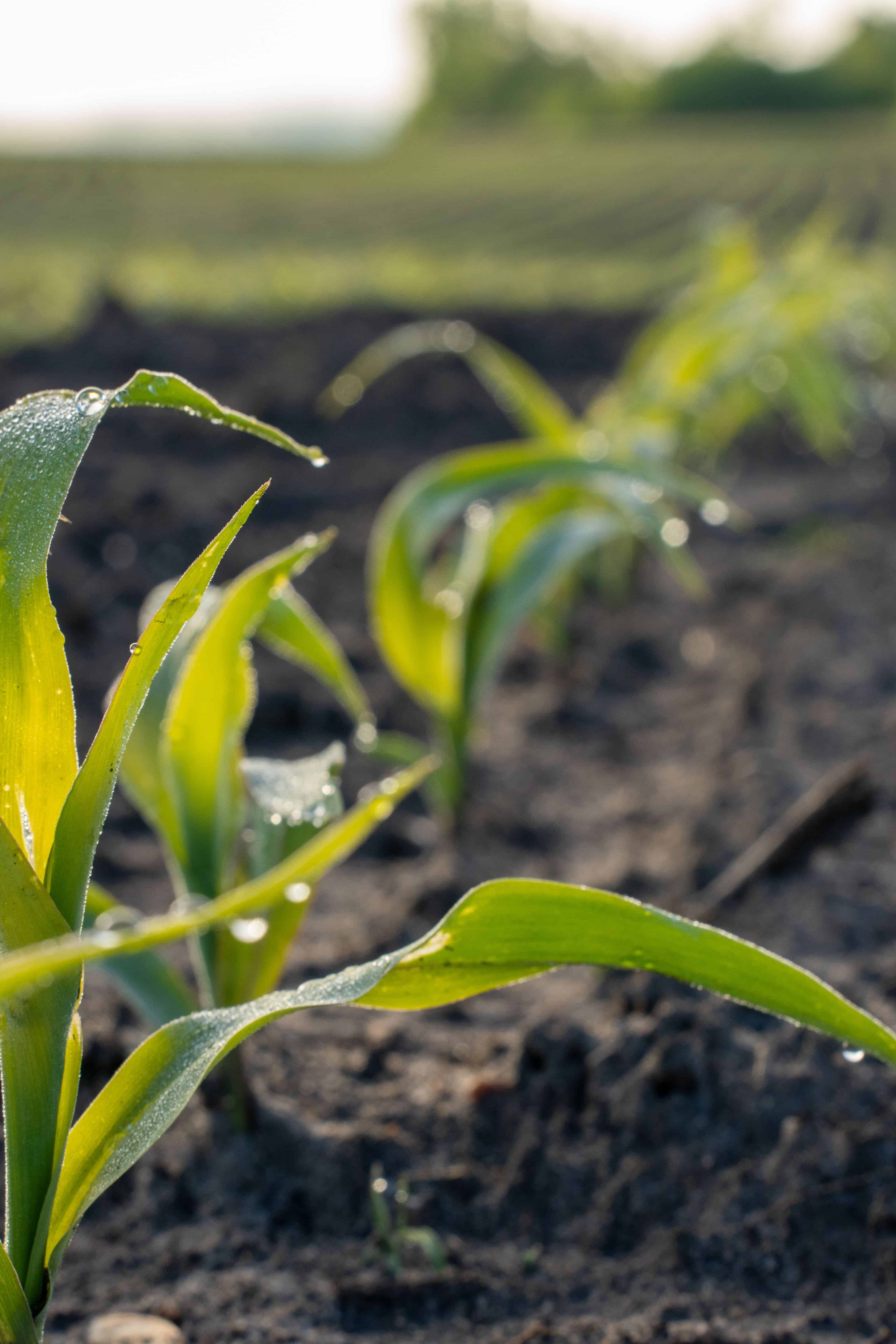
In this study, researchers from Kansas State University evaluated the long-term impacts of different fertilization and tillage practices on soil health and microbial communities in a continuous corn production system. Long-term cropping system experiments like this one are useful for identifying complex soil interactions, and they can provide actionable insights into how major agricultural management practices can be used to build soil health over time.
Farmer Takeaways
- In a long-term continuous corn production system, no-till management with organic fertilization resulted in significant increases in soil organic matter (SOM), total N, available P, and microbial biomass at soil depths up to 30cm.
- Soil organic carbon (SOC) equilibrium in the top 0-5cm of soil was achieved after ~13 years in the no-till + organic fertilizer treatment, after which both SOC and microbial biomass began accumulating in deeper soil horizons.
- Soils tended to be healthier in no-till systems than in tilled systems, and no-till systems were most effective at building SOM when combined with organic fertilization.
Project Objectives and Approach
Evaluate the impacts of different tillage and fertilization practices on microbial communities and soil health in a long-term continuous corn production system
- Researchers at Kansas State University conducted a 28-year continuous corn cropping system experiment, beginning in 1990.
-
- Tillage treatments included: (1) no-till and (2) conventional tillage (chisel plowing in the fall, followed by offset disking in the spring).
- Fertilizer treatments included: (1) no fertilizer; (2) organic fertilizer (fresh cattle manure (1990-2001), composted organic waste (2001 onwards)); and (3) mineral fertilizer (ammonium nitrate or urea).
-
- Fertilizer treatments were applied at rates calculated to deliver 150 lbs N per acre. Phosphorus, potassium, and other essential nutrients were applied as-needed based on preliminary soil test results.
Data Collection/Analysis:
- Soil samples were collected from replicated experimental plots in 2017 and 2023. **Note: Researchers had previously observed soil organic carbon equilibrium* in the surface layer of some treatments, and their goal was to assess microbial communities in treatments with different soil organic carbon status.
-
- *Soil organic carbon equilibrium: the steady state reached when the amount of carbon entering the soil equals the amount leaving it; it represents the maximum amount of carbon a specific production system can hold under current management practices and climate conditions.
-
- These soil samples were partitioned into multiple depth intervals. The 2017 samples were separated into six layers from 0-90 cm, while the 2023 samples focused on three layers from 0-30 cm. **Note: the 2023 samples were collected based on the strongest observed effects from 2017, but the sampling approach otherwise remained the same.
- Soil samples from each plot and depth were analyzed in the laboratory for pH, organic carbon, total N, Mehlich-3 extractable P, hydrolytic and oxidative enzyme activities, microbial biomass, and microbial community structure.
Key Findings
In this long-term experiment, the no-till system with organic fertilizer reached an equilibrium state that stabilized soil organic carbon (SOC) and built organic matter in deeper soil layers
- In 2003, the no-till + organic fertilizer treatment reached (and remained at) soil organic carbon equilibrium in the top 0-5cm of soil.
- In 2007, researchers observed significant soil organic carbon increases at the 5-15cm soil depth, and in 2017, they observed significant increases at the 15-30cm depth.
- In this equilibrium state, microbial biomass and enzyme activity (primarily β-glucosidase) plateaued in the surface soil layers. Following a similar trend as soil organic carbon, microbial biomass increased over time in deeper soil horizons (up to 30cm).
-
- These findings not only suggest that no-till + organic fertilization are effective soil health management practices, but also that, after reaching SOC equilibrium in the top 0-5cm of soil, both SOC and microbial biomass can continue to accumulate at soil depths up to 30cm over the course of 2+ decades in a no-till, continuous corn system receiving organic fertilization.
-
Other tillage and fertilizer systems were not as effective at building soil organic carbon (SOC) and other soil health indicators as the no-till, organic fertilizer system
- Conventional tillage + organic fertilizer resulted in ~30% less soil organic carbon and total N compared to no-till + organic fertilizer, suggesting that tillage disrupts soil carbon accumulation and increases decomposition.
- Unlike the no-till + organic fertilizer treatment, neither the no-till + no fertilizer nor the no-till + mineral fertilizer treatment had any effect on soil microbes or soil organic carbon, emphasizing the importance of organic residue (i.e., organic fertilizer) in increasing soil organic carbon levels and boosting microbial populations.
Resources
Hsiao, C.-J., Mushtaq, M., Sassenrath, G. F., Zeglin, L. H., Hettiarachchi, G. M., & Rice, C. W. (2025). Long-Term Tillage and Compost Shape Soil Microbes Under Soil Organic Carbon Equilibrium. European Journal of Soil Science, 76(3), e70125.
Read MoreLocation
KansasCollaborators
Muazzama Mushtaq, Kansas State University
Gretchen Sassenrath, Kansas State University
Lydia Zeglin, Kansas State University
Ganga Hettiarachchi, Kansas State University
Charles Rice, Kansas State University
Region
Plains
Topic
Soil Health, Crop Nutrient Management, Cropping Systems
Year Published
2025