Project Overview
Soil amendments are a cornerstone practice for building soil health, especially in organic systems. Soil amendments can have wide-ranging effects on soil health, affecting a soil’s physical, chemical, and biological properties, but these effects vary by amendment and across soil types.
Soil amendments may be of particular importance in organic vegetable cropping systems in the Southeastern U.S., owing to the size of the vegetable industry, the growth of the organic sector in the region, and the sandiness of coastal soils, which drain water and leach nutrients easily. Mineral soil amendments that increase the overall fertility of sandy soil could be beneficial for organic vegetable growers, particularly by increasing silt and clay content that boost functional measures of soil health like cation exchange capacity and water holding capacity.
A series of greenhouse and on-farm experiments took place in Florida in 2021 and 2022 to test whether mineral soil amendments, namely soils excavated from a riverbed and a retention pond, affect several measures of soil health, including aspects related to water, nutrients, carbon, pests, and plant biomass.

Farmer Takeaways
- Mineral soil amendments rich in silt and clay can measurably affect the texture of sandy soils when applied a rate of 86 tons per acre.
- Amended soils had higher soil water content compared to unamended soils, although this effect did not translate into changes in crop yield or other soil properties.
Project Objectives and Approach
Evaluate the impacts of different mineral soil amendments on soil health properties and vegetable crop performance on an organic vegetable farm
- Experimental plots were established in Florida, with an organic vegetable crop rotation including: (1) a sunn hemp-sorghum sudangrass cover crop (Summer 2021), (2) cabbage (Fall 2021), and (3) carrots (Winter 2021/Spring 2022), followed by a second cycle of summer cover crop and cabbage production. All crops were monitored for biomass production and yield.
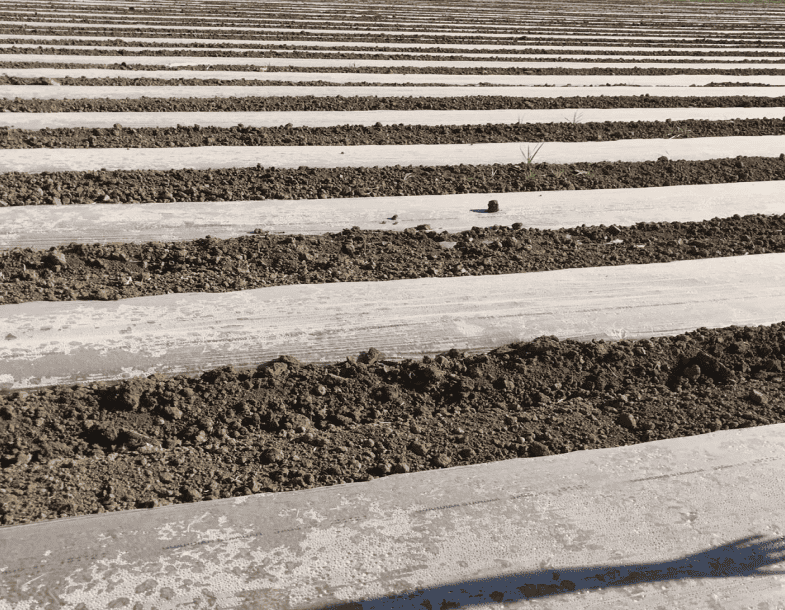
- The experimental plots were amended with one of two mineral soil amendments, collected from local soil sources. The first amendment was collected from a riverbed located near the experimental plots, and the second amendment was collected from a nearby retention pond. Both amendments were selected to alter soil texture by increasing the amount of clay and silt particles, although it should be noted that, when compared to other mineral amendments, the silt and clay content for these amendments were relatively low. Both amendments were applied at rates of 86 tons per acre and incorporated with a rototiller to a depth of about 6”.
- The researchers measured a suite of soil health properties, comparing amended soils to nontreated control plots. Throughout the experiment, soils were analyzed for nutrients, soil carbon indicators, texture, and nematodes. Soils were generally sampled to a depth of about 6”, though deeper soil nutrient samples were taken at several points during the study. Plots also had soil moisture sensors installed at approximately 6” and 12” depths.
Evaluate the impact of mineral amendment application rate and irrigation on crop performance
- The riverbed soil amendment was mixed with sandy field soil at five different levels, ranging from 3.4 tons per acre to 99 tons per acre equivalent rates, to create potting soil for a greenhouse study.
- In these greenhouse pots, researchers established sorghum sudangrass plants and subjected them to high and low irrigation treatments, in addition to the soil amendment treatments.
- Sorghum sudangrass plants were harvested, dried, and weighed to collect dry aboveground biomass data.
Monitor the costs and returns of using mineral soil amendments
- Field trials were monitored for the costs of using high rates of soil amendments, and a partial budget analysis, break even analysis, and sensitivity analysis were used to determine how much these amendments affect vegetable production costs.
Key Findings
High rates of mineral soil amendments can affect soil texture in sandy soils at levels that increase soil moisture
- Incorporating the riverbed mineral amendment into the top 6” of soil marginally increased the silt and clay soil texture fraction (4.7% to 7.1%). The retention pond mineral amendment led to a more modest increase in the silt and sand fraction. The researchers note that more substantial and consistent effects on soil texture may be obtained if using mineral amendments higher in silt and clay content, as the silt and clay content of the amendments used in this study were relatively low.
- Amended soils had slightly increased soil water content, about 5 to 10% more than the nontreated plots. This effect was affected by the depth and measurement timing, but soils amended with the riverbed mineral amendment generally held more water at 12” soil depth, while soils with the retention pond amendment held more water at 6” soil depth.
- These two soil amendments did not have significant effects on other aspects of soil health, including soil nutrients, organic matter, or carbon.
Soil amendments in this study did not affect crop yield or provide consistent economic benefit
- No differences in crop yield or cover crop biomass were observed in the field experiment.
- Sorghum sudangrass plant biomass did somewhat increase with increasing soil amendment rates in the greenhouse experiment, but this effect was small and inconsistent.
- The soil amendments used in this study cost at least $250 per acre. Despite not contributing to measured increased in crop yield, these amendments could potentially lead to economic gain over a ten-crop cycle by reducing irrigation costs.
Resources
Ali, A., Campbell, D. N., Pilco, F., Ballou, J., Bean, E. Z., Chase, C. A., Athearn, K., Sanchez-Jones, T., & Maltais-Landry, G. (2025). Mineral amendments benefit soil moisture but not nutrient cycling or crop productivity in a Florida organic vegetable system established on a sandy soil. Organic Agriculture, 15(3), 473–491.
Read MoreVideo: Impact of Clay Amendments on Nutrient and Water Management | UF/IFAS SARE
Read MoreLocation
FloridaCollaborators
Ahmad Ali, Florida A&M University
David Campbell, University of Florida
Fabrizio Pilco, University of Texas Rio Grande Valley
Johnathan Ballou, University of Florida
Eban Bean, University of Florida
Carlene Chase, University of Florida
Kevin Athearn, University of Florida
Tatiana Sanchez-Jones, UF/IFAS Extension
Region
Southeast
Topic
Soil Health, Crop Nutrient Management
Year Published
2025