Project Overview
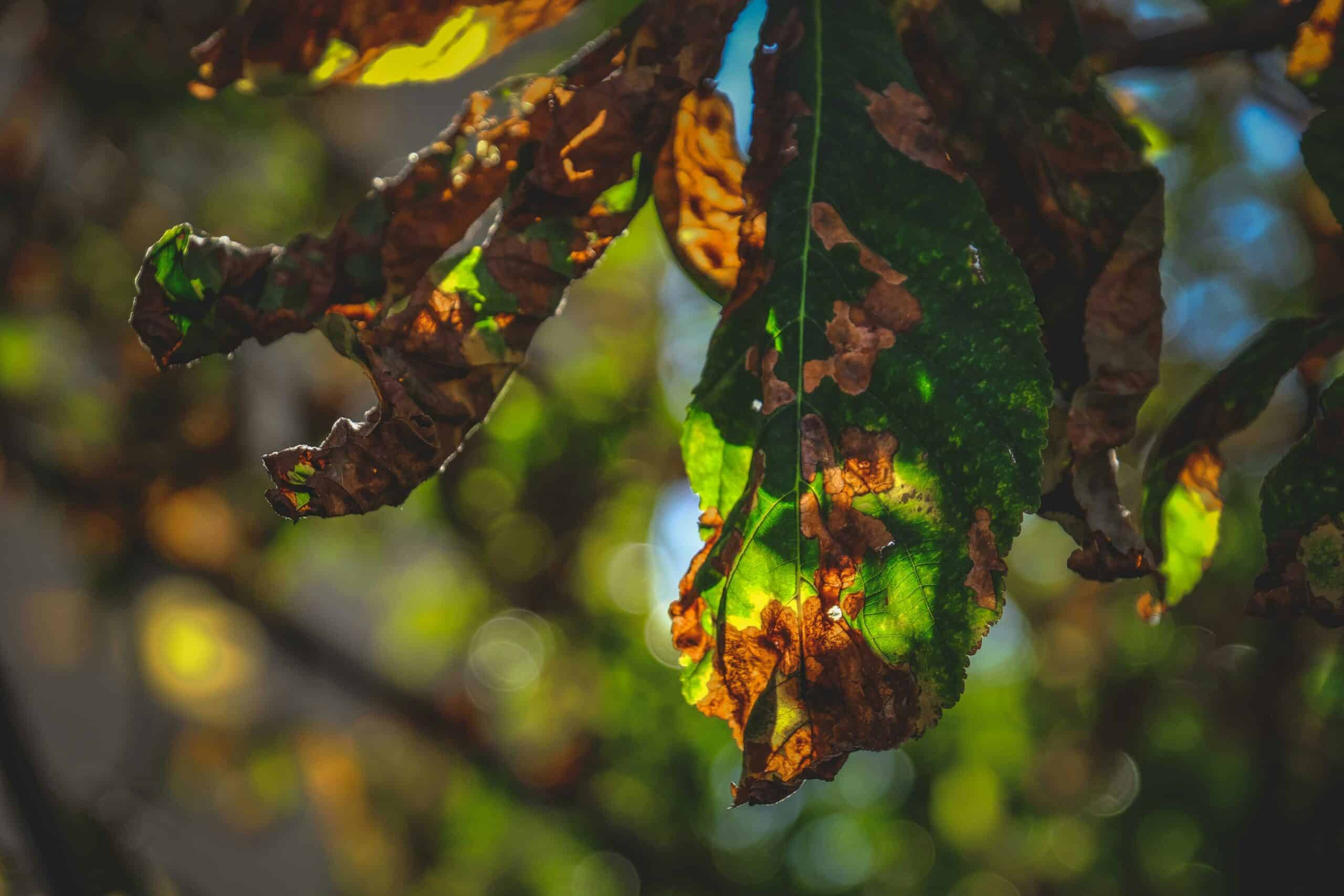
Fire blight is a highly destructive disease in apples, causing rapid defoliation, shoot death, and even whole tree death. It is caused by a bacteria (Erwinia amylovora), carried by insects in the spring to apple blossoms and then infecting fruit spurs and young shoots, generating a sticky, highly-infectious bacterial ‘ooze.’ Genetic resistance to fire blight is the most effective control mechanism for this disease; however, many apple cultivars – including some of the most popular table apple varieties – lack this genetic resistance.
Developing a successful fire blight management program is key to apple production in many U.S. states, particularly those with humid conditions. Because fire blight spreads rapidly, the standard management program in conventional orchards is to use bactericide sprays. These sprays are expensive, sensitive to application timing and coverage, tend to lose efficacy over time, and can have negative impacts on human health. At present, management options are limited for organic apple production systems, although some organic fire blight sprays have emerged.
One such organic spray utilizes bacteriophage* biocontrol, where naturally-occurring viruses that infect plant pathogens are isolated, cultured, and applied in apple orchards at bloom to prevent the spread of fire blight. Beginning in 2018, researchers in Michigan, New York, North Carolina, and Connecticut set out to understand some of the key factors affecting phage applications for fire blight. To do this, the researchers conducted a series of field experiments that assessed (1) the sensitivity of bacteriophages to ultraviolet (UV) light, and (2) the effects of bacteriophage strain and application timing on fire blight bacterial communities.
**bacteriophage (“phage”): a specialized virus that exclusively infects specific bacteria
Farmer Takeaways
- Bacteriophages can provide organic fire blight control comparable to existing conventional products, but this control was extremely variable across site-years, ranging from 0% to >80%.
- No single application practice (timing, frequency, rate, or strain) consistently improved bacteriophage efficacy against fire blight. Additional research is needed to understand which practices provide the most consistent outcomes.
- Bacteriophages are sensitive to both UV-B and UV-C light, but none of the UV protectants in this study improved phage survival.
- Bacteriophages temporarily reduced blight abundance on blossoms, but with no lasting changes to bacterial community diversity.
Project Objectives and Approach
Test the sensitivity of fire blight phages to UV light, with and without natural UV protectants
- Researchers created in vitro UV sensitivity assays by culturing individual bacteriophage strains, growing them in a liquid suspension on a petri dish, and exposing petri dishes to different intensities and wavelengths of UV light.
-
- The researchers also tested phage sensitivity to UV light when irradiated in combination with several UV protectants (kaolin clay, peptone, and carrot juice).
-
- Following each UV irradiation treatment, researchers transferred the treated bacteriophage solution to a new petri dish inoculated with fire blight bacteria. These dishes were incubated for 24 hours, after which surviving phages and bacterial plaques were counted.
Evaluate bacteriophage performance as an organic fire blight management strategy under field conditions, assessing application timing, strain, and interaction with UV protectants
- A series of small-plot field experiments were carried out in Michigan, New York, and North Carolina. Each trial compared one or more bacteriophage strains (either individual strains or a commercial bacteriophage mix, AgriPhage) against an untreated control and conventional bactericides.
-
- Across the different trials, researchers also tested several of the UV protectants listed above (kaolin clay, peptone, and carrot juice).
-
- While application timings differed slightly between sites, each bacteriophage treatment was applied between 2-3 times, between 75% bloom and petal fall.
- In Michigan and New York, field experiments were conducted in plantings of ‘Buckeye Gala’ apples, and in North Carolina, experiments were conducted in ‘Brookfield Gala’ apples.
- Blossom blight was evaluated approximately one month after the final spray application in each treatment by counting infected flower clusters (per 100 clusters per tree).
Understand the impacts of bacteriophages on the apple flower microbiome
- In another series of field experiments (Michigan and Connecticut), researchers conducted a microbial analysis of apple blossoms collected before/after bacteriophage application.
-
- In these trials, some trees were sprayed with bacteriophage (AgriPhage), and others were sprayed with water (which has been known to promote fire blight spread/infection).
- Baseline blossoms were collected prior to spraying. Additional blossoms were collected 16 and 36 hours after spraying, and for three days following a second spray application.
-
- Researchers extracted bacterial RNA from the blossoms to analyze bacterial abundance and community structure.
Key Findings
Bacteriophages can provide organic fire blight control comparable to existing conventional products, but this control is highly variable
- Bacteriophages provided variable fire blight control under field conditions, with control ranging from 0% to 82% across 11 site-years of research.
- No single application practice (timing, frequency, rate, strain, or UV protectant) consistently improved bacteriophage efficacy against fire blight.
-
- These findings indicate that more research is needed to elucidate which application practices have the strongest fire blight management outcomes.
-
- Lab tests of UV protectants highlighted the sensitivity of bacteriophages to UV-B and UV-C light, but none of the protectant materials consistently helped phages survive UV irradiation.
- Analysis of apple blossom microbial communities revealed that the bacteriophages were highly selective against fire blight, having little-to-no effect on other bacterial communities present on apple blossoms. This finding highlights the advantages of using bacteriophages instead of bactericides, which can broadly disrupt the plant’s microbiome.
Resources
Gdanetz, K., Dobbins, M. R., Villani, S. M., Outwater, C. A., Slack, S. M., Nesbitt, D., Svircev, A. M., Lauwers, E. M., Zeng, Q., Cox, K. D., & Sundin, G. W. (2024). Multisite Field Evaluation of Bacteriophages for Fire Blight Management: Incorporation of Ultraviolet Radiation Protectants and Impact on the Apple Flower Microbiome. Phytopathology®, 114(5), 1028–1038.
Read MoreLocation
Michigan, New York, North Carolina, ConnecticutCollaborators
Kristi Gdanetz, Michigan State University
Madison Dobbins, Michigan State University
Sara Villani, North Carolina State University
Cory Outwater, Michigan State University
Suzanne Slack, Michigan State University
Darlene Nesbitt, Agriculture and Agri-Food Canada
Antonet Svircev, Agriculture and Agri-Food Canada
Erin Lauwers, Michigan State University
Quan Zeng, CT Agricultural Experiment Station
Kerik Cox, Cornell University
Region
Midwest, Northeast/Mid-Atlantic, Southeast
Topic
Disease Management
Year Published
2024