Project Overview
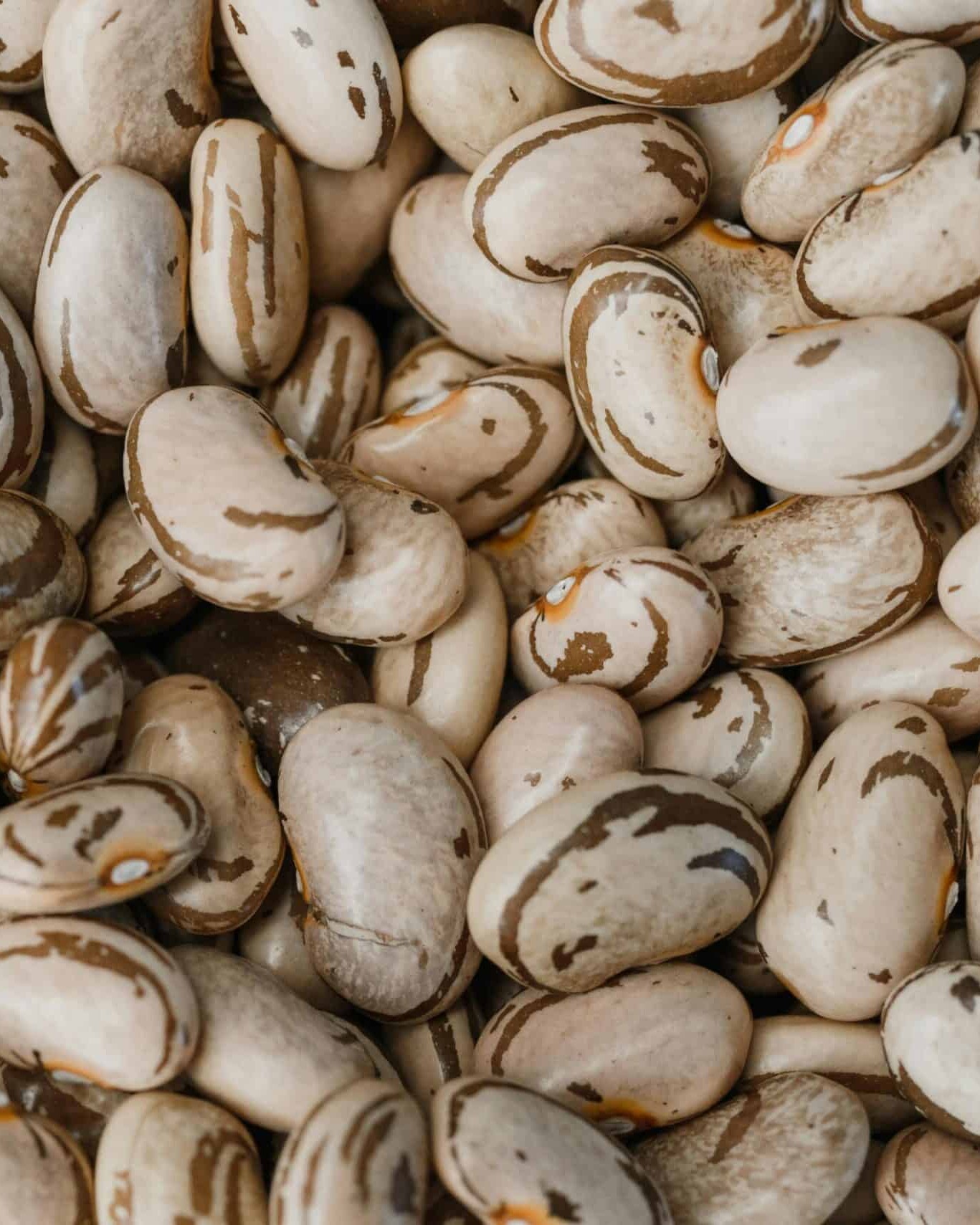
Consumer interest in niche and culturally-diverse food presents an opportunity for organic producers to add specialty and heirloom crop cultivars into their crop rotation. Dry beans (Phaseolus vulgaris) are one such example, with growing interest in different bean cultivars in specialty marketplaces and in restaurants. Dry bean production in the US drastically declined early in the 20th century due to diseases such as the bean common mosaic virus (Potyvirus phaseovulgaris) and white mold (Sclerotinia sclerotiorum), but breeding and cultivar improvements have helped dry bean performance. In this study, commercial and specialty dry bean cultivars were evaluated on their performance in organically-managed field trials, and surveys were conducted to determine consumer preferences for the various cultivars.
Farmer Takeaways
- Commercial cultivars such as black, pinto, and navy yielded higher than specialty cultivars.
- Commercial cultivars had greater “uprightness” than specialty cultivars, indicating easier harvesting.
- Consumers had greater preference for specialty cultivars (taste, appearance) and were willing to pay higher prices per pound for them – despite lower yields, this could permit selling specialty cultivars in high-value markets.
Project Objectives and Approach
-
Identify high-yielding dry bean cultivars with elevated pod height and upright plant architecture under organic production systems.
- Organic field trials were conducted over two years at four different locations in the Midwest and Northeast.
- 32 dry bean cultivars were evaluated, including black, pinto, navy, small red, and several specialty cultivars such as Southwest Gold, Tiger’s Eye, Desert Song, and Rojo Chiquito. These were selected based on prior regional trials and stakeholder input, representing cultivars that were most likely to have strong agronomic performance under organic management. A complete list of the 32 cultivars can be found in Table 2 of the paper.
- Pod height was determined by measuring the distance from the soil surface to the bottom of the lowest pod; this was done with five randomly selected bean plants in two 1-m lengths of crop row.
- Plant uprightness was determined using a Likert scale with rankings from 1-5, with 1 representing almost all bean plants erect.
- Seed yield was measured in the two 1-m length of rows where pod height and uprightness were also measured. This was done by cultivar maturity, approximately one week after 95% of pods were mature. The plants were removed, counted, dried, and seed biomass weighed.
-
Evaluate regional consumer preferences for different dry bean cultivars, and consumer willingness to pay a premium for them in direct markets.
- 126 consumers participated in in-person surveys across locations. These were conducted to determine regional preferences such as flavor, texture, and seed coat appearance, as well as consumer willingness to pay for different organic dry beans.
- Participants were gathered from previous extension events and field days.
- Seven cultivars were randomly selected for the surveys, and each participant received four cultivars, randomly selected from the pool of seven. They were asked to taste each sample and answer different questions.
Key Findings
-
Commercial cultivars had higher yields than the specialty cultivars.
- Across the commercial cultivars, yields averaged 3,255 lb/ac compared to an average yield of 2,373 lb/ac across specialty cultivars. This was consistent across the study sites.
-
Black and navy beans had the highest “uprightness” architecture compared to all other cultivars.
- Uprightness was ranked on a scale of 1-5 using the Likert scale, with 1 indicating a majority of plants were erect. Better uprightness contributes to ease of harvest.
- Black and navy beans had the best uprightness, while specialty cultivars showed high variability in this measurement.
-
Consumers indicated a greater preference for the specialty cultivars and were willing to pay more for them.
- Consumers who participated in the surveys indicated a greater preference for the specialty cultivars based on bean flavor, texture, and seed coat appearance, and indicated a willingness to pay up to $11 per pound for organically-produced specialty dry beans.
- This indicates the potential for lower yielding specialty cultivars to still allow producers to sell these cultivars in high-value markets.
Resources
Everest, E.F., Loria, K.A., Ryan, M.R., Krezinski, I., Darby, H.M., Brockmueller, B., Stedden, C.G., Silva, E.M., Molloy, T., Mallory, E.B., Crawford, J., & Moore, V.M. (2025). Organic dry bean cultivar evaluation in the Northeast and Upper US Midwest: Opportunities for growers and food systems. Agronomy Journal, 117, e70195.
Read MoreLocation
Wisconsin, New York, Vermont, MaineCollaborators
Kristen A. Loria, Cornell University
Matthew R. Ryan, Cornell University
Ivy Krezinski, University of Vermont
Heather M. Darby, University of Vermont
Benjamin Brockmueller, University of Wisconsin
Claire G. Stedden, University of Wisconsin
Erin M. Silva, University of Wisconsin
Thomas Molloy, University of Maine
Ellen B. Mallory, University of Maine
Jamie Crawford, Cornell University
Virginia M. Moore, Cornell University
Region
Midwest, Northeast/Mid-Atlantic
Topic
Plant Breeding, Varieties, and Seeds, Business and Marketing
Year Published
2025