Project Overview
Weed management remains a top challenge for organic producers; without the ability to use synthetic herbicides, organic growers utilize tillage and cultivation to curb weed growth. However, these mechanical weed management strategies are highly disruptive to soils, often resulting in increased erosion and a reduction in beneficial microbial populations; as such, there is interest in finding alternative organic weed management strategies that reduce soil disturbance.
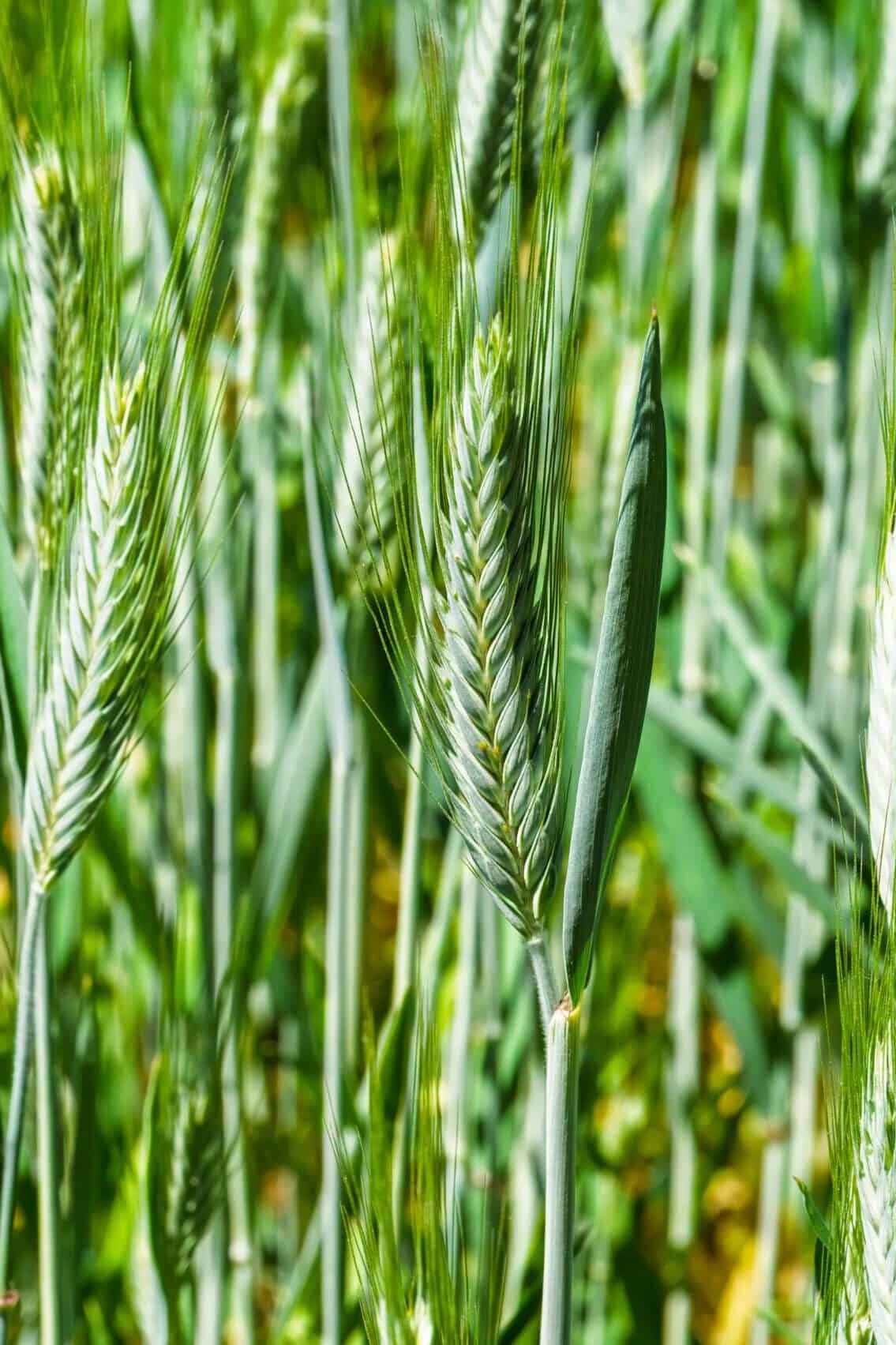
One such method is using cover crops as a living mulch between cash crop rows during the growing season. Cereal rye (Secale cereale L.) has potential as a living mulch in soybeans because it has vigorous early season growth, dying back as the cash crop canopy matures. This study, conducted over two years on certified-organic land in Wisconsin, examined a cereal rye living mulch treatment compared to a standard tillage-based treatment in organic soybean and the resulting effects on rye mulch biomass, weed density and biomass, and soybean yield.
Farmer Takeaways
- Consistent with past research, using winter rye as a living mulch showed neutral to negative impacts on soybean yields compared to traditional tillage-based soybean systems.
- Under optimal conditions, growers can maximize rye living mulch biomass production, which reduces weed pressure. In dry conditions, rye living mulch is reduced, leading to greater weed pressure and lower soybean yield.
- Rye living mulch may suppress broadleaf weeds better than grass weeds, which can influence weed management decisions based on a given location’s weed seedbank composition.
Project Objectives and Approach
To understand potential risks and benefits from (1) interseeding a cereal rye living mulch with soybeans and (2) delaying soybean planting date within the context of a spring-seeded rye system on weed prevalence and soybean production in the Upper Midwest
- A two-year field trial was established on certified-organic land at the Arlington Agricultural Research Station (Arlington, WI), with a third-site year established at the Michael Fields Agricultural Institute (East Troy, WI).
- At all sites, a randomized, replicated complete block design was used. Treatments consisted of:
- June Rye + Soy: winter rye and soybeans were interseeded in early June. Tine weeding and rotary hoeing were performed 1-2 times as necessary to adequately disrupt emerging weed seedlings with minimal soil disturbance. After the rye crop reached its two-leaf growth stage and the soybean crop reached its cotyledon stage, rye growth alone was allowed to control weeds.
- May Control: soybeans were planted in late May. Standard mechanical weed control methods were implemented throughout the growing season, with soybeans receiving 2-5 post-plant tillage events using a field cultivator.
- June Control: soybeans were planted in early June (June 1-5), allowing for an additional stale seedbed tillage pass prior to seeding. Standard mechanical weed control methods were implemented throughout the growing season, with soybeans receiving 2-5 post-plant tillage events using a field cultivator.
- All treatments received stale seedbed tillage passes prior to sowing soybeans.
- **Note: A May-planted rye living mulch treatment was not used in the trial due to previous research which found that early rye seeding increased the risk of rye vernalization and provided less time to manage the weed seedbank prior to planting.
- In August of each year, rye biomass and weed biomass samples were collected, as well as weed density. Soybeans were harvested in November and evaluated for yield.
Key Findings
A living mulch system may produce lower soybean yields than in a tilled system
- Soybean grain yields were smaller in the rye living mulch treatment than in the tilled control treatments.
- Weed density in the June Rye + Soy treatment was higher compared to the two tilled controls.
Maximizing living rye biomass is essential to controlling weeds and achieving high grain yields in this system
- Soybean grain yields in the rye living mulch treatment were higher when rye biomass was higher.
- Higher rye biomass also resulted in greater weed suppression.
- The living rye mulch suppressed broadleaf weeds better than grass weeds, which may have been due in part to broadleaf weed sensitivity to allelopathic compounds such as those found in cereal rye.
Resources
Brockmueller, B., Tautges, N., Vereecke, L., & Silva, E. (2022). Spring-seeded winter rye living mulches enhance crop biodiversity and promote reduced tillage organic soybeans. Frontiers in Sustainable Food Systems, 6, 926606.
Read MoreLocation
WisconsinCollaborators
Nicole Tautges, Michael Fields Agricultural Institute
Léa Vereecke, University of Wisconsin
Erin Silva, University of Wisconsin
Region
Midwest
Topic
Soil Health, Crop Nutrient Management, Weed Management
Year Published
2022