Project Overview
Growing media, or greenhouse potting mixes, provide a nutrient-rich substrate for seedling transplants in vegetable production systems. Certified organic growers are required to use growing media that meet NOP standards, which can be costly and vary widely from manufacturer to manufacturer. Many organic growing media are peat-based, but can include a myriad of other ingredients, including compost, plant materials, soil texture conditioners like perlite or vermiculite, mineral amendments, organic fertilizers like bone meal, biochar, biological amendments, and more. Growing media are a major investment in the health of a transplanted crop, and it is important that growing media provide appropriate nutrient levels and create suitable soil conditions for seedlings.
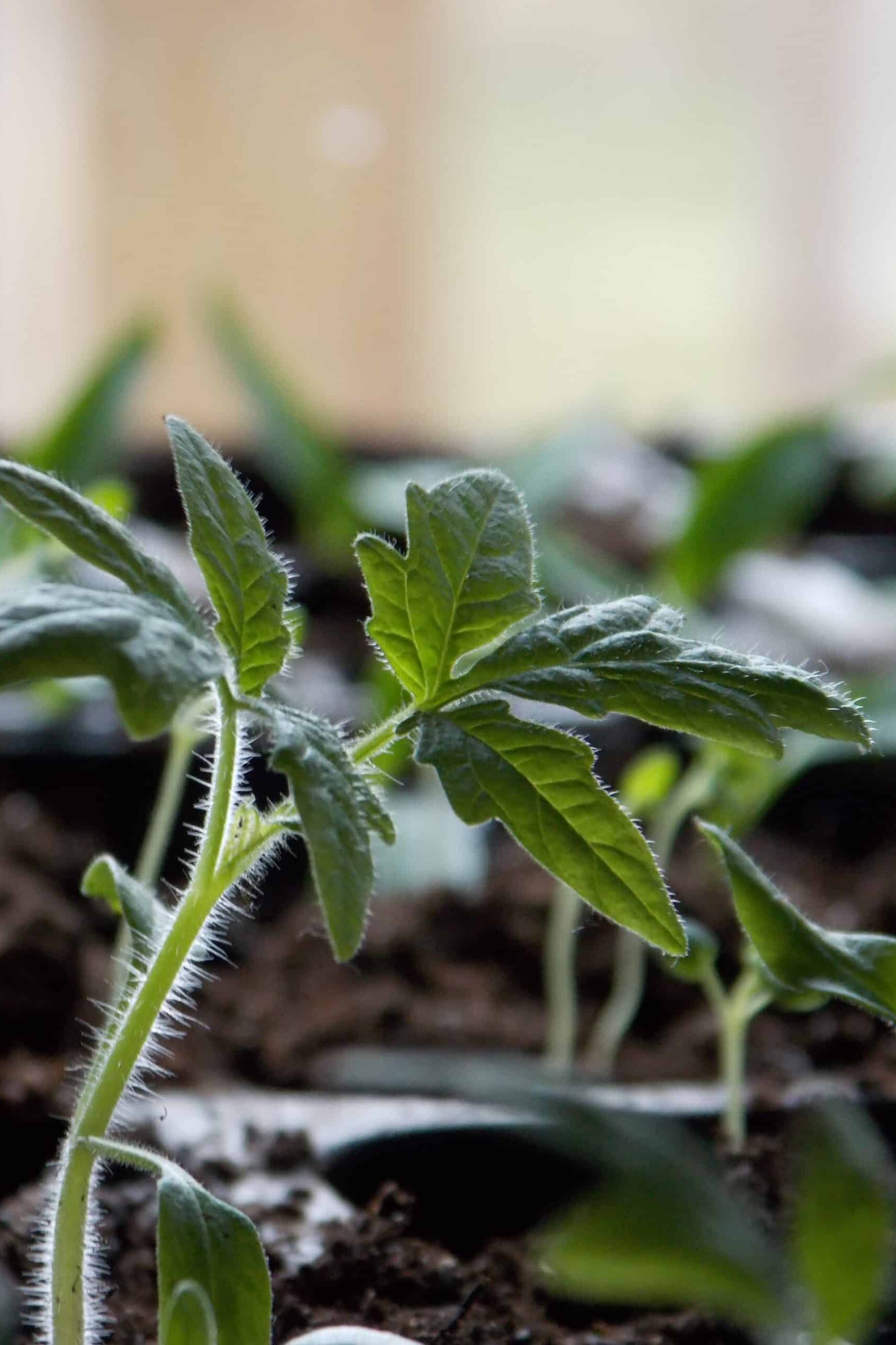
Information about growing media performance can help farmers sort through these options and more consistently produce vigorous plants. Researchers in Indiana established greenhouse and field trials to evaluate several commercially-available, organically-approved growing media in a tomato production system. The researchers grew tomato transplants in several different growing media in the greenhouse before transplanting some of those plants in the field. Through this process, researchers tracked the tomato plants to determine if the growing media had an affect on germination rates, emergence timing, seedling biomass and nutrient content, and flowering in the field. Data from the trials were combined with information about the nutrient concentration and ingredients of the various media to identify growing media that contribute to transplant vigor.
Farmer Takeaways
- Growing media vary widely in their chemical properties, with implications for plant emergence and vigor.
- High electrical conductivity (EC), despite being associated with high fertility, reduced tomato seedling emergence and uniformity.
- Tomato plants started in media containing compost tended to be larger, grow faster, and flower earlier when transplanted to the field. Compost tends to increase the electrical conductivity of a growing medium, so there may be trade-offs between seedling emergence and plant vigor.
- Additional research is needed to clarify how EC relates to nutrient availability and release in organic growing media.
Project Objectives and Approach
Compare organic growing media based on their ingredients, chemical properties, and nutrient contents
- Researchers at Purdue University acquired seven different growing media suitable for organic production and available to local (Midwestern) growers in commercial quantities.
-
- Based on previous research, the researchers sought out growing media with different levels of compost, including two without compost. All of the media contained peat, and all but one contained some kind of organic material beyond peat and compost such as sawdust, worm castings, biochar, mycorrhizal inoculant, and other materials.
-
- Nutrient analyses were performed with saturated media extract analysis at a commercial lab. Prior to lab analysis, all of the growing media samples were kept moist in pots for three days in order to incorporate nutrients and activate amendments.
Assess the growth/performance of tomato seedlings produced in each medium, including greenhouse-based germination assays and field-based trials of subsequent transplants
- In 2018, five trials were carried out to test tomato emergence in the seven growing media outlined above. These trials were carried out in different greenhouse environments, including varying levels of environmental control.
- In each trial, greenhouse plug trays were filled with one growing medium before tomatoes were planted. Researchers had separate full trays for each growing medium treatment. Researchers kept the trays watered and monitored emergence daily for about four weeks.
- In addition to monitoring emergence, the researchers also measured seedling height and stem diameter, final biomass, and tissue nutrient concentrations.
- After the greenhouse experiment, some seedlings from each treatment were transplanted into the field to assess the health of the resulting tomato plant. Researchers monitored the tomato plants from each medium to evaluate survival after one week, vegetative growth, and reproductive growth after four weeks.
Key Findings
Organic growing media vary widely in their composition, which can affect the health of resulting plants
- Tomato seedling emergence was significantly influenced by electrical conductivity (EC), which varied by media type. Electrical conductivity is known to impact the speed and uniformity of seedling germination. Tomatoes are particularly sensitive to high soluble salt concentrations when sprouting, so a lower EC range (0.5-1.5 mS/cm) is preferred.
-
- In the greenhouse trials, four of the seven tested growing media were within the standard EC range for tomato germination, and the researchers found that media with higher ECs resulted in lower seedling emergence and reduced uniformity. Several factors, including growing medium composition and moisture, can influence EC.
-
- Nutrient composition also varied significantly by media type, although measured pre-plant media nutrient concentrations did not always correlate to final plant tissue nutrient concentrations.
-
- The two media treatments resulting in the highest plant tissue N concentrations contained very different pre-plant nitrate (NO3-N) concentrations (<40ppm and >200ppm, respectively). This suggests that other forms of plant-available N not measured during the pre-plant assessment (i.e., ammonium and other organic compounds) contributed significantly to the growth and N uptake of the tomato plants. More comprehensive pre-plant nutrient assessments may be needed to accurately predict N potential in growing media.
-
Compost is an important component of a growing medium that produces vigorous seedlings, although it may hinder seedling emergence in some scenarios
- Across all trials, tomato plants started in media containing compost were larger, had faster relative growth rates, and set fruit earlier than plants started in media without compost. This effect was consistent across the five media with compost.
-
- Compost increases electrical conductivity, high levels of which were observed to slow seedling emergence and evenness. This apparent tradeoff between tomato seedling emergence and plant vigor necessitates further research.
-
Resources
Maynard, E. T., Guan, W., Langenhoven, P., & Hoagland, L. (2024). Tomato Seedling Performance in Commercial Organic Growing Media.
Read MoreLocation
IndianaCollaborators
Wenjing Guan, Purdue University
Petrus Langenhoven, Purdue University
Lori Hoagland, Purdue University
Region
Midwest
Topic
Crop Nutrient Management, Plant Breeding, Varieties, and Seeds
Category
Vegetables/Fruits
Year Published
2024