Project Overview
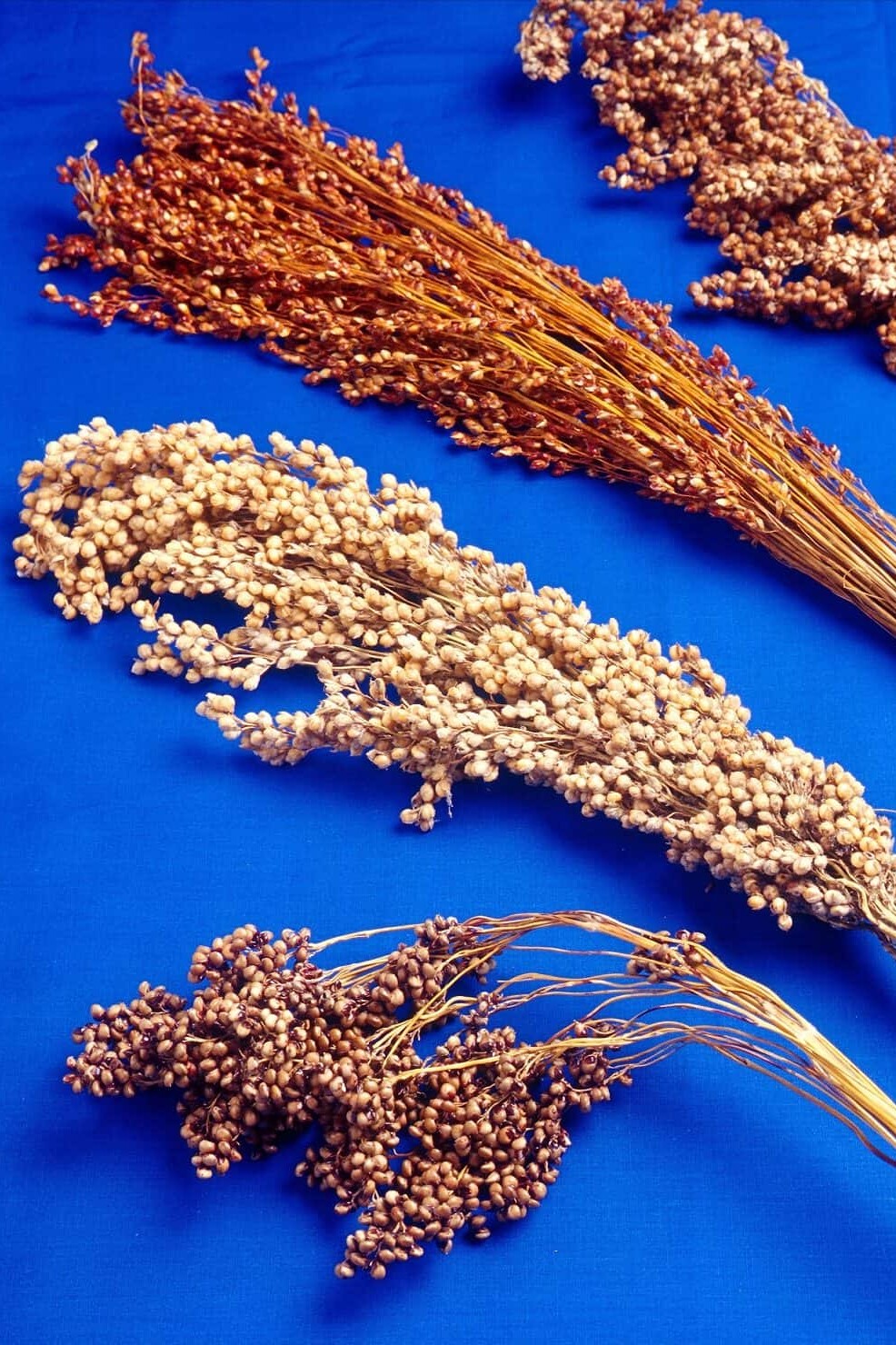
Sorghum is a warm-season cereal crop that can be grown for grain, animal feed, and value-added products like syrup. It can be a beneficial crop to incorporate into agronomic rotations, as it is a hardy crop capable of withstanding high temperatures and drought conditions, requires fewer inputs than other grain crops, and can sustain high yields.
However, sorghum breeding efforts are needed to optimize this crop for organic production. Increased disease resistance and competitiveness against weeds are two traits that would be particularly beneficial for organic sorghum producers, whose options for disease and weed management are more limited than conventional producers. In this study, researchers at Clemson University tested sorghum varieties in certified organic fields to understand which varieties and traits perform best in organic cropping systems.
Farmer Takeaways
- Sorghum can be successful in low-input organic cropping systems.
- Hybrid sorghum cultivars outperformed most inbred/pure line varieties. Average grain yields for hybrid cultivars were ~2x higher than grain yields for advanced breeding lines and historic varieties.
- Grain yields of the top-performing sorghum cultivars were comparable to commercial organic maize yields. The top three highest-yielding cultivars were: TAMU 5 (Hybrid), PV20_0426 (Advanced Breeding Line), and BRD_0508 (Hybrid)
- Key traits for sorghum yield potential include earlier canopy closure, increased disease resistance, and sugarcane aphid resistance.
Project Objectives and Approach
Evaluate sorghum varieties for their growth, performance, and yield under organic production
- On-farm field trials were established at two certified-organic sites located in the Piedmont and Sandhills regions of South Carolina.
- 185 unique grain sorghum varieties were tested, including 70 hybrid cultivars, 72 advanced breeding lines, and 43 historic varieties obtained from the Sorghum Association Panel, adapted to perform well in the Atlantic Coastal Plain.
-
- In addition to grain sorghum, researchers also evaluated 10 sweet sorghum varieties (grown predominantly for sap/syrup) and four hybrid corn cultivars.
-
- At both sites, sorghum was planted by mid-June of each year, following the harvest of a winter field pea cover crop. Remaining field pea chaff was tilled into the soil via disc harrow, and fallow stale planting beds were established approximately two weeks prior to sorghum planting.
-
- Planting populations were equivalent to ~85,000 seeds per acre.
- Throughout the growing season, a combination of in-row cultivation, finger-weeding, flame weeding, and manual weeding were used to suppress weeds.
- Plots received minimal preplant fertilizer and no or low rates of organic foliar fertilizers.
-
- During each growing season, data was collected on relative maturity (the approximate length of time, in days, from plant emergence until flowering), weed suppression, canopy closure, sugarcane aphid tolerance, plant height at postphysiological maturity, presence of grain mold, and grain yield.
Key Findings
Hybrid sorghum cultivars outperformed advanced breeding lines and historic varieties
- Average grain yields for the top-performing sorghum varieties were about 95 bushels per acre, which were comparable to the corn yields observed in this study.
-
- The highest-yielding grain sorghum cultivars were: TAMU 5 (Hybrid), PV20_0426 (Advanced Breeding Line), and BRD_0508 (Hybrid), respectively.
-
- On average, grain yields for the hybrid cultivars were more than 2x greater than yields for the advanced breeding lines and historic varieties, suggesting that hybrid sorghum cultivars may be more suited for organic production systems than advanced breeding lines or historic varieties.
-
- **Note: It should be noted that the second-highest yielding grain sorghum cultivar was a pure line/inbred (non-hybrid) cultivar, PV20_0426. There were two other pure line cultivars that rivalled the top-performing hybrids (see original journal article for additional information).
-
Key traits to improve sorghum for organic production include disease resistance, sugarcane aphid resistance, and early canopy closure
- Fusarium wilt, a fungal disease, was an important limitation to sorghum grain yield. Certain sorghum varieties – particularly pigmented ones – showed some resistance to Fusarium.
- Sugarcane aphid (SCA) was a critical pest at both sites, causing significant yield penalties across all site-years. Nine grain sorghum genotypes (two hybrids, five advanced breeding lines, and two historic varieties) displayed SCA tolerance.
-
- Of note, the three top-performing (highest-yielding) grain sorghum varieties all displayed SCA tolerance, indicating that SCA tolerance should be considered a key trait for improved sorghum breeding efforts, as these varieties may produce consistently higher yields.
-
- Canopy closure (the stage in the growing season when adjacent plants grow large enough for their leaves/stems to overlap across rows, creating a continuous soil cover) was strongly correlated with final grain yield, with earlier canopy closure resulting in higher yields and lower weed pressure.
Resources
Boyles, R. E., Ackerman, A. J., & Kresovich, S. (2022). Traits and underlying genetics important for low-input organic sorghum production. Crop Science, 62(2), 753–766.
Read MoreLocation
South CarolinaCollaborators
Arlyn Ackerman, Clemson University
Stephen Kresovich, Cornell University
Region
Southeast
Topic
Cropping Systems, Plant Breeding, Varieties, and Seeds
Year Published
2021