Project Overview
Biochar is an increasingly popular soil amendment created through the pyrolysis of biomass. Biochar has high carbon content, surface area, porosity, and cation exchange capacity (CEC), which can result in improved soil structure, increased nutrient retention, increased water holding capacity, and stimulated microbial activity. However, biochar can be a relatively challenging soil amendment for organic producers to use, owing to its high required application rates and unpredictable interactions with soils/soil nutrients. As such, despite its potential to help growers build organic matter and improve soil health, biochar implementation remains complicated in commercial production systems.
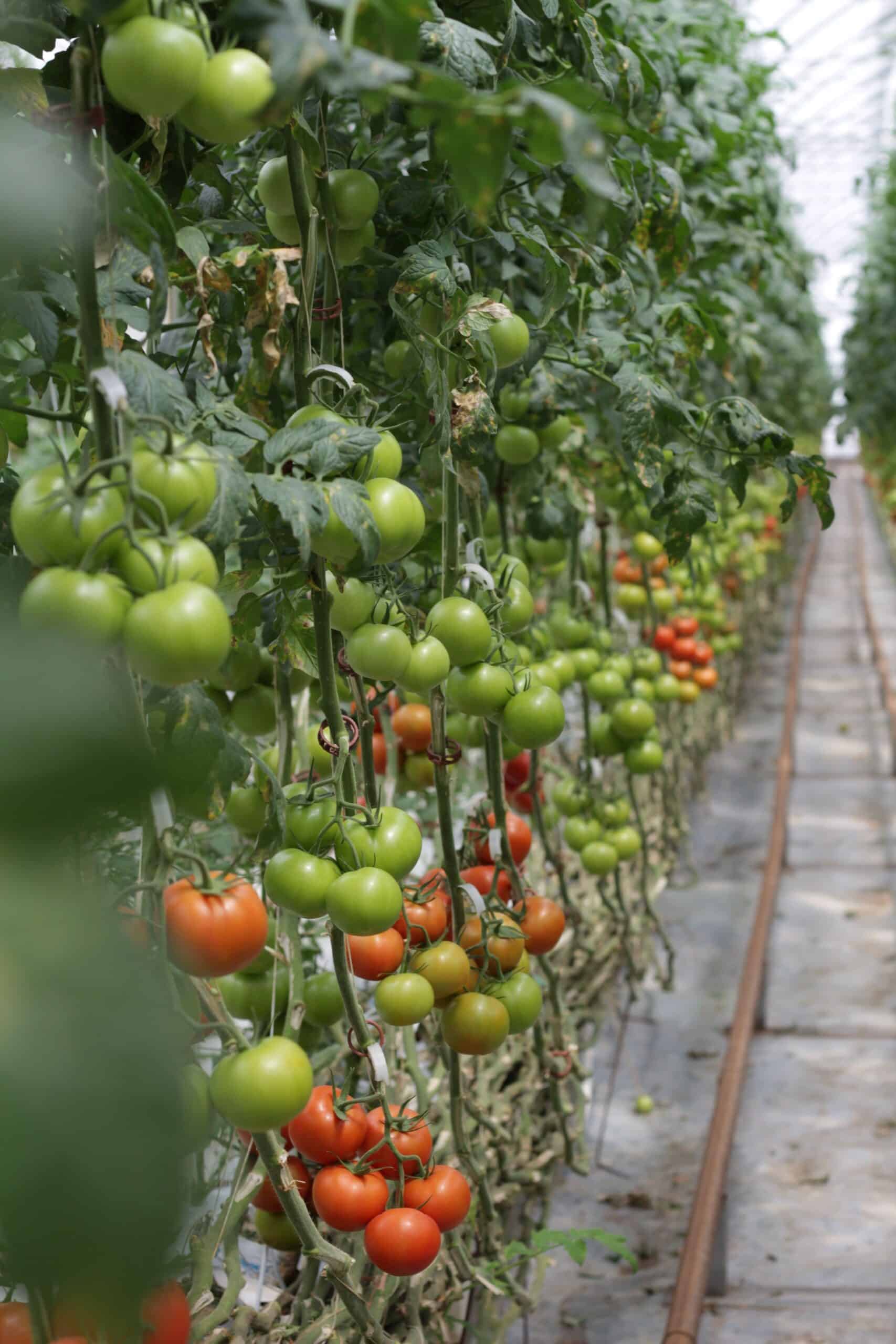
Agronomic information about ideal biochar application rates and fertilizer combinations would help growers make informed soil health management decisions. In this study, researchers in Georgia evaluated biochar in a plasticulture-based tomato production system. They assessed how biochar, when applied at multiple rates in combination with either conventional or organic fertilizer, affected soil health.
Farmer Takeaways
- Combining biochar with fertilizer (conventional or organic) increased soil pH, cation exchange capacity (CEC), and total inorganic N, with higher application rates corresponding to greater increases.
- Applying biochar and fertilizer may be an effective strategy for improving soil health in organic tomato production systems; however, additional research is needed to understand how changes in soil properties correlate with tomato crop performance.
- When combined with poultry litter, biochar increased soil N, enhanced microbial activity, and supported more organic matter accumulation than when combined with conventional fertilizer.
Project Objectives and Approach
Evaluate the impacts of biochar application rate and fertilization method (combined with organic vs. conventional fertilizer) on soil health in a plasticulture-based production system
- Researchers established a randomized field experiment at the University of Georgia Hort Hill Farm (Tifton, GA) to test five biochar application rates and two mixed biochar-fertilizer treatments.
-
- Biochar application rates included: (1) 0 tons/ac, (2) 5 tons/ac, (3) 10 tons/ac, (4) 15 tons/ac, and (5) 20 tons/ac. **Note: Given the observation that biochar can temporarily tie up/immobilize soil nutrients, the researchers opted not to test biochar independently (without fertilizer).
- Mixed biochar-fertilizer treatments included: (1) biochar + conventional granular fertilizer (10-4.3-8.3 Rainbow Fertilizer LLC), and (2) biochar + organic poultry litter. Tomato plants from both mixed biochar-fertilizer treatments were compared to plants from ‘control’ plots fertilized with only the conventional or organic fertilizer. All fertilizers were applied at rates calculated to provide 225 lbs N/acre.
-
- Biochar treatments were applied once at the beginning of the experiment, before fertilizer treatments were incorporated. Then, the researchers formed beds, laid plastic mulch and drip-irrigation tape, and transplanted tomatoes. **Note: The experiment was repeated for a second year in the same plots, with re-formed beds and fresh fertilizer/plastic mulch.
- Soil samples were collected monthly during the growing season and analyzed for pH, cation exchange capacity (CEC), total organic matter, total inorganic N, microbial activity, and active carbon.
Key Findings
Combining biochar with fertilizer (either conventional or organic) increased certain soil health properties more than either fertilizer alone, with higher application rates corresponding to greater increases
- Both mixed biochar-fertilizer treatments resulted in significant increases to soil pH, cation exchange capacity (CEC), and total inorganic N. These increases were positively correlated with biochar application rates, with higher application rates (15-20 tons/ac) corresponding to greater increases in pH/CEC/N.
-
- These findings suggest that applying biochar and fertilizer may be an effective strategy for improving soil health in tomato production systems; however, additional research is needed on whether the observed changes in soil properties correspond to improved tomato crop performance.
-
- Other soil health indicators were less responsive to biochar application rate.
Combining biochar with organic poultry litter may result in greater improvements to soil health than combining biochar with conventional, granular fertilizer
- The mixed biochar-organic poultry litter treatment resulted in significantly greater increases to cation exchange capacity (CEC), organic matter accumulation, active carbon, and microbial CO2 than the mixed biochar-conventional fertilizer or fertilizer-only treatments.
-
- Poultry litter, which is rich in labile carbon, microbes, and micronutrients, may interact synergistically with biochar. The findings from this study suggest that applying biochar with poultry litter may be a viable practice for organic soil health management plans in nutrient-limited, intensified plasticulture systems.
-
Resources
Suarez, E., Diaz-Perez, J. C., Pulici, E., Cassity-Duffey, K., Sintim, H. Y., & McAvoy, T. (2025). Biochar Rate and Fertilizer Source Influence Soil Chemical and Biological Properties in Tomato Plasticulture Systems.
Read MoreLocation
GeorgiaCollaborators
Emilio Suarez, University of Georgia
Juan Diaz-Perez, University of Georgia
Elvis Pulici, University of Georgia
Kate Cassity-Duffey, University of Georgia
Henry Sintim, University of Georgia
Region
Southeast
Topic
Soil Health, Crop Nutrient Management
Year Published
2025