Project Overview
Cover cropping is a valuable agricultural management strategy, recognized for its ability to increase soil organic carbon, suppress weeds, and prevent soil erosion. However, the decomposition of cover crop residues can contribute to increased greenhouse gas (GHG) emissions, including carbon dioxide (CO2), nitrous oxide (N2O), and methane (CH4). These GHG emissions can diminish the climate benefits associated with C accrual from cover crop production; as such, the implementation of additional conservation practices should be considered.
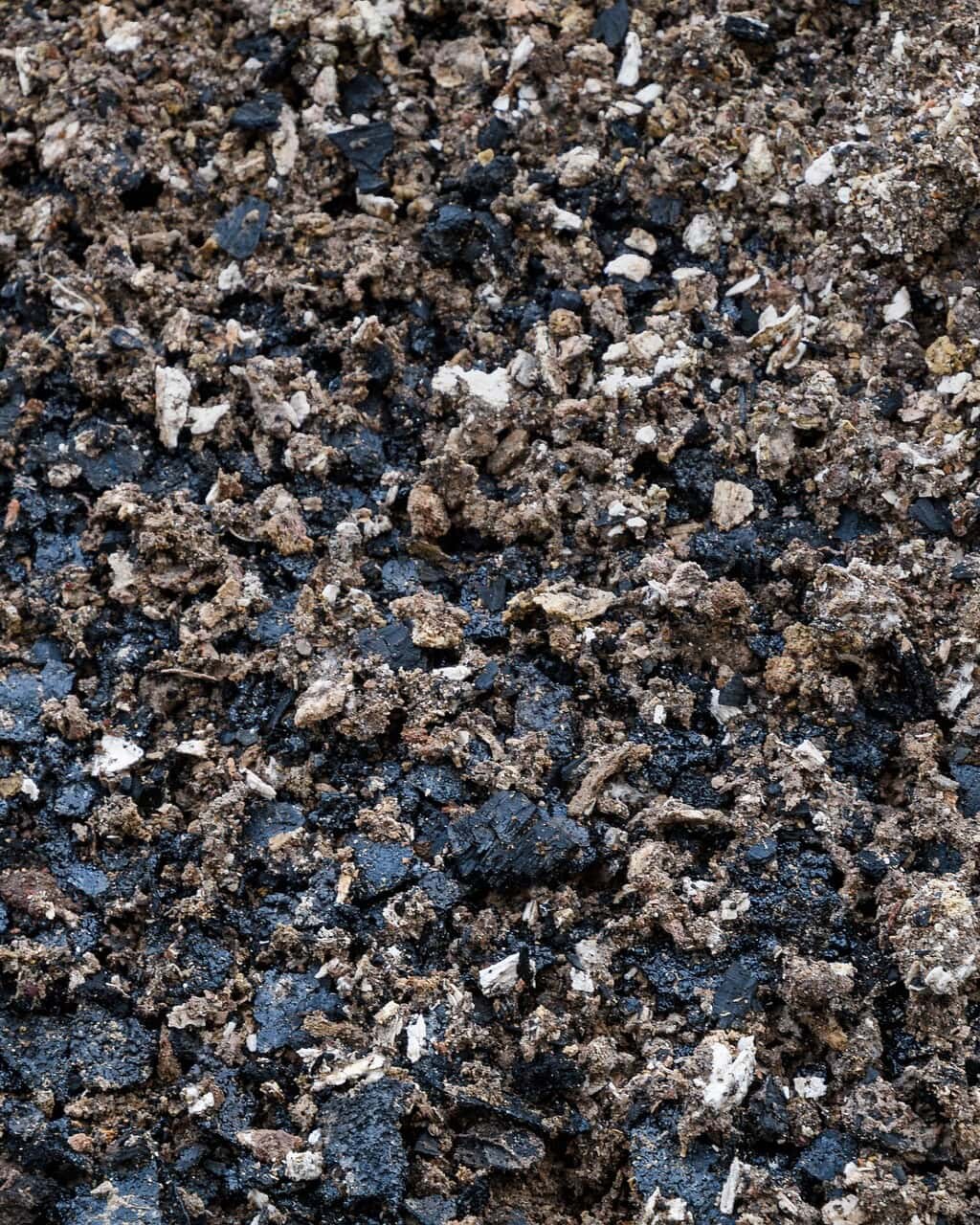
Biochar – a byproduct of the pyrolysis* of crop residues or animal waste – has gained significant interest in recent years as a climate-smart alternative (or supplement) to fresh cover crop residues. Biochar consists of >95% recalcitrant C, making it resistant to rapid decomposition and enhancing its potential for long-term soil C sequestration. Additionally, biochar’s porous structure can provide a protected habitat for beneficial soil microbes and enhance soil nutrient cycling, water-holding capacity, and aeration. Several studies have investigated how biochar incorporation affects soil GHG emissions; however, the impact of adding biochar at the time of cover crop termination, combined with manure, is not well understood.
- *pyrolysis: the heating of an organic material, such as biomass, in the absence of oxygen. Biomass pyrolysis is usually conducted at or above 500 °C.
This study evaluated the combined effects of organic cotton residue biochar, cover crops, and poultry litter on soil CO2, N2O, and CH4 emissions.
Farmer Takeaways
- The incorporation of biochar (in combination with poultry litter) at the time of cover crop termination may significantly reduce cumulative N2O emissions, regardless of residue type. However, its impact on CO2 and CH4 emissions remains less clear.
- Biochar, cover crop residue, and poultry litter may each contribute to the accumulation of soil total carbon (TC) and total nitrogen (TN) over time.
Project Objectives and Approach
To evaluate the combined effects of cover crop residue, poultry litter, and organic cotton residue biochar decomposition on soil CO2, N2O, and CH4 emissions
- Laboratory soil incubation experiments were conducted over two years using soil collected from a cotton field study site under organic management located near College Station, TX.
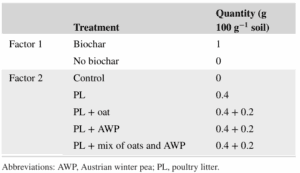
- 100g dry soil was packed into plastic containers to achieve a bulk density ~1.28g/cm^3. Treatments in the incubation experiment included two levels of biochar and five levels of cover crop and poultry litter residues, including a control, for which no residues added (see Table 1 below). Water content for all containers was adjusted to 60%, and containers were placed in a 1L mason jar and incubated in the dark at 25 degrees C.
- GHG samples were collected periodically throughout the incubation period and analyzed for CO2, N2O, and CH4 concentrations.
Key Findings
CO2 Emissions
- When averaged across residue types, biochar addition did not affect soil CO2 emissions in any of the incubation years.
- Cumulative CO2 emissions tended to be higher in soils treated with both cover crop residue and poultry litter, regardless of biochar. This suggests that combining residue treatments may enhance soil microbial activity, resulting in the elevated release of CO2.
- When averaged across biochar treatments, cumulative CO2 emissions were highest in the two residue treatments containing AWP, suggesting that Austrian winter pea (a legume) may stimulate microbial activity more than oats or poultry litter alone.
N2O Emissions
- In both years, biochar significant reduced cumulative N2O emissions across all residue treatments, demonstrating biochar’s potential to reduce overall GHG emissions.
- When averaged across biochar treatments, cumulative N2O emissions were highest in the two residue treatments containing Austrian winter pea.
CH4 Emissions
- Soil CH4 fluxes were negligible across all cover crop residue and poultry litter treatments, and cumulative CH4 emissions averaged across biochar treatments did not differ between residue treatments.
- When averaged across residue types, biochar addition reduced soil CH4 uptake.
Total Soil C and N
- Compared to initial soil C and N levels, all cover crop residue and poultry litter-amended soils increased soil total carbon (TC) and total nitrogen (TN) at the end of incubations, indicating that cover crop residue and poultry litter both contribute to the accumulation of soil C and N over time.
- In general, soil TC and TN levels were highest in the two residue treatments containing Austrian winter pea (PL + AWP, PL + mix of oats and AWP).
- When averaged across residue types, biochar addition increased soil TC by 25.5% (2022) and 43.7% (2023), and increased soil TN by 10% (2022) and 6.7% (2023), indicating that the addition of biochar can contribute to the accumulation of soil C and N over time.
Resources
Salehin, S. M. U., Rajan, N., Mowrer, J., Casey, K. D., Somenahally, A., & Bagavathiannan, M. (2025). Combined effect of biochar, cover crop residues, and manure on greenhouse gas emissions: Insights from 60-day soil incubations. Soil Science Society of America Journal, 89(1), e70008.
Read MoreLocation
TexasCollaborators
Sk Musfiq Us Salehin, Texas A&M University
Jake Mowrer, Texas A&M University
Kenneth Casey, Texas A&M AgriLife Research
Anil Somenahally, Texas A&M AgriLife Research
Muthu Bagavathiannan, Texas A&M University
Region
West/Southwest
Topic
Soil Health, Crop Nutrient Management, Climate Solutions
Year Published
2024