Project Overview
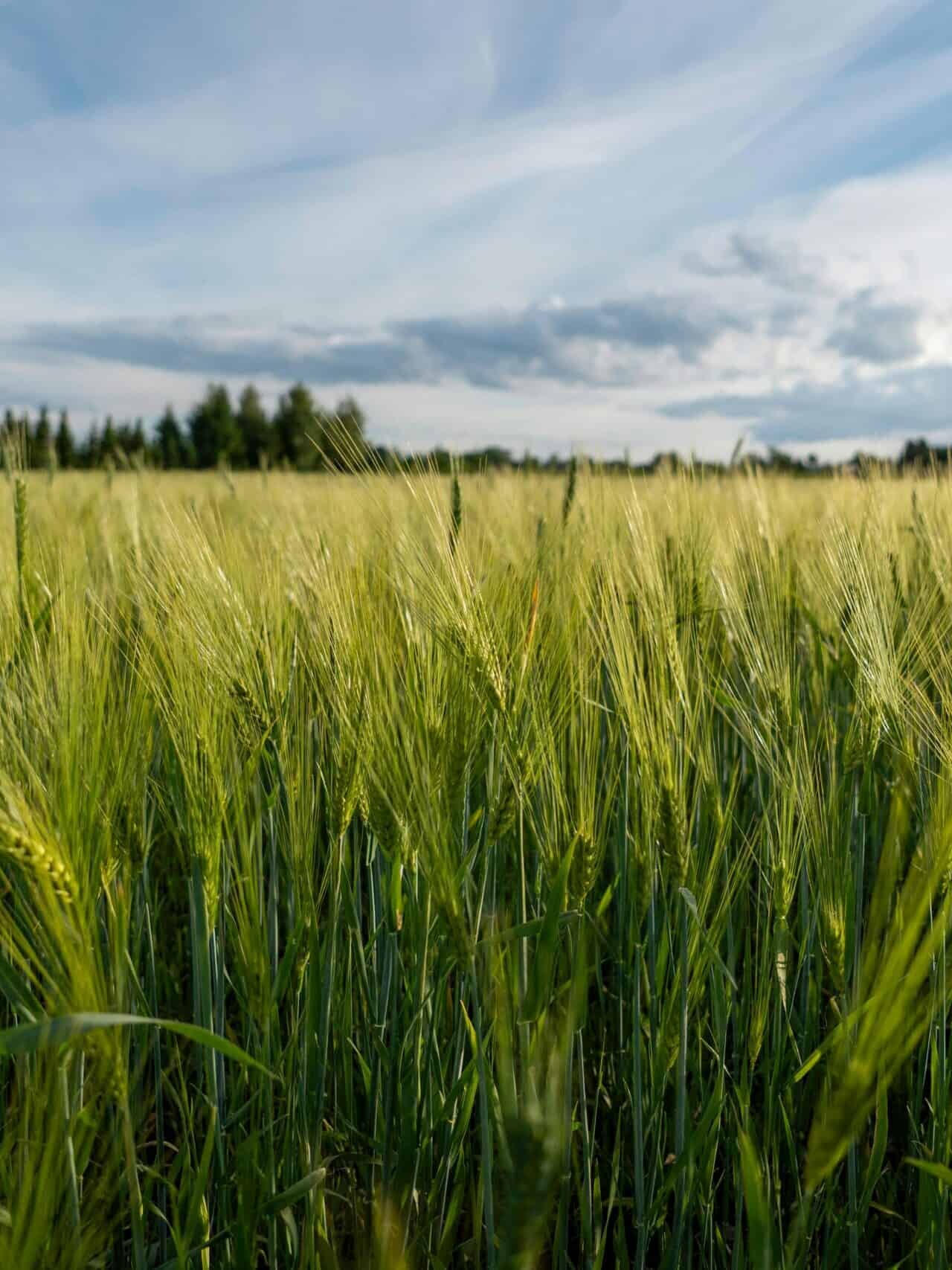
Organic farmers are continuously in search of sustainable crop substitutes. Recently, hybrid winter rye – a winter-hardy, high-yielding grain crop with soil structure-enhancing properties – has gained attention as a potential alternative to corn, soybean, or wheat in organic swine diets. Previous studies on hybrid rye have suggested that, compared to corn, hybrid rye can enhance the production of short-chain fatty acids (SCFAs), improving gut health and subsequently impacting lipid synthesis, protein deposition, meat color, and other pork quality characteristics.
This study, conducted by the University of Minnesota, evaluated the effects of including hybrid rye in the diets of organically-raised pigs on pork quality, carcass traits, and taste.
Farmer Takeaways
- Hybrid winter rye could be an effective, sustainable substitute for corn in diets for growing-finishing pigs in an organic production system. Replacing 50% of corn with hybrid winter rye did not negatively impact carcass traits, pork quality, or taste.
- Further research is needed to understand the soil health/environmental benefits possible from this shift, as well as any differences in production costs. Furthermore, further research is needed to determine the maximal inclusion rate of hybrid winter rye in organic swine diets that can maintain or improve quality and consumer eating quality of organic pork.
Project Objectives and Approach
Evaluate the impacts of incorporating hybrid winter rye into organic swine diets on pork quality, carcass traits, and taste
- A study was conducted at the University of Minnesota’s West Central Research and Outreach Center (WCROC) in Morris, Minnesota. All pigs were managed according to standards established by the National Organic Program (NOP) and verified by the Midwest Organic Services Association. All diets fed to pigs consisted of certified organic ingredients and were formulated to meet or exceed nutritional requirements of pigs at each production stage.
- Pigs were weaned at 6 weeks of age. At 8 weeks, pigs were transferred to growing-finishing hoop barns. Each hoop barn was divided into two pens, with fifty pigs housed in each pen. Within each hoop barn (block), two dietary treatments were tested: (1) a control diet, consisting primarily of corn and soybean meal, and (2) the rye diet, where 50% of the corn from the control diet was replaced with organic hybrid winter rye.
-
- The study began when pigs reached 10 weeks and lasted until they reached market weight (~127 kg, or 23 weeks). Throughout the study, pigs were allowed ad libitum* access to feed and water.
-
- *ad libitum: as much or as often as necessary or desired
-
- The study began when pigs reached 10 weeks and lasted until they reached market weight (~127 kg, or 23 weeks). Throughout the study, pigs were allowed ad libitum* access to feed and water.
-
- Five total blocks (500 total pigs) were tested over the course of two years.
- Pigs were weighed individually every four weeks, and data was collected on average daily gain (ADG) and average daily feed intake (ADFI). When pigs reached market weight (~127 kg), 8 pigs/pen from each treatment (balanced for sex) were selected for evaluation of carcass and pork quality characteristics, including dressing percentage, back fat thickness at the 1st and 10th rib, carcass length, pork pH, pork color, and intramuscular fat (marbling).
-
- 73 consumer panelists were recruited for sensory (taste) evaluation. Pork chops were thawed, trimmed of excess fat/tissues, and baked before sampling. Each panelist evaluated the samples for characteristics including toughness, juiciness, off-flavor, and overall ‘liking.’
-
Key Findings
Incorporating hybrid winter rye into the diets of organic pigs did not significantly influence carcass traits, pork quality measures, or consumer preferences
- Dietary treatment did not affect carcass traits, including hot carcass weight, cold carcass weight, dressing percentage, carcass length, and back fat depth at the 1st and 10th ribs.
- Similarly, dietary treatment did not affect pork quality measures, including pH, color, and marbling.
- When sampled for taste/texture/likability, pork chops did not differ between treatments for overall ‘likability,’ juiciness, and off-flavor. However, pork from pigs fed rye diets tended to be slightly tougher than pork from pigs fed the control diet. These findings suggest that incorporating hybrid winter rye into the diets of organic pigs can maintain pork quality.
Resources
Kavanagh, M., Lima, G., Hilbrands, A., Cox, R., Johnston, L., & Li, Y. (2025). Effects of dietary hybrid rye on quality and consumer eating quality of pork from pigs raised under organic conditions. Organic Agriculture, 15(3), 529–539.
Read MoreLocation
MinnesotaCollaborators
Gabriella Lima, University of Minnesota
Adrienne Hilbrands, University of Minnesota
Ryan Cox, University of Minnesota
Lee Johnston, University of Minnesota
Megan Kavanagh, University of Minnesota
Region
Midwest
Topic
Soil Health, Livestock Feeding, Post-Harvest Quality and Safety
Category
Grain and Field Crops, Livestock
Year Published
2025