Project Overview
Fertilizers, which provide essential nutrients to crops throughout the growing season, are an important component of many agricultural systems. In addition to their impacts on crop productivity/growth, fertilizers can also influence a crop’s pest tolerance, either directly (via morphological changes to the crop that encourage or discourage consumption by pests) or indirectly. Despite a lack of research on how impacts to pest tolerance may differ between organic and synthetic fertilizers, researchers postulate that organic fertilizers – which support a more robust/diverse soil microbial community – may provide some benefits to a crop’s ability to withstand pests.
This study, conducted by researchers at Washington State University, evaluated the effects of organic and synthetic fertilizer inputs on insect pest populations in two quinoa varieties suited to the Pacific Northwest.
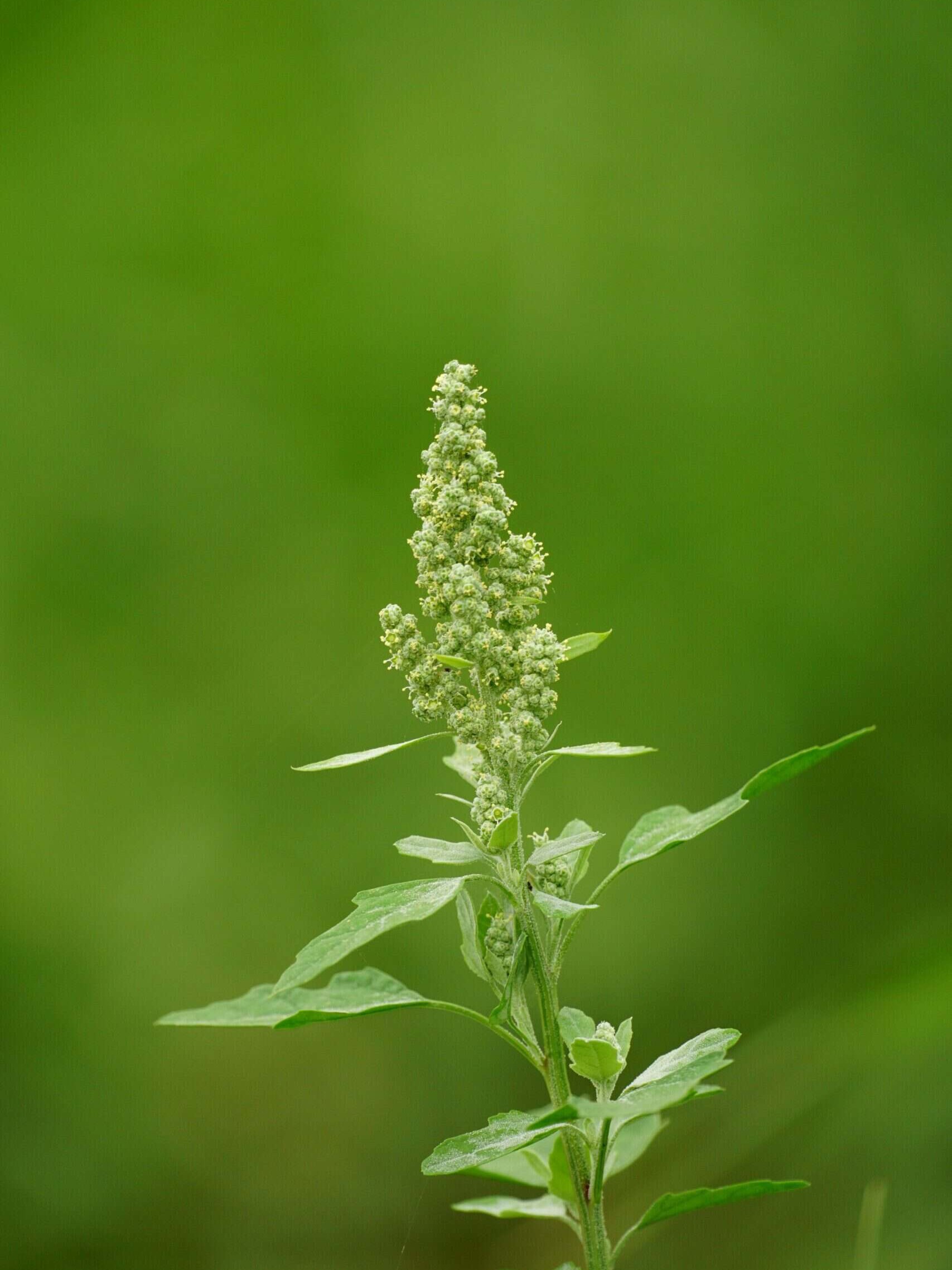
Farmer Takeaways
- Organic fertilizers may provide some protection against certain insect pests, but may weaken plant defenses against others. Additional research on these interactions is needed, and farmers will need to consider which insect pests pose the greatest threat to their production systems.
- Organic chicken manure provided some protection against cowpea aphids, but not against Lygus bugs.
- In an open-field setting, quinoa variety had no impact on insect pest populations.
Project Objectives and Approach
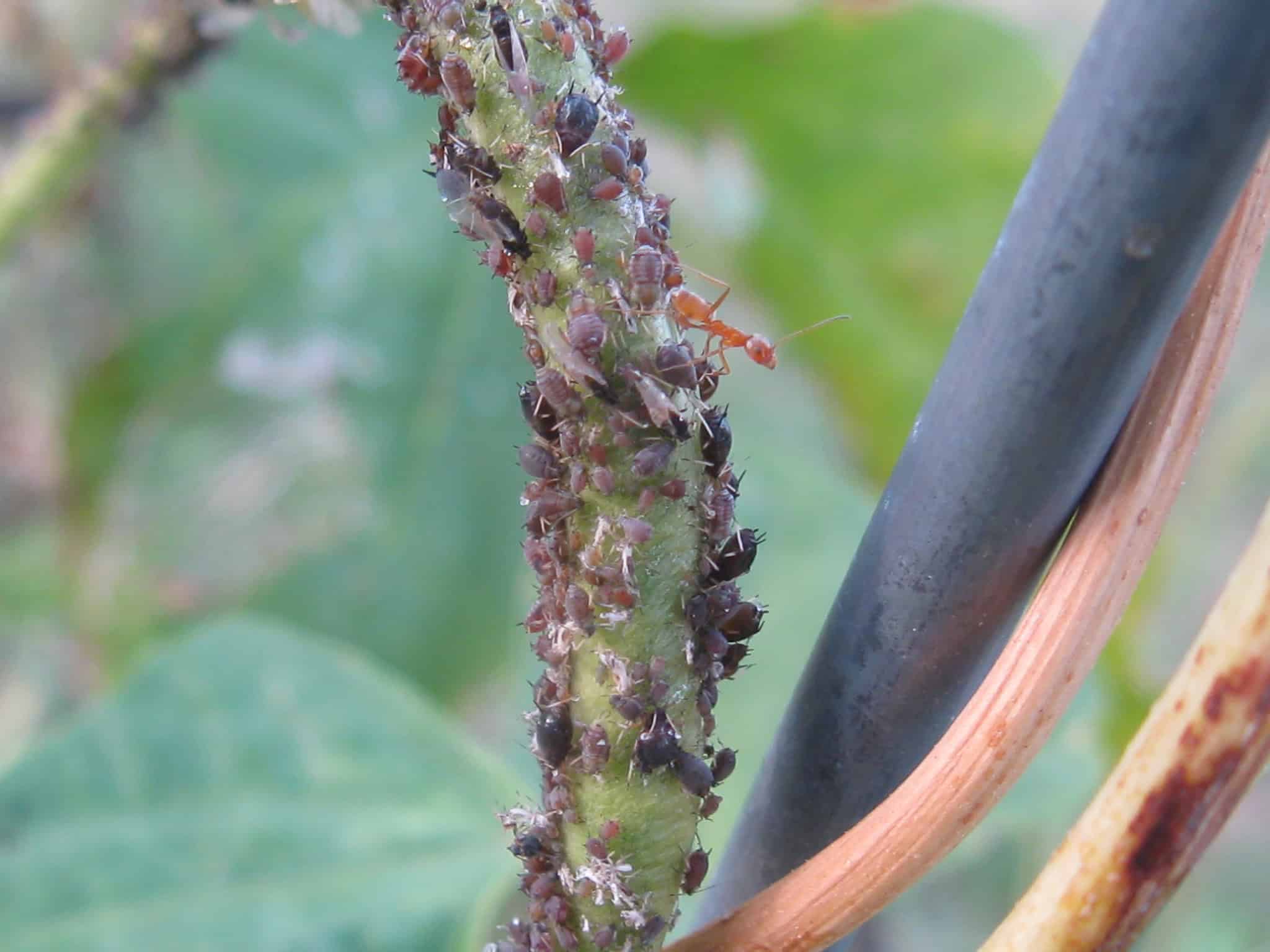
Evaluate the impacts of organic and synthetic fertilizers on population growth and survival of two key insect pests – cowpea aphid and Lygus bugs – in two varieties of quinoa
Greenhouse Trial:
- A greenhouse trial was established to assess fertilizer and quinoa variety effects on cowpea aphids.
-
- Fertilizer treatments included: (1) organic chicken manure (Perfect Blend 4-4-4), (2) synthetic granular (Osmocote 14-14-14), and (3) an unfertilized control. Application rates for each fertilizer were calculated to provide ~2gN for each 3L pot of soil.
- Quinoa variety treatments included: (1) Titicaca and (2) Cherry Vanilla. **Note: The Titicaca variety is known to contain high quantities of saponin, a plant secondary metabolite (PSM) that can act as a chemical insect pest deterrent.
-
- Quinoa plants were seeded, thinned, and placed in individual mesh cages.
- Five adult cowpea aphids were placed on a leaf on the top third of each plant, and two leaves per plant were collected and sampled for ‘pre-aphid’ levels of jasmonic acid, salicylic acid, and abscisic acid.* Final aphid counts were taken 9 days later (one aphid-generation), and two more leaves were sampled.
-
- *Jasmonic acid, salicylic acid, and abscisic acid are all vital plant hormones that act as chemical messengers, coordinating immune responses and stress tolerance when a plant is attacked by pathogens or herbivores.
-
Field Cage Trial:
- A second experiment was conducted in field cages to assess the impacts of fertilizer and quinoa variety on Lygus bug survival and reproduction. The same fertilizer and variety treatments were used.
- Quinoa plants were seeded, thinned, and placed in the ground with a mesh cage over each.
- Eight adult Lygus bugs (four male, four female) were placed on each plant and re-counted every 2 days for 9 days. Identical to the greenhouse trial, leaf tissue samples were collected and sampled for ‘pre-Lygus bug’ and ‘post-Lygus bug’ levels of jasmonic acid, salicylic acid, and abscisic acid.
Open Field Trial:
- A similar experiment was conducted with open-field quinoa, using the same fertilizer and quinoa variety treatments.
- Fertilizers were broadcast and tilled into their respective plots at a standardized rate of 56kg N/hectare one week prior to planting.
- After planting, visual observations of insect pests (both cowpea aphids and Lygus bugs) were taken weekly on 10 random plants per plot.
Assess the impacts of organic and synthetic fertilizers inputs on quinoa plant defense gene expression
- Bioassays were conducted on quinoa plant tissue samples collected from ‘pre’ and ‘post’ aphid and Lygus infestation in the greenhouse and field cage trials. These bioassays assessed the expression of genes responsible for the production of jasmonic, salicylic, and abscisic acid.
Key Findings
Greenhouse Trial:
- Cowpea aphid abundance was significantly higher on quinoa plants grown with the synthetic granular fertilizer than with the organic chicken manure.
- Quinoa variety did not influence cowpea aphid abundance.
Field Cage Trial:
- Lygus bug survival was higher on quinoa plants grown with organic chicken manure than on plants grown with no fertilizer or with the synthetic granular fertilizer.
- Lygus bug survival and egg counts were higher on the Titicaca variety than on the Cherry Vanilla variety, despite the Titicaca variety having been selected for the study due to its high saponin content.
Open Field Trial:
- In the open field experiment, neither cowpea aphid nor Lygus bug populations were affected by quinoa variety.
- Cowpea aphid counts were marginally smaller on quinoa grown with organic chicken manure than with synthetic fertilizer or no fertilizer.
- Lygus bug populations were not impacted by fertilizer treatment.
Resources
Oeller, L., Lee, B. W., Basu, S., Murphy, K. M., & Crowder, D. W. (2025). Effects of Organic and Synthetic Fertiliser on Insect Herbivore Populations in Quinoa. Journal of Applied Entomology, 149(4), 515–523.
Read MoreLocation
WashingtonCollaborators
Benjamin Lee, Washington State University
Saumik Basu, Washington State University
Kevin Murphy, Washington State University
David Crowder, Washington State University
Region
Northwest
Topic
Insect/Pest Management
Category
Grain and Field Crops
Year Published
2025