Project Overview
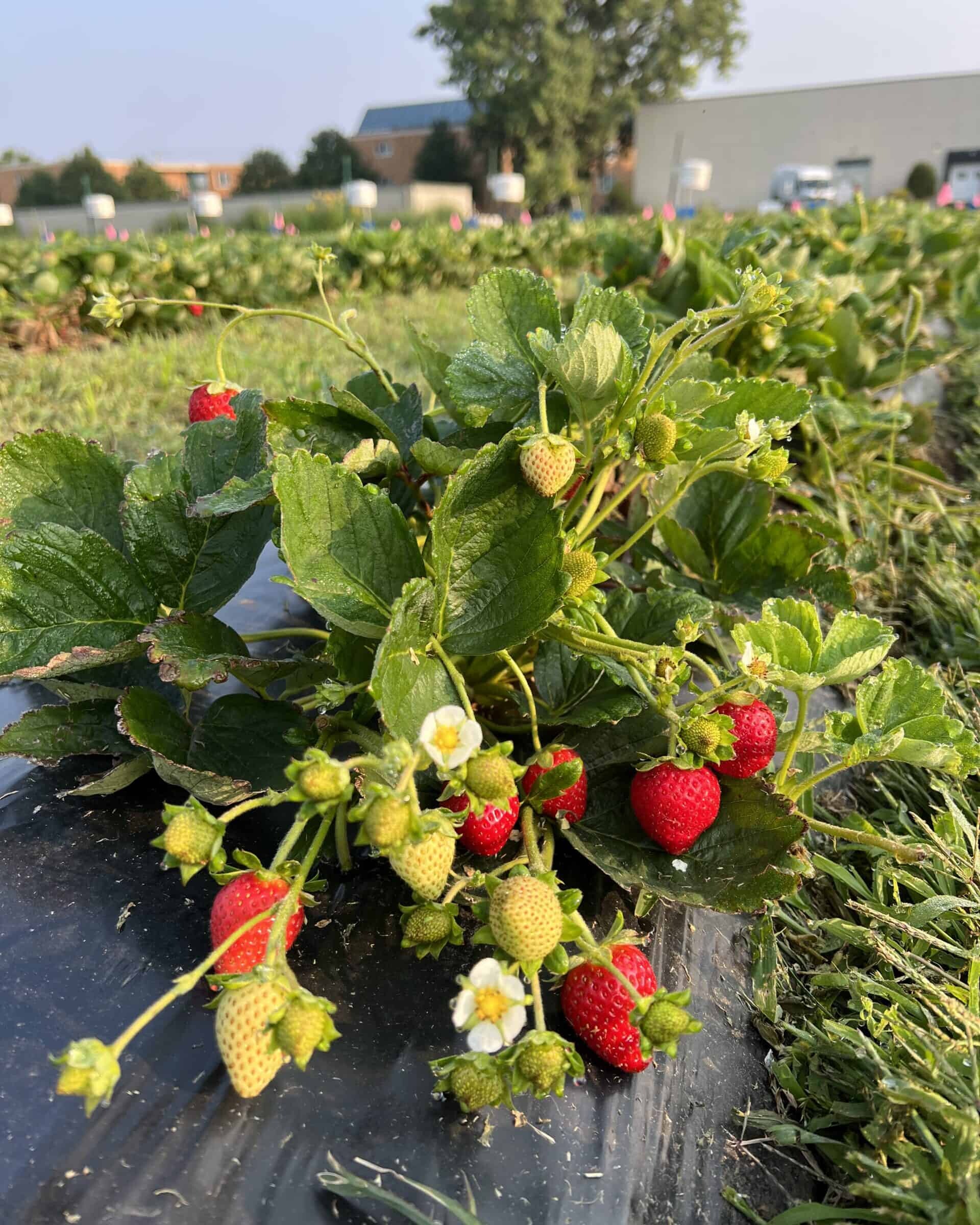
Day-neutral strawberries (DNS) are a strawberry cultivar that can flower and fruit continuously throughout the growing season (from early summer to fall), rather than producing one large crop, as is customary for June-bearing strawberries. Recently, day-neutral strawberries have gained attention for their potential to extend the strawberry harvest season, increase total yields, and provide growers with a steady supply of berries during less competitive times of the year. However, effective pest management and high labor demands pose significant challenges to strawberry production, especially in organic production systems.
Spotted-wing drosophila (SWD), a species of fruit fly, is one of the major insect pests threatening organic strawberry production. SWD deposit their eggs into ripening soft fruits and the larvae feed on the interior of the fruit, which can result in decreased marketability or rejection by distributors/consumers.
This study, conducted over two years in St. Paul, MN, evaluated the effects of several spotted-wing drosophila management tactics (increased harvest frequency, botanical-based repellents, and weekly rotations of organic insecticides) on organic day-neutral strawberry production.
Farmer Takeaways
- The evaluated spotted-wing drosophila treatments did not appear to impact SWD infestation (# of eggs/fruit, proportion of infested fruits) enough to influence overall strawberry crop characteristics at harvest.
- Implementing pest control treatments incurs significant additional labor expenses, which may reduce the profitability of organic day-neutral strawberry production systems in the Midwest.
Project Objectives and Approach
To compare the efficacy of several spotted-wing drosophila (SWD) control methods in organic day-neutral strawberry production systems
- A two-year field trial was established at the University of Minnesota, St. Paul Agricultural Experiment Station. Day-neutral strawberries (cultivar Cabrillo) were planted in May of both trial years in raised beds. Plots were fertigated using drip tape applicators under plastic mulch at a rate of 5.6 kg/ha fertility solution per week (Neptune’s Harvest Fish and Seaweed Fertilizer 2-3-1). Runners and weeds were removed weekly.
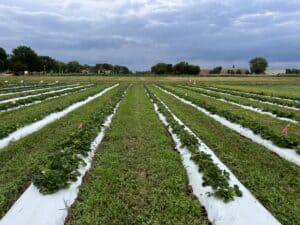
- The four treatments included: (1) a botanical oil-based deterrent (Key-Plex Ecotrol Plus), sprayed weekly; (2) increased harvest frequency; (3) a weekly rotation of organic insecticides (Entrust SC Naturalyte Insect Control (Dow Agrosciences) and Grandevo WDG (Marrone Bio Innovations)); and (4) an untreated control.
-
-
- All plots were harvested twice weekly, except for the frequent harvest treatment plots, which were harvested three times weekly. At each harvest, all fully-ripe berries were harvested from the interior 30 plants within each plot and immediately placed into coolers to be transported and weighed. Data was collected on the % marketable fruit at each harvest.
- Five randomly-selected berries per treatment plot per harvest were analyzed under a microscope for SWD infestation.
- Botanical-based deterrent and organic insecticides were not applied until SWD eggs were observed in fruit, after which sprays were applied weekly at the maximum label rate.
-
To evaluate the economic viability of spotted-wing drosophila control methods in organic day-neutral strawberry production systems
- Direct material and labor costs for each treatment were estimated.
- Gross returns were calculated by multiplying yield per plant for each treatment by the observed 2-year average Minneapolis farmers market price ($17.64/kg). Gross sales per hectare were calculated by multiplying the number of plants per hectare by the gross return per plant.
- Net returns were calculated by subtracting direct and indirect costs from gross sales.
Key Findings
Spotted-wing drosophila treatment had little-to-no effect on day-neutral strawberry production variables and SWD infestation
- Total cumulative yield (g/plant), marketable yield (g/plant), number of strawberries per plant, and strawberry mass (g) were similar among all treatments (including the untreated control) for both years.
- The average number of SWD eggs per strawberry (1.5-2.3) was similar among all treatments across both years.
- The proportion of SWD-infested fruit was similar among all treatments for one of the two trial years; in the other year, the only significant treatment difference was between the organic insecticide treatment and untreated control, with the organic insecticide treatment resulting in a lower proportion of infested fruit.
The spotted-wing drosophila treatments were less profitable than the untreated control, largely due to added labor expenses
- Assuming no difference in marketable yield between the treatments, net returns (profit after subtracting associated costs) were significantly higher for the untreated control group than for any of the SWD treatments.
- The added labor expense of implementing the pest control treatments, which had no effect on SWD management or strawberry yield, resulted in lower net returns than the untreated control.
-
- Labor costs accounted for between 86% (untreated control) and 88% (organic insecticide treatment) of the field trials’ direct costs.
-
Resources
Gullickson, M. G., DiGiacomo, G., & Rogers, M. A. (2024). Efficacy and Economic Viability of Organic Control Methods for Spotted-wing Drosophila in Day-neutral Strawberry Production in the Upper Midwest.
Read MoreLocation
MinnesotaCollaborators
Matthew Gullickson, University of Minnesota
Gigi DiGiacomo, University of Minnesota
This research was funded by the USDA Sustainable Agriculture Research and Education (SARE) Program (LNC21-457).
Region
Midwest
Topic
Insect/Pest Management
Year Published
2024