Project Overview
When managed properly, integrated crop-livestock systems can improve soil health, promote nutrient cycling, reduce the need for external inputs, diversify farm income, and more. However, several safety considerations arise when integrating livestock and crops; in particular, food safety. Raw manure can carry pathogens such as Salmonella and E. coli, which can contaminate crops if not properly managed. Vegetable production poses an especially high contamination risk.
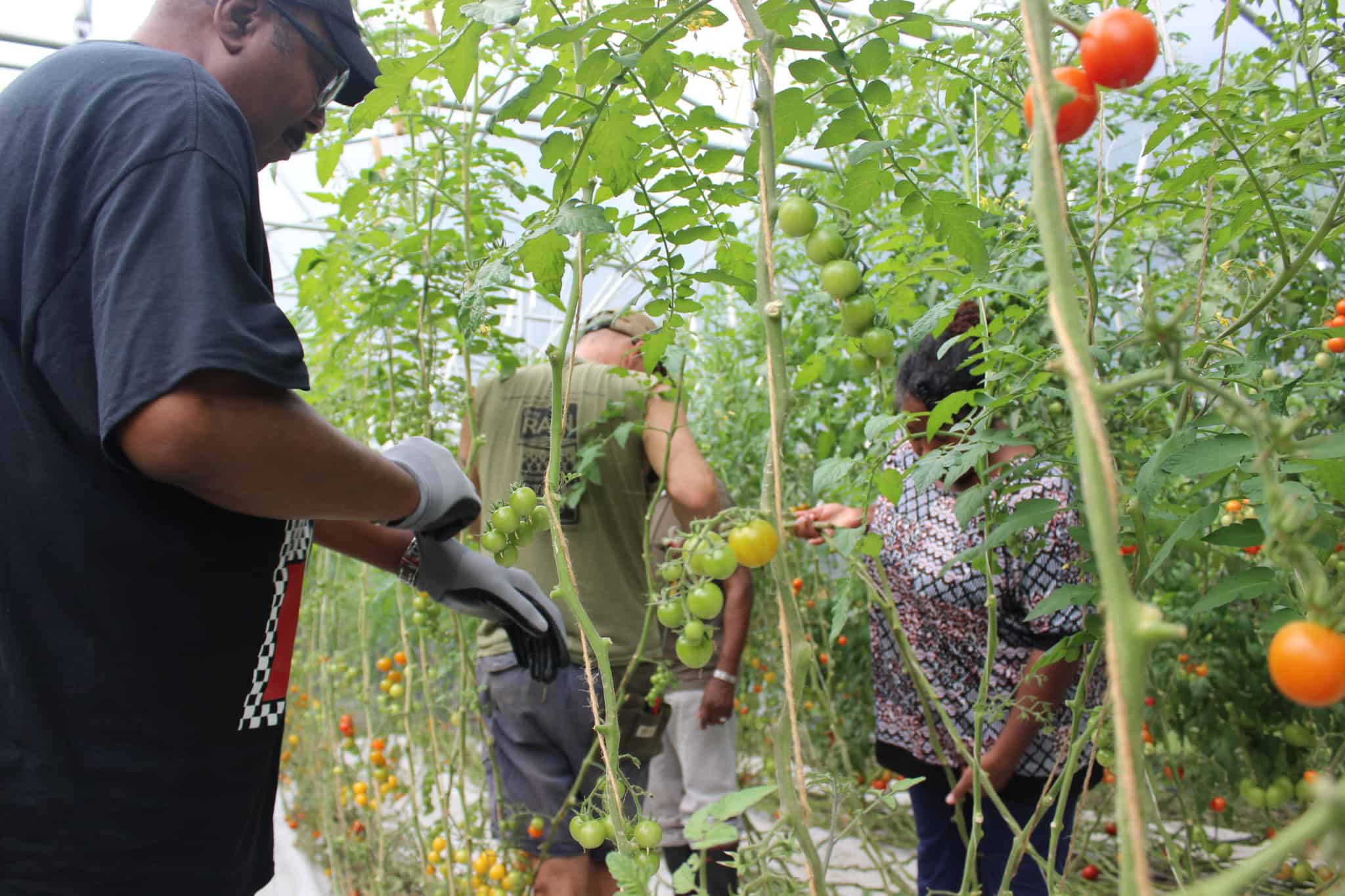
This study, conducted by researchers at Iowa State University, examined poultry integration in an organic summer vegetable system. The goal was to determine whether poultry raised in the summer or fall after spring vegetables could be safely integrated into a vegetable crop rotation while enhancing soil health. Results from this study can inform organic growers on how to address food safety issues when implementing integrated crop-livestock systems.
Farmer Takeaways
- Poultry integration in the summer or fall preceding a spring vegetable crop did not increase pathogen presence on harvested vegetables or in the soil.
- A winter fallow period between poultry integration and a spring vegetable crop was sufficient to mitigate food safety risks in the spring vegetable crop.
- Soil health metrics such as nitrate, phosphorus, and microbial biomass carbon improved over time with poultry inclusion.
Project Objectives and Approach
Demonstrate the effects of an integrated poultry-vegetable system on soil health and crop yield
- A small-plot field experiment was established on certified organic land at the Iowa State University Horticulture Research Station (Ames, IA). Three crop/livestock rotation sequences were evaluated, including:
- Vegetable/Cover Crop/Vegetable (Control): Spring vegetable, summer cover crop, fall vegetable
-
- Year 1: broccoli, crimson clover + oat, romaine lettuce
- Year 2: pepper, crimson clover + oat
- Year 3: spinach, crimson clover + oat, carrot
-
- Vegetable/Cover Crop/Poultry: Spring vegetable, summer cover crop, fall poultry
-
- Year 1: broccoli, crimson clover + oat, Red Ranger chicken
- Year 2: lettuce, crimson clover + oat, Imperial chicken
- Year 3: spinach, crimson clover + oat, Imperial chicken
-
- Vegetable/Poultry/Cover Crop: Spring vegetable, summer poultry, fall cover crop
-
- Year 1: broccoli, Red Ranger chicken, cereal rye
- Year 2: lettuce, Imperial chicken, cereal rye
- Year 3: spinach, Imperial chicken, cereal rye
-
- Vegetable/Cover Crop/Vegetable (Control): Spring vegetable, summer cover crop, fall vegetable
- **Note: Vegetable and cover crop species varied by year and crop rotation order in order to reflect a typical organic vegetable enterprise where there is a 3+ year separation between crops within the same family.
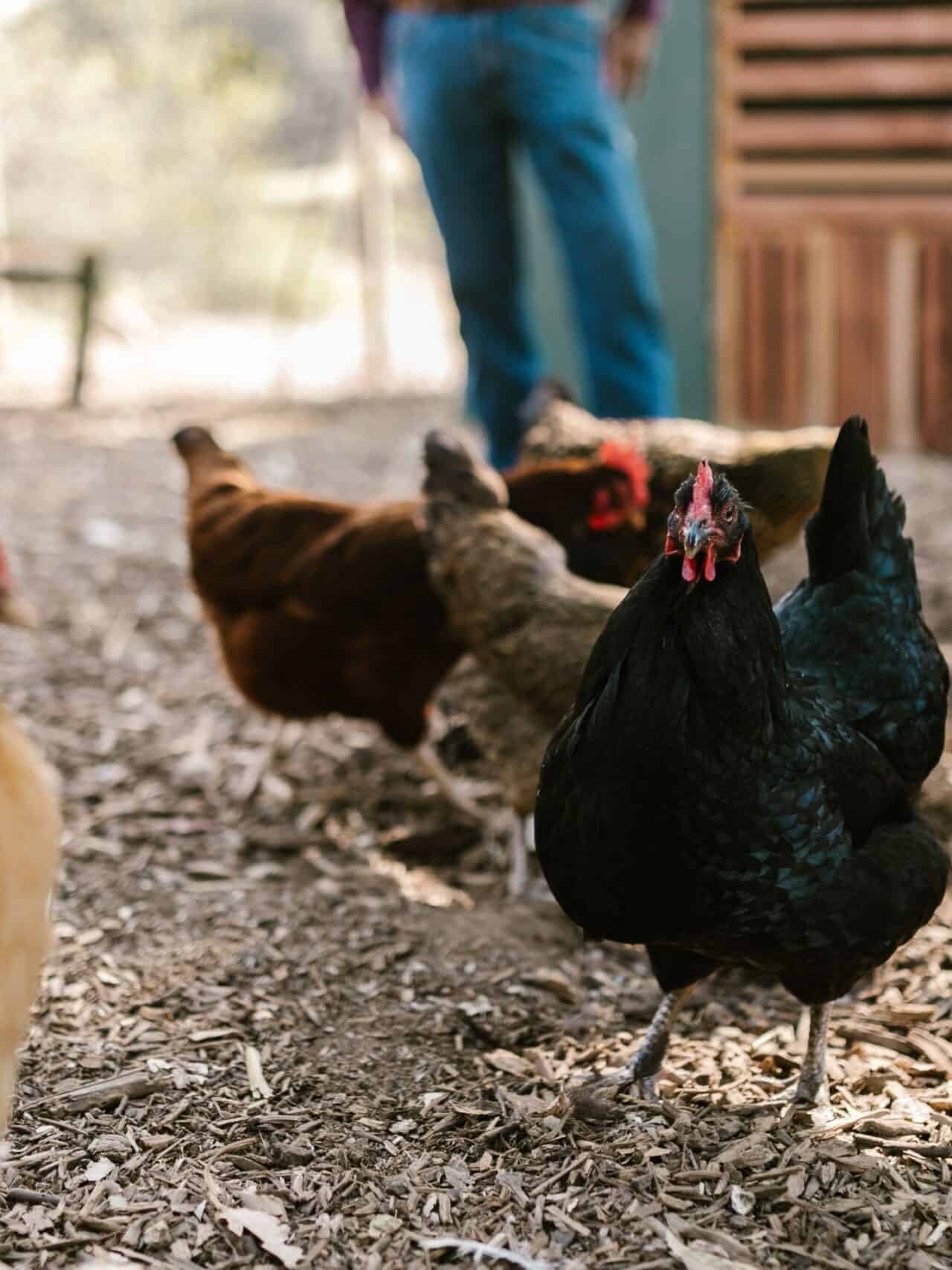
- Chickens were introduced in mobile coops, enclosed with electric fencing, and rotated to prevent over-foraging.
- Soil samples were collected several times throughout the multi-year trial to assess soil health, including nutrient levels, microbial activity, and organic matter (SOM).
- The researchers also recorded crop yield, chicken weight gain, feed consumption, and feed conversion.
Evaluate food safety outcomes of vegetable production following poultry in the prior summer or fall
- Soil and vegetable tissue samples were collected and assessed for E.coli and Salmonella.
- Spinach was grown in the spring of Year 3 for all treatments and tested for pathogen presence at harvest.
- Pathogens were quantified using standard microbiological methods to assess contamination risk.
Key Findings
Pathogen detection rates were similar across all crop rotations, regardless of poultry presence
- E.coli was detected at similar rates in soil samples across all treatments, and Salmonella was not detected in the soil for either of the poultry treatments, suggesting that the presence of poultry did not increase soil pathogens.
- No pathogens were detected on spinach harvested in spring of Year 3 for any of the treatments, suggesting that – regardless of whether poultry was raised in the preceding summer or fall, the winter fallow period appeared to be sufficient to reduce pathogen risk to the spring vegetable crop.
Integrating poultry into an annual vegetable crop rotation can improve certain aspects of soil health, but should be monitored/managed carefully to avoid overapplication of nutrients like nitrate (NO3-N) and phosphorus (P)
- Soil nitrate (NO3-N) levels were ~2x higher in poultry treatments immediately following poultry removal than in the non-poultry treatment. These findings indicate that poultry manure can increase plant-available forms of nitrogen, which can either be utilized by subsequent crops or must be managed accordingly to prevent nitrate leaching.
- Soil phosphorus (P) levels increased across all treatments over the course of the experiment.
- Integrating poultry increased microbial biomass carbon by an average of 25% across all sampling dates, suggesting that poultry manure may enhance soil microbial activity.
- Organic matter levels remained unchanged across all treatments.
Resources
Bilenky, M. T., Nair, A., McDaniel, M. D., Shaw, A. M., Bobeck, E. A., & Delate, K. (2024). Integrating pastured meat chickens into organic vegetable production increased nitrogen and microbial biomass with variability in presence of E. coli and Salmonella spp. Renewable Agriculture and Food Systems, 39, e11.
Read MoreLocation
IowaCollaborators
Ajay Nair, Iowa State University
Marshall McDaniel, Iowa State University
Angela Shaw, Texas Tech University
Elizabeth Bobeck, Iowa State University
Kathleen Delate, Iowa State University
Region
Midwest
Topic
Soil Health, Crop Nutrient Management, Livestock Feeding, Livestock Well-Being, Post-Harvest Quality and Safety
Category
Vegetables/Fruits, Grain and Field Crops, Livestock
Year Published
2024