Project Overview
Managing weeds and improving soil health are two areas of importance for organic farmers; however, achieving high levels of weed control in organic production systems often comes at the cost of soil health, due to the reliance upon mechanical weed control strategies (i.e., tillage, cultivation), which disrupt the soil. Living mulches, which are low-growing plants grown beneath cash crops or between vegetable rows, can improve soil health, conserve moisture, and suppress weeds, thereby reducing the need for mechanical weed control in organic systems. However, living mulches need to be managed carefully, as they can sometimes compete with the cash crop for essential nutrients.
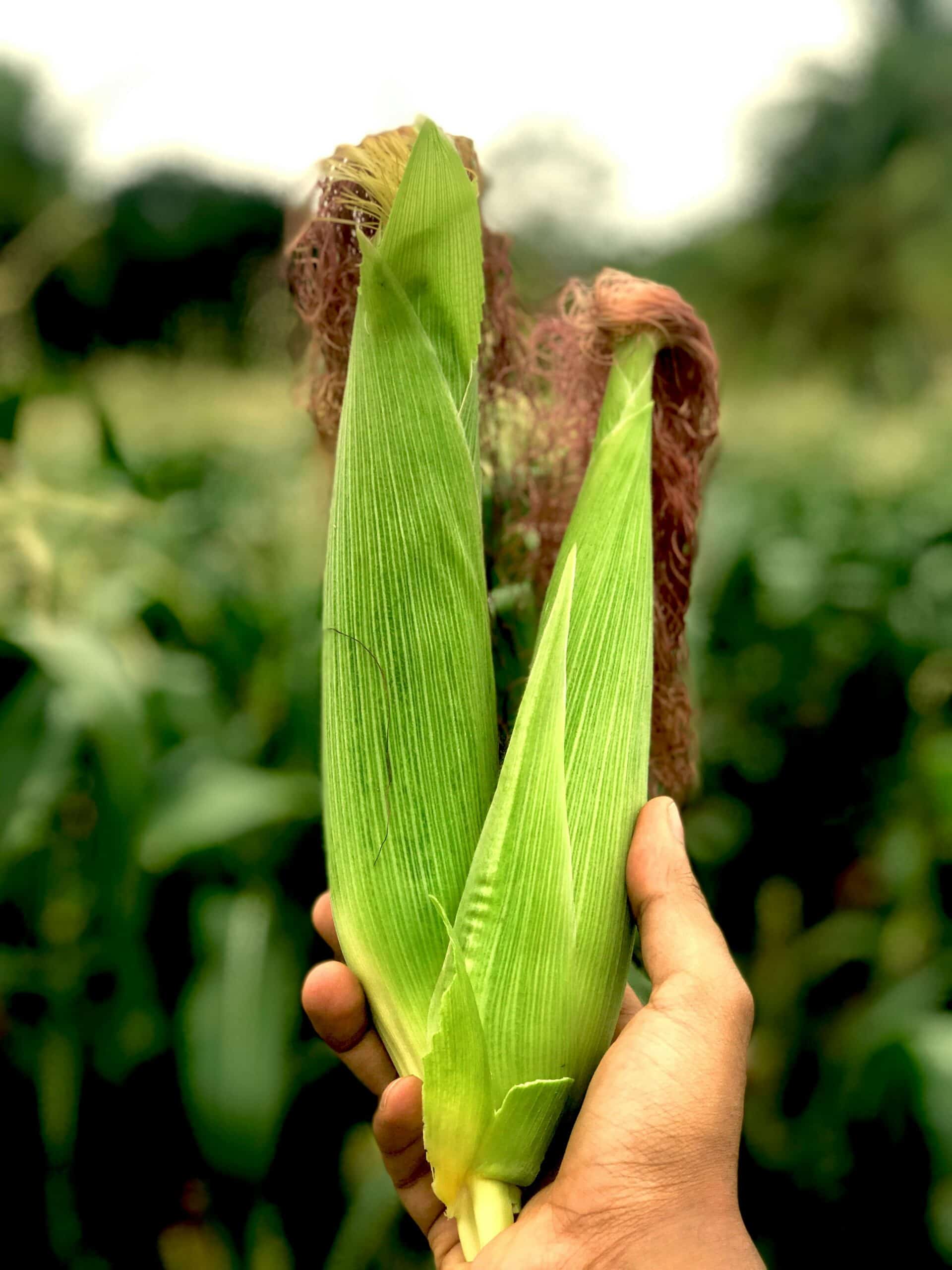
This study, conducted by the University of Wisconsin, evaluated red clover as a living mulch within an organic grain corn production system. The researchers examined the impacts of several mulch management practices (undercutting, flaming, roller-crimping, and high-residue cultivation) on red clover and corn performance.
Farmer Takeaways
- Undercutting and flame weeding may be beneficial management strategies for a red clover living mulch. Both of these practices resulted in greater final corn yields than the no-till treatment.
- Using a high-residue cultivator reduced clover biomass but did not affect corn yield.
- Undisturbed living mulches are effective at suppressing weeds, and management strategies that disturb living mulches (i.e., tillage, cultivation, roller-crimping) allow for weed growth.
Project Objectives and Approach
To evaluate the impacts of several living mulch management strategies (pre- and post-corn planting) on red clover growth, weed suppression, and corn grain yield.
- A field experiment was conducted from 2021-2022 at the University of Wisconsin Arlington Agricultural Research Station, with red clover as the living mulch and organic grain corn as the cash crop.
- Mulch management factors consisted of:
- Pre-Corn Planting (2 treatments):
- Undercutting: immediately before seeding corn, a high residue cultivator was used to create planting strips by slicing clover roots just below the soil surface. The intention was to terminate the living mulch within the planting zone, while leaving the clover between planting strips untouched.
- No-Till: corn was seeded directly into the red clover living mulch.
- Post-Corn Planting (2 treatments):
- Flame Weeding: immediately after seeding corn, the clover living mulch between corn rows was flame-weeded. **Note: Flame weeding damages the top growth of a clover living mulch, but due to clover’s deep root system, the clover will likely grow back.
- No Flame Weeding: no flame weeding occurred.
- In-Season Clover Management (3 treatments):
- Inter-Row Roller Crimping: the clover living mulch between corn rows was roller-crimped twice, 2- and 4-weeks post-corn planting.
- High-Residue Cultivation: a high-residue cultivator was passed between corn rows 4-weeks post-corn planting.
- Combination: the clover living mulch was roller-crimped 2-weeks post-corn planting and cultivated with a high-residue cultivator 4-weeks post-corn planting.
- Pre-Corn Planting (2 treatments):
- Data was collected on red clover height and biomass (prior to and after management strategies), weed biomass, corn population counts, and corn yield.
Key Findings
In-season high-residue cultivation reduced between-row red clover biomass compared to roller crimping, but corn yield was unaffected
- Red clover biomass between the corn rows averaged 465 lb/ac for high-residue cultivation compared to 741 lb/ac in the roller crimping treatment.
- Corn yield averaged 70 bu/ac in the high-residue cultivation treatment and 74 bu/ac in the roller crimping treatment. These findings suggest that high-residue cultivation may limit the regrowth of a clover living mulch more than roller-crimping, but that the observed reduction in living mulch biomass didn’t impact weed suppression enough to affect final corn crop yield.
Compared to no-till corn planting, undercutting or flame weeding the red clover living mulch at planting resulted in greater corn yield
- Corn yields were 86 bu/ac for the undercut treatment, 79 bu/ac for the flame weeding treatment, and 60 bu/ac for the no-till treatment, suggesting that both undercutting and flame weeding may be beneficial living mulch management strategies, enhancing cash crop yields.
-
- **Note: The greater corn yields observed in the undercut treatment were likely attributable to an increase in soil temperature caused by tillage, as higher soil temperatures can lead to quicker crop emergence. Additionally, undercutting may have reduced early-season competition for soil nutrients and light between the clover and cash crop.
-
Effects on weed management varied and depended on treatment, and were likely attributed to where soil disturbance occurred in the treatments (in or between the crop row)
- Undercutting the red clover living mulch increased weed biomass in the crop row, and high-residue cultivation increased weed biomass between the crop row. These results suggest that the presence of an (undisturbed) living mulch suppresses weeds, and disturbing a living mulch (via cultivation, tillage, roller-crimping, etc.) allows for weed growth.
- Soil disturbance can stimulate weed seed germination, and coupled with living mulch disturbance, can create an environment for weed emergence and growth.
Resources
Brockmueller, B., Drewry, J. L., Vereecke, L., Silva, E.M., & Luck, B. (2025). Mechanical management strategies improve corn production in organically managed living mulch systems. Agronomy Journal, 117, e70100.
Read MoreLocation
WisconsinCollaborators
Jessica L. Drewry, Department of Biological Systems Engineering, University of Wisconsin, Madison
Léa Vereecke, Department of Plant Pathology, University of Wisconsin, Madison
Erin M. Silva, Department of Plant Pathology, University of Wisconsin, Madison
Brian Luck, Department of Biological Systems Engineering, University of Wisconsin, Madison
Region
Midwest
Topic
Soil Health, Weed Management, Cropping Systems
Category
Grain and Field Crops
Year Published
2025