Project Overview
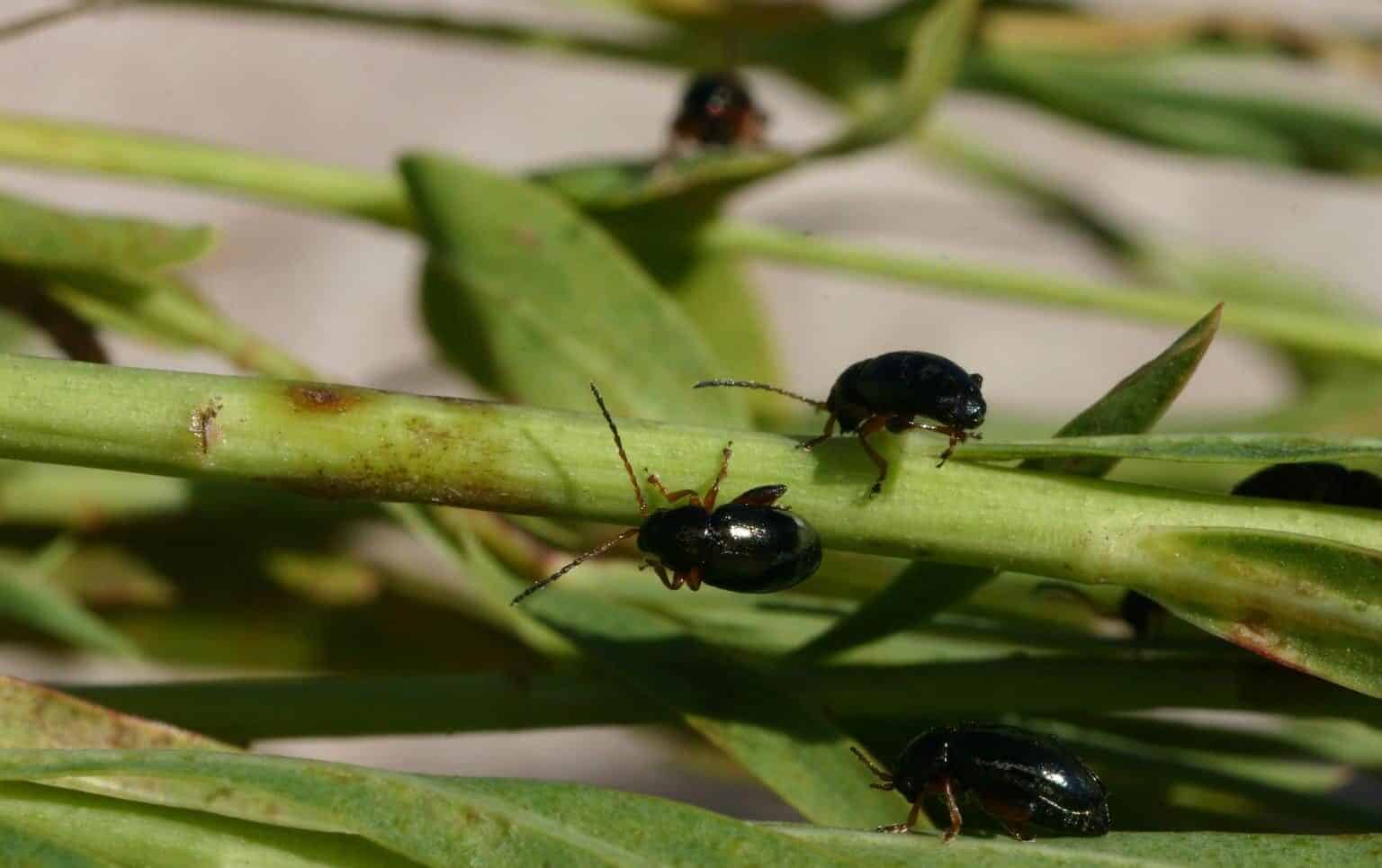
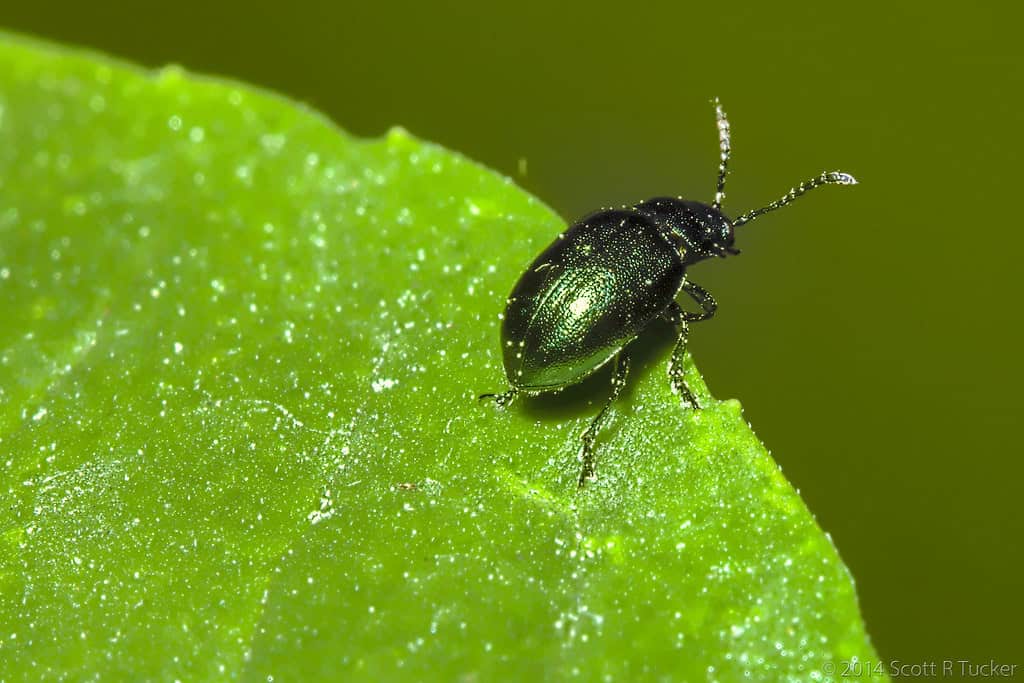
Flea beetles are a major insect pest of eggplants. They cause damage by feeding on leaves, often creating clusters of tiny holes across the leaf surface, which can result in defoliation (the loss/removal of leaves) and a reduction in overall plant health and eggplant yield. Flea beetles can rapidly infest entire fields, so preventative and timely management strategies are needed. For organic producers, organic insecticides can be an effective management strategy against flea beetles; however, these products often have a short residual activity and can negatively impact non-target insects and pollinators.
As such, additional strategies are needed for effective flea beetle management in organic eggplant production systems. Several potential options are growing in popularity, including the use of aromatic essential oil sprays, reflective mulch, and protective row covers. Protective row covers are transparent or semi-transparent mesh sheets that are draped or suspended over crop plants to create a physical barrier against insects. This approach can be particularly useful, because it serves as a preventative strategy, rather than a restorative one.
Between 2019 and 2024, researchers at the University of Kentucky compared row covers against other organically-acceptable flea beetle management options in eggplant production systems, including organic insecticides, essential oils, and reflective mulches.
Farmer Takeaways
- Protective row covers, regardless of material (spunbonded vs. fine mesh), fineness (25g vs. 85g fine mesh), and pollination strategy (on-off vs. open-end) can reduce flea beetle abundance in organic eggplant production systems compared to an untreated control.
- Row covers may be particularly effective at reducing flea beetle-induced leaf damage during critical plant growth and reproductive stages, outperforming other organic management strategies.
- Fine-mesh row covers can enhance marketable eggplant yields, although additional research is needed.
- An ‘open-end’ pollination strategy for row covers may be more beneficial than an ‘on-off’ strategy, allowing for adequate pollination while providing some continued crop protection against flea beetles after flowering.
Project Objectives and Approach
Evaluate organic management practices for flea beetle in eggplant cropping systems in the Southeast
- Researchers established a series of small-plot field experiments at the University of Kentucky Horticulture Research Farm (Lexington, KY) between 2019 and 2024. The trials were iterative, meaning that the treatments evaluated in a given growing season were selected based on the results from the previous growing season. **Note: due to the iterative nature of this study, each growing seasons/trial was analyzed separately.
-
- All trials included at least one fine-mesh row cover treatment; one organic insecticide treatment (pyrethrins and spinosad); and an untreated control. Depending on the results of the previous growing season/trial, certain trials also included a reflective plastic mulch treatment; an essential oil treatment (eucalyptus, rosemary, and/or neem oil); a spunbonded row cover treatment*; or a conventional insecticide treatment.
-
- Spunbonded vs. Fine-Mesh Row Covers: Spunbonded row cover fabric is made with non-woven synthetic fibers (like polyester or polypropylene) bonded together, whereas fine-mesh row cover fabric is made from knitted or woven plastic mesh with tiny holes
-
- At flowering, in order to allow for adequate natural pollination, protective row covers were either removed (‘on-off‘ strategy), or the ends were opened/rolled up (‘open-end‘ strategy).
- All trials included at least one fine-mesh row cover treatment; one organic insecticide treatment (pyrethrins and spinosad); and an untreated control. Depending on the results of the previous growing season/trial, certain trials also included a reflective plastic mulch treatment; an essential oil treatment (eucalyptus, rosemary, and/or neem oil); a spunbonded row cover treatment*; or a conventional insecticide treatment.
-
- Researchers collected several types of data, including:
-
- Flea Beetle Abundance: flea beetle abundance was measured at several points throughout each growing season (transplant, flowering, and harvest), using sticky traps, visual surveys, and vacuum sampling.
- Leaf Damage: leaf damage was assessed by counting the number of ‘shot holes’ (an indicator of flea beetle herbivory) per unit of leaf area at flowering.
- Eggplant Yield: at harvest, total and marketable eggplant yield were calculated for each treatment.
-
Key Findings
Flea Beetle Abundance (at flowering):
- Across all four growing seasons/trials, flea beetle abundance was significantly lower in protective row cover treatments than in the untreated Control. **Note: Most of the evaluated organic flea beetle management treatments (i.e., row covers, organic insecticides, essential oils) resulted in lower numbers of flea beetles at flowering than the untreated Control, but in one growing season (2019), the row cover treatments significantly outperformed all other treatments.
-
- These findings indicate that protective row covers, regardless of material (spunbonded vs. fine mesh), fineness (25g vs. 85g fine mesh), and pollination strategy (on-off vs. open-end) can reduce flea beetle abundance in organic eggplant production systems compared to an untreated control. Additional research is needed to determine whether row covers are more, less, or equally effective at reducing flea beetle abundance than other organic management strategies.
-
Shot Holes/Leaf Damage (at flowering):
- Of the evaluated flea beetle management strategies, protective row covers were the most effective at reducing the number of shot holes at flowering. In the 2019 and 2021 growing seasons, the number of shot holes at flowering was significantly lower in row cover treatments than in the untreated Control and the organic insecticide treatment.
- In 2024, the number of early-season shot holes was significantly lower in the row cover treatments than in the untreated Control, and one of the row cover treatments (open-end, 85g fine-mesh) outperformed both the untreated Control and the organic insecticide treatment.
-
- These findings indicate that protective row covers may be particularly effective at reducing flea beetle-induced leaf damage during critical plant growth and reproductive stages, compared to other organic management strategies.
-
Marketable Yield:
- There were no significant differences in marketable eggplant yield between any of the treatments or the untreated Control in 2019 and 2020.
- However, in 2021 and 2024, marketable yield was significantly greater in at least one of the evaluated row cover treatments than in the untreated Control.
-
- The researchers observed that an open-end pollination strategy (see ‘Project Objectives and Approach’ section above), combined with a fine-mesh row cover (instead of a spunbound row cover), may result in greater marketable eggplant yields than other combinations of row covers and pollination strategies.
- These findings suggest that fine-mesh row covers can enhance marketable yields in organic eggplant production systems, and that an ‘open-end’ pollination strategy may be more beneficial than an ‘on-off’ strategy, allowing for adequate pollination while providing some continued crop protection against flea beetles after flowering.
-
Resources
Losekamp, E., Brockman, R., Halmos, V., Pulliam, K. F., Kuesel, R., Bessin, R., Scott, D., Williams, M., & Gonthier, D. (2026). Protective Row Covers for Management of Flea Beetles in Organic Eggplant Production in the Southeastern US. Crops, 6(2), 42.
Read MoreLocation
KentuckyCollaborators
Elaine Losekamp, University of Kentucky
Robert Brockman, University of Kentucky Cooperative Extension
Viktor Halmos, University of Kentucky
Kathleen Fiske Pulliam, University of Kentucky
Ryan Kuesel, Washington State University
Ric Bessin, University of Kentucky
Delia Scott, University of Kentucky Cooperative Extension
Mark Williams, University of Kentucky
Region
Southeast
Topic
Insect/Pest Management
Year Published
2026