Project Overview
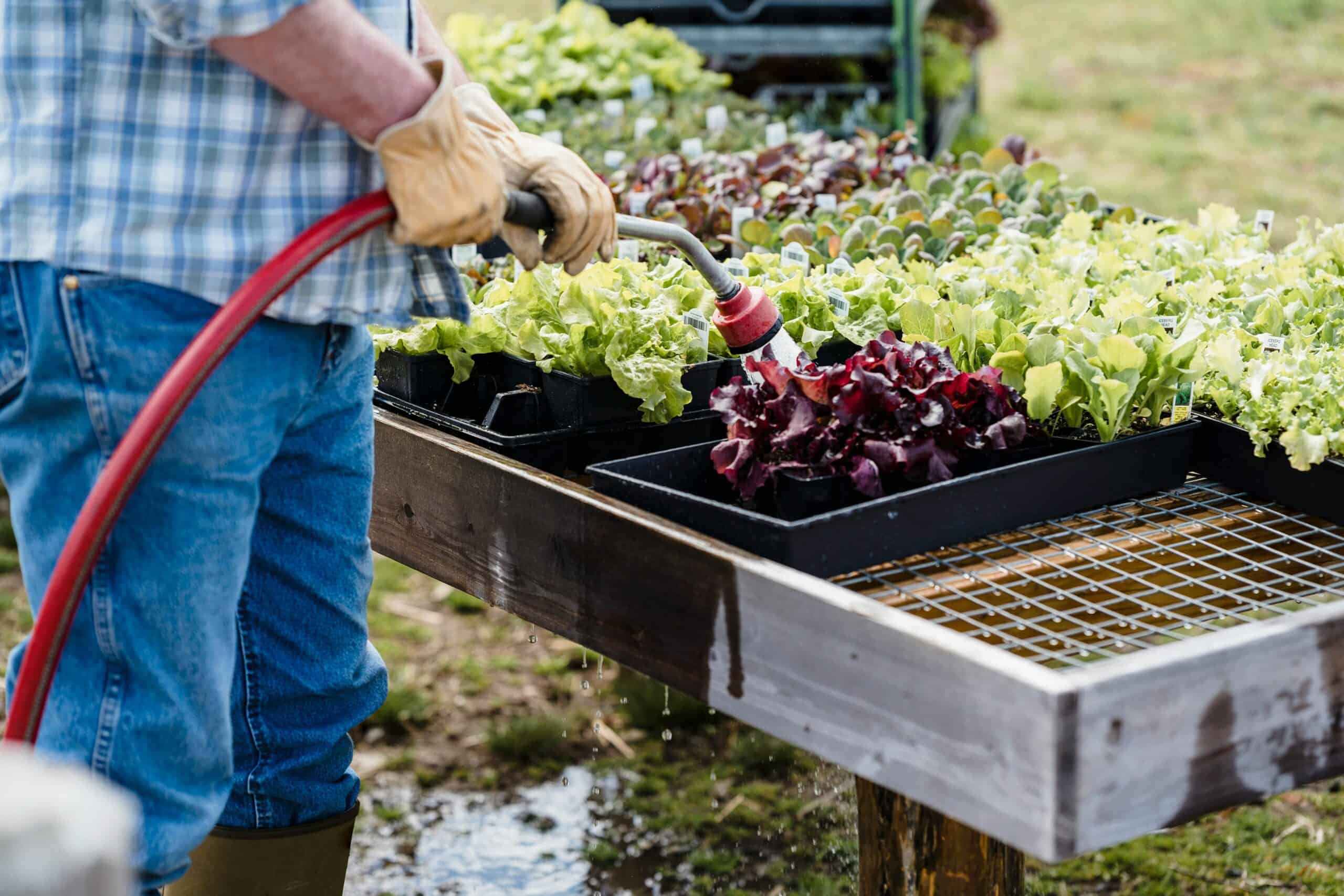
Water management is essential for producing high-quality vegetables. In hot, arid regions where water is limited, this practice is especially important. Lettuce is a shallow-rooted, cool-season crop that grows best with consistent, frequent moisture; while it can be grown in hotter/arid conditions, producers must be adept at monitoring and managing soil moisture to ensure that the lettuce crop receives sufficient water throughout the growing season.
Irrigation type and timing are two components of an agricultural water management plan. A balanced water management plan will improve crop quality and agronomic efficiency (crop biomass produced per unit of water applied) while minimizing surface evaporation and water loss.
In this study, researchers in Yuma County, Arizona tested several irrigation scheduling approaches to measure crop water productivity (CWP) in conventional and organic lettuce production systems. They evaluated a traditional, calendar-based irrigation approach against a soil moisture sensor-based irrigation approach, comparing lettuce crop performance under each.
Farmer Takeaways
- Sensor-based irrigation scheduling outperformed traditional, calendar-based irrigation scheduling, resulting in improvements to lettuce crop water productivity. Sensor-based irrigation may be a promising water management strategy for arid, water-limited vegetable production systems.
- Under hot/arid growing conditions, conventional lettuce may utilize water more efficiently than organic lettuce.
- Organic production systems may build soil health and improve soil water-holding capacity over time, so additional research is needed on the long-term impacts of organic production on crop water productivity.
Project Objectives and Approach
Compare crop water productivity between organic and conventional lettuce systems irrigated with different irrigation scheduling methods
- Researchers at the University of Arizona Yuma Agricultural Center (Yuma, AZ) established field trials to test different subsurface drip-irrigation schedules, with and without the addition of a biostimulant*, in conventional and organic lettuce beds.
-
- **Note: Biostimulants are substances and/or microorganisms whose function when applied to plants or the rhizosphere is to stimulate natural processes to enhance nutrient uptake, nutrient use efficiency, tolerance to abiotic stress, and/or crop quality”.
-
- The two irrigation scheduling strategies evaluated were:
-
- Sensor-Based Irrigation (SI): Soil moisture sensors were installed at multiple depths and programmed to ‘trigger’ (initiate irrigation) when certain soil moisture depletion thresholds were reached.
- Traditional Irrigation (TI): Irrigation followed standard grower practices, with fixed drip-irrigation intervals typical of Yuma lettuce production.
-
- The eight treatment combinations included:
-
- OSB: Organic sensor-based irrigation + biostimulant
- OSI: Organic sensor-based irrigation (no biostimulant)
- OTB: Organic traditional irrigation + biostimulant
- OTI: Organic traditional irrigation (no biostimulant)
- CSB: Conventional sensor-based irrigation + biostimulant
- CSI: Conventional sensor-based irrigation (no biostimulant)
- CTB: Conventional traditional irrigation + biostimulant
- CTI: Conventional traditional irrigation (no biostimulant)
-
- Organic treatments received pre-plant chicken pellet fertilizer and an organic fertilizer top-dress, and conventional treatments received pre-plant mineral fertilizer.
- Biostimulants were applied twice during the season in both systems through the subsurface drip irrigation system.
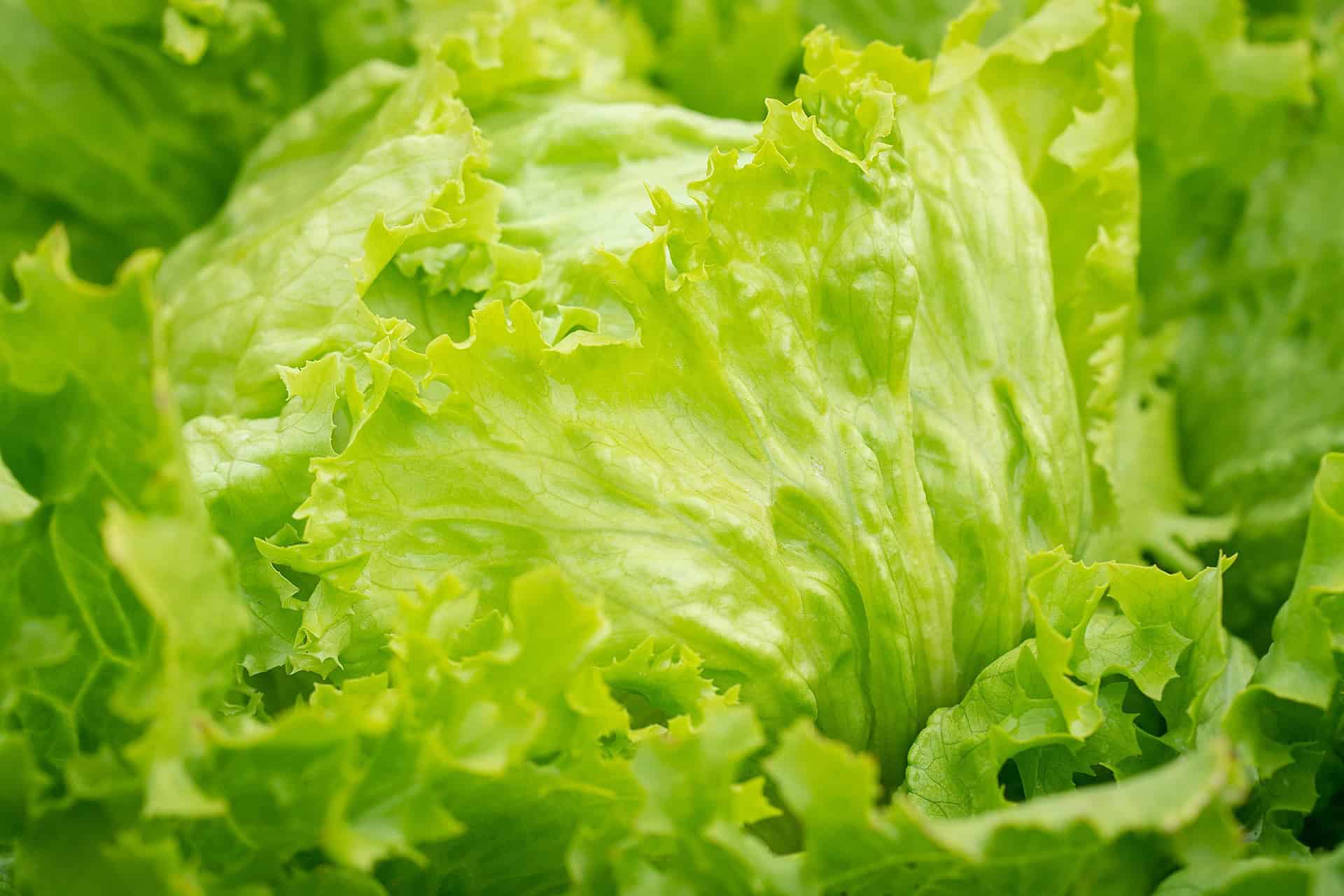
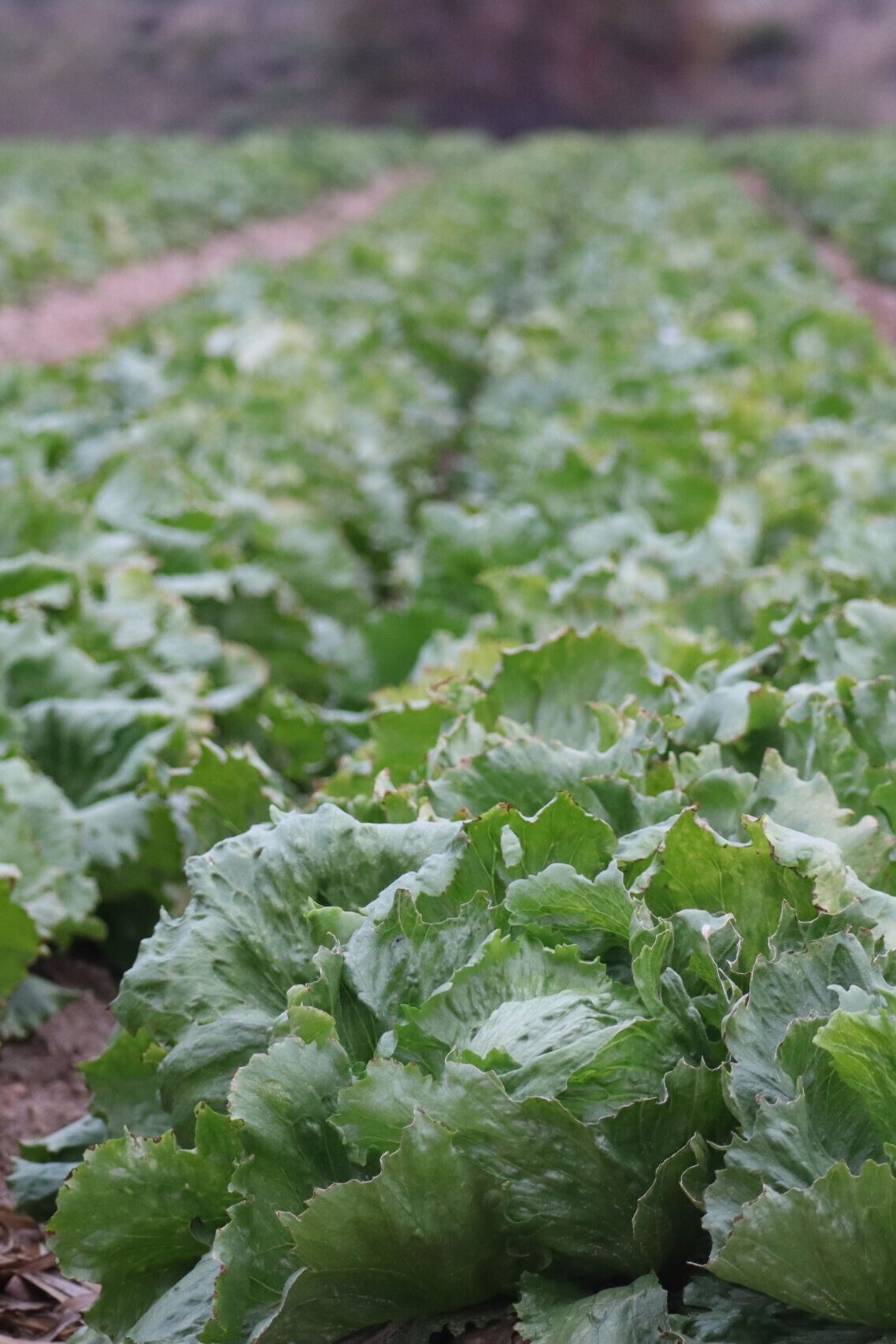
- Iceberg lettuce was planted in late October. Researchers monitored the lettuce plots for one full growing season, continuously recording soil moisture and weather data, which was used to estimate crop evapotranspiration. At harvest, crop yield was measured, and crop water potential (CWP) was calculated by dividing crop yield by total crop evapotranspiration.
Key Findings
Conventional production systems tended to be more water-efficient than organic production systems, and sensor-based irrigation scheduling improved crop water productivity across both systems
- Sensor-based irrigation scheduling resulted in higher crop water productivity (CWP) in organic and conventionally-produced lettuce, averaging 9.1kg lettuce/m3 irrigation water compared to 8.05kg lettuce/m3 in the traditional irrigation scheduling treatments.
-
- These findings indicate that sensor-based irrigation technology can work in arid, water-limited vegetable cropping systems, effectively conserving water and improving agronomic efficiency.
-
- CWP was consistently lower in organic treatments than in conventional treatments, averaging 6.63 and 10.53kg lettuce/m3 irrigation water, respectively.
-
- These findings indicate that, under hot/arid growing conditions, lettuce produced conventionally may utilize available water more efficiently than lettuce produced organically. This may be due in part to the fast-release nature of conventional fertilizers, which may boost early crop growth/development. However, additional research is needed.
-
- The addition of biostimulants resulted in slight increases to crop water productivity in both organic and conventional lettuce, but this effect was not statistically significant.
Resources
Mohammed, A.T., Duarte, S.D., Masson, R., Osgood, C., Saber, M.N. (2026). Quantifying and Comparing Crop Water Productivity in Organic vs. Conventional Iceberg Lettuce, Yuma, AZ. University of Arizona Cooperative Extension.
Read MoreLocation
ArizonaCollaborators
Samuel Discua Duarte, University of Arizona
Robert Masson, University of Arizona
Connor Osgood, University of Arizona
Mazin Saber, University of Arizona Cooperative Extension
Region
West/Southwest
Topic
Crop Nutrient Management
Year Published
2026