Project Overview
Organic vegetable farmers often rely upon frequent tillage to manage weeds, prepare seedbeds, and loosen soil for planting. However, frequent tillage can reduce soil fertility and increase erosion/runoff; as such, many organic farmers have adapted reduced-till (RT) or no-till (NT) systems that utilize specialized equipment (i.e., strip tillers and roller crimpers), ground cover (i.e., cover crops, mulches), and tarping to manage weeds and seedbeds without disturbing soils.
Small-scale organic vegetable farms maintain highly diverse cropping systems that require labor-efficient, scale-appropriate reduced/no-till strategies that can be applied over consecutive years to balance yield, financial, and soil health goals.
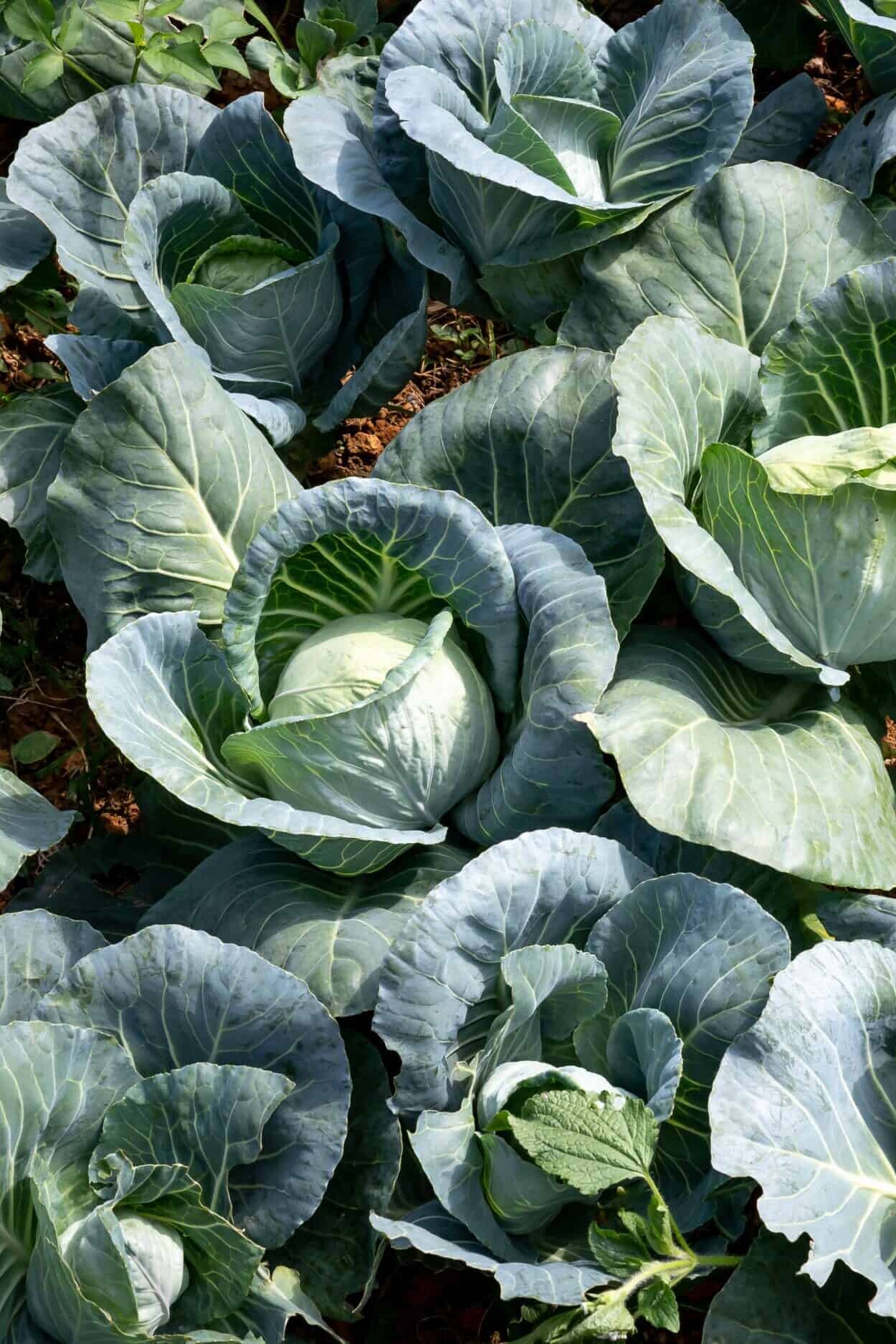
This study, conducted over four consecutive growing years in New York, evaluated the potential trade-offs associated with tillage, organic mulches, and tarping practices on crop yields, labor, profitability, and soil health in an organic cabbage/winter squash production system.
Farmer Takeaways
- Organic cabbage may be particularly well-suited to a tarped, no-till production system, with yields exceeding or matching those of conventionally-tilled plots.
- Applying compost mulch may provide soil health and yield benefits to organic cabbage and winter squash, particularly when combined with tarping in no-till systems.
- Compost mulch may be a more labor-efficient mulching option than rye mulch in both tilled and no-till production systems.
- No-till systems tend to be more labor-intensive than tilled systems; however, tarping can significantly reduce labor requirements, thereby increasing net returns to a level comparable to tilled systems.
Project Objectives and Approach
Evaluate the impacts of tillage, organic mulches, and tarping practices on crop yields, labor, profitability, and soil health in an organic cabbage/winter squash production system
- A four-year field study was conducted at the Homer C. Thompson Vegetable Research Farm (Freeville, NY). The experiment used a split-plot randomized complete block design, with tillage as the main plot treatment and mulch as the sub-plot treatment.
- Tillage Treatments: (1) conventional rototill (CT), (2) shallow-depth rototill (ST), (3) no-till (NT), and (4) no-till with tarping (NTT).
-
- Conventional tillage was performed to a depth of 20cm, shallow-depth tillage to a depth of 7.5-10cm, and tarping involved covering entire plots with polyethylene black tarps and removing prior to planting.
-
- Mulch Treatments: (1) rye mulch, (2) compost mulch, and (3) no mulch.
-
- Rye mulch and compost mulch were applied annually to each crop. Rye mulch was applied by hand across the entire plot in a 7.5-10cm layer, and compost mulch was applied evenly in a 3-4cm layer.
- The no-mulch and rye mulch treatments received supplemental fertilization at planting in the form of pelleted chicken litter. No fertilizer was applied to compost mulch plots, since nutrients in the compost (manure-based) exceeded fertilizer recommendations.
-
- Tillage Treatments: (1) conventional rototill (CT), (2) shallow-depth rototill (ST), (3) no-till (NT), and (4) no-till with tarping (NTT).
- Certified organic cabbage and winter squash were grown in alternate years (cabbage in Y1 and Y3, winter squash in Y2 and Y4). Both crops were transplanted in early June. Cabbage was harvested in mid-August, and winter squash was harvested in mid-September/early October.
Data Collection
At harvest, cabbage and winter squash samples were weighed, counted, and assessed for pest/disease damage.
Pre-harvest labor hours were calculated by adding all hand labor and equipment labor hours required for crop production (excluding harvest, washing, and packing).
Crop budgets were generated to compare the economic performance of each treatment using marketable yields and estimated costs for field operations.
Soil cores were collected and analyzed for total carbon (TC), total nitrogen (TN), extractable phosphorus (P), and bulk density.
Key Findings
Tillage had no effect on winter squash yields, but did affect cabbage yields in both years, with higher yields observed under tarped, no-till conditions
- Cabbage yields in the tarped, no-till (NTT) plots tended to be greater than yields observed in either of the tilled treatments (conventional rototill and shallow-depth rototill), with the extent of these yield differences sometimes dependent upon whether/what type of mulch was applied.
-
- Yields were most consistently greater in the tarped, no-till (NTT) plots than in conventionally-tilled (CT) plots, whereas yield differences between NTT and the shallow-depth rototilled (ST) plots were more likely to be influenced by mulching treatment.
-
- Cabbage yields in the no-till (NT) treatment without tarping were lower than yields in the tarped, no-till (NTT) treatment in Y3, suggesting that tarping may provide important nutrient cycling benefits in a no-till system.
-
- **Note: Both no-till treatments received frequent hand-weeding; as such, the researchers postulate that the observed yield differences between NT and NTT in Y3 were the result of soil-related factors (i.e., N availability), rather than weed competition.
-
- Cabbage yields in the shallow-depth rototill (ST) treatment were statistically similar to yields in the conventional rototill (CT) treatment (with the exception of CT with rye mulch), suggesting that farmers could maintain high cabbage yields while simultaneously reducing tillage intensity.
Compost mulch increased cabbage and winter squash yields across all tillage systems after the first year of production
- Compost mulch increased crop yields (both cabbage and winter squash) across all tillage systems after Y1. These yield increases were most pronounced in the tarped, no-till (NTT) system. These findings suggest that applying compost mulch may provide significant soil health/nutrient benefits to organic cabbage and winter squash, particularly when combined with tarping in no-till systems.
No-till production systems were significantly more labor-intensive than tilled systems, although tarping reduced this labor differential
- Labor hours for conventional rototill (CT) and shallow-depth rototill (ST) did not differ in any year or across mulch treatments. No-till (NT) required significantly more labor than tilled systems, especially in the absence of mulch (NM). Hand-weeding accounted for much of the additional labor in no-till systems.
-
- Tarping reduced labor requirements in no-till systems by 41%, but still required 25% more labor than conventional tillage.
-
- Tarping reduced labor requirements in cabbage, but increased labor requirements in winter squash, suggesting that the benefits of tarping in a no-till system may be highly crop-specific.
Mulches tended to increase pre-harvest labor hours, especially in tilled systems, with rye mulch often requiring the most labor
- Across tilled systems (conventional and shallow-depth), the no-mulch treatment required the least labor, rye mulch required the most, and compost mulch was intermediate.
- Rye mulch significantly increased labor requirements in the tarped, no-till (NTT) treatment, but had no impact on labor in the untarped, no-till (NT) treatment.
-
- **Rye mulch was more effective at suppressing weeds than compost mulch in the no-till systems, but the high labor requirements associated with rye mulch application outweighed any labor reductions in hand-weeding.
-
- These findings indicate that compost mulch may be a more labor-efficient mulching option than rye in both tilled and no-till production systems.
Net returns for each treatment were generally correlated with labor requirements, with tilled systems outperforming no-till, but with returns for the tarped, no-till system comparable to tilled systems
- Net returns were significantly affected by tillage in three of the four years; in general, the no-till (NT) treatment was the least profitable.
-
- Tillage treatment effects on net returns were largely attributable to differences in labor requirements.
-
- Net returns for the tarped, no-till (NTT) treatment were comparable to returns in both tilled systems (conventional and shallow-depth) across all years, suggesting that – despite higher labor requirements – a tarped, no-till system can be economically competitive with tilled systems for certain vegetable crops.
Resources
Maher, R. M., Rangarajan, A., Caldwell, B. A., Ho, S.-T., Hutton, M. G., & Ginakes, P. (2024). Tarping and mulching effects on crop yields, profitability, and soil nutrients in a continuous no-till organic vegetable production system. Renewable Agriculture and Food Systems, 39, e1.
Read MoreLocation
New YorkCollaborators
Anusuya Rangarajan, Cornell University
Brian Caldwell, Cornell University
Shuay-Tsyr Ho, National Taiwan University
Mark Hutton, University of Maine Cooperative Extension
Peyton Ginakes, University of Maine Cooperative Extension
Region
Northeast/Mid-Atlantic
Topic
Soil Health, Crop Nutrient Management, Cropping Systems
Year Published
2024