Project Overview
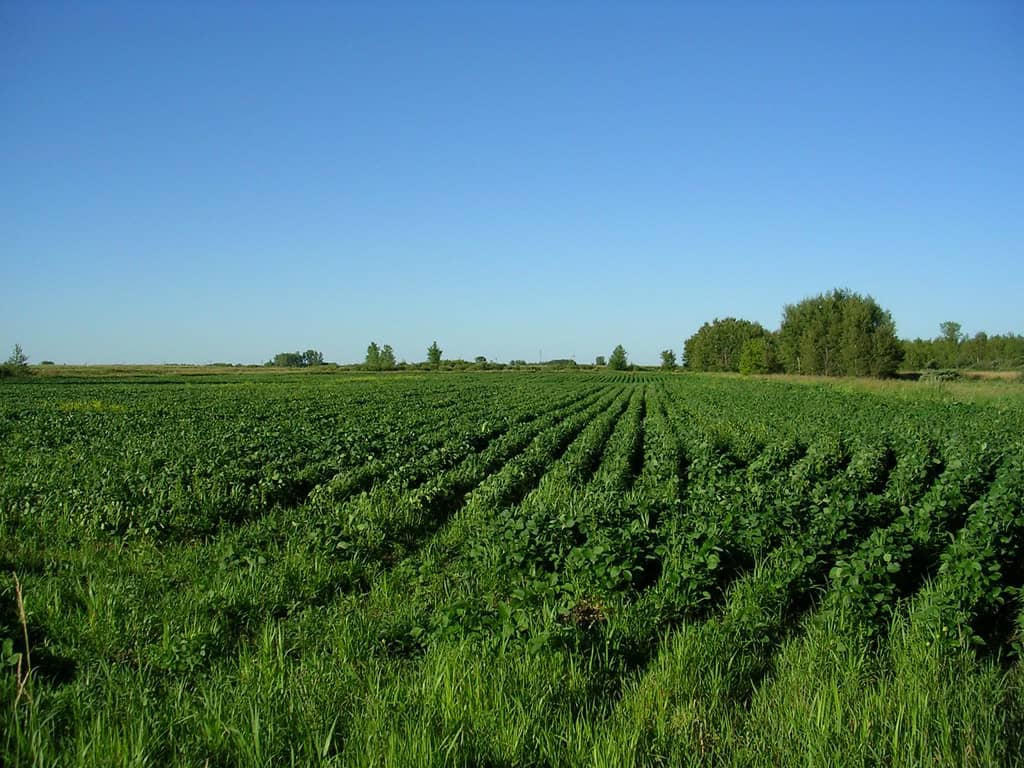
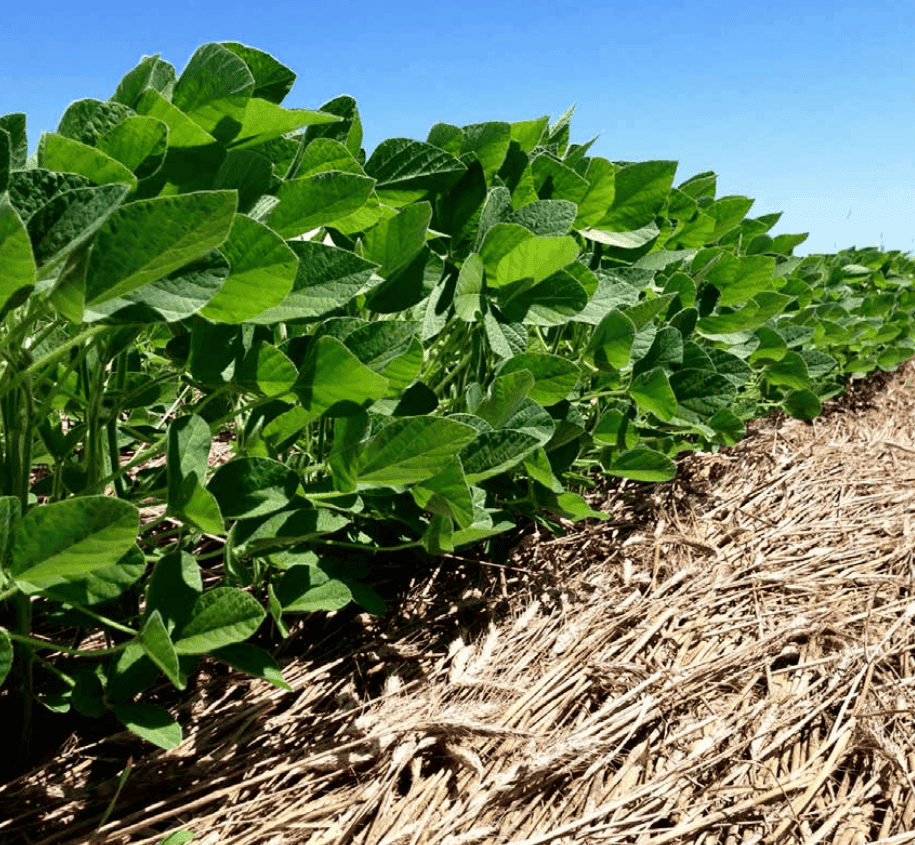
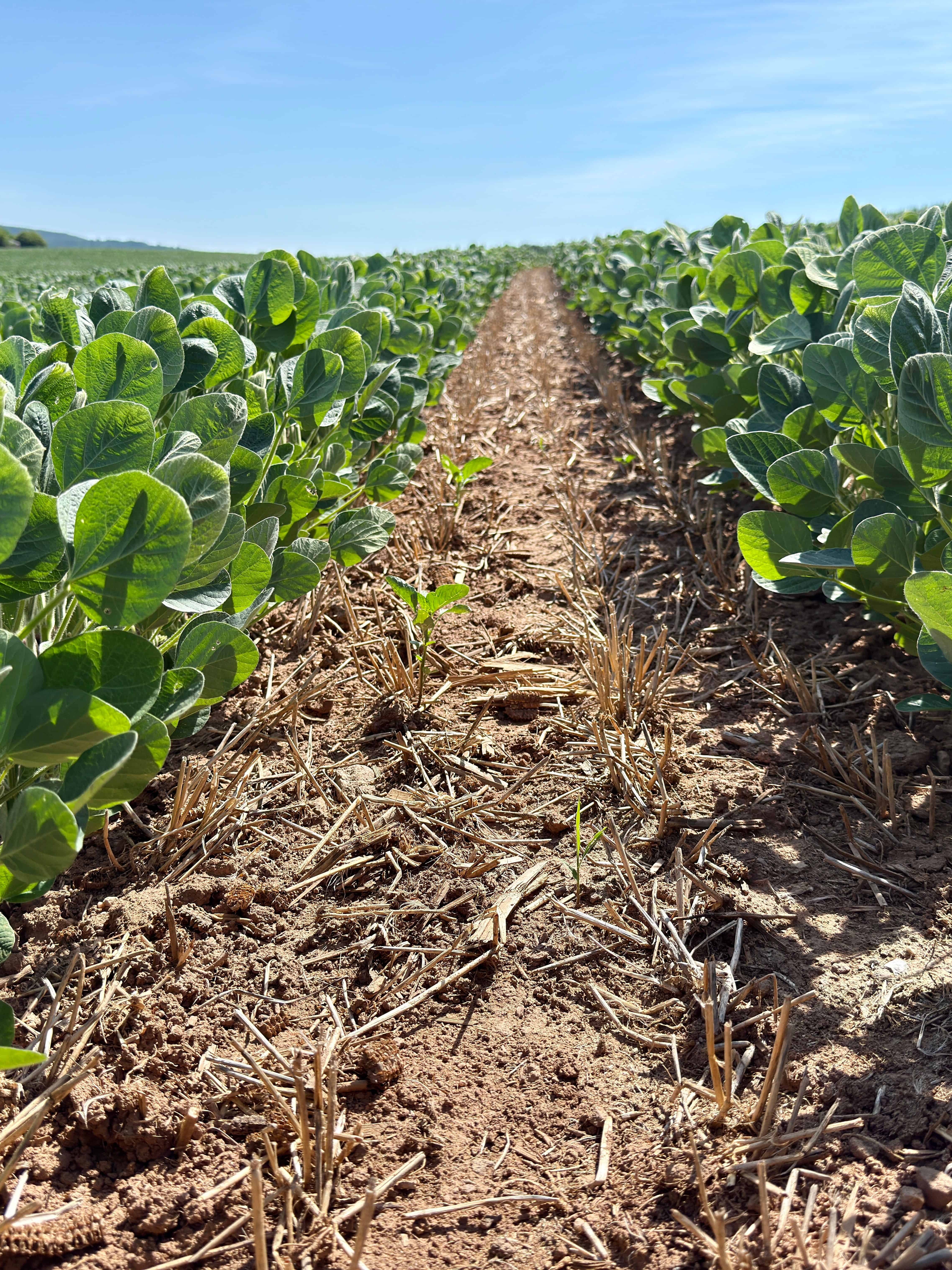
Organic, no-till soybean production systems are becoming more common in the United States. In this system, soybeans are seeded directly into a roller-crimped winter cover crop (often cereal rye). The winter cover crop takes the place of tillage by providing a living cover during the off-season, which manages weeds and improves overall soil health/structure. In recent years, research into seeding rates, timing, and cover crop termination have improved yields in organic, no-till soybean systems; however, several challenges remain.
One such challenge is the impact of cover crop residue on soybean establishment. Cereal rye residue has a high C:N ratio (significantly more carbon to nitrogen), which – when decomposing – can result in nitrogen immobilization, a process in which soil nitrogen becomes temporarily ‘locked up’ in forms inaccessible for uptake by plants. If nitrogen is unavailable, young soybean plants may experience delays in early-season growth/development. Starter fertilizer could be an important tool for kickstarting soybean growth during emergence. In this study, researchers at Cornell University and the University of Wisconsin, Madison tested several organic starter fertilizers within an organic, no-till soybean production system.
Farmer Takeaways
- Organic starter fertilizers did not significantly impact soybean yield, stand density, or biomass when planted into a roller-crimped cereal rye cover crop in an organic, no-till production system.
- Sodium nitrate advanced early-season soybean growth compared to feather meal, poultry litter, and the untreated control, although this effect was inconsistent.
Project Objectives and Approach
Evaluate the effects of starter N fertilizers on organic, no-till soybeans planted into a roller-crimped cereal rye cover crop
- Researchers established field trials at the Cornell University Musgrave Research Farm (Aurora, NY) and the University of Wisconsin Arlington Research Station (Arlington, WI).
- Cereal rye was drill-seeded the fall prior to soybean planting across all site-years and terminated via roller-crimping at 50% anthesis*.
-
- Anthesis: the flowering stage when the plant actively sheds pollen; typically occurs in late May to early June for a fall-planted cereal rye crop.
-
- Organic soybeans were no-till planted into the crimped cereal rye, and starter fertilizer was banded 5cm to the side and 5cm below the soybean seeds at a rate of 28 kg N/ha. Fertilizer treatments included:
-
- No fertilizer control
- 15-0-2 Sodium nitrate, an organically-acceptable mineral fertilizer
- 8-2-2 feather meal
- 5-4-3 poultry litter
-
- No further field operations took place until harvest; the soybeans relied on the nutrients provided in the starter fertilizer and residual nutrients from previous crops.
- Throughout the growing season, researchers monitored soybean growth, stand density and height, cereal rye residue, weed and soybean biomass, soil nutrients, and soybean yield.
Key Findings
Starter fertilizer applications do not benefit cover crop-based organic no-till soybean systems
- None of the measured soybean growth, biomass, crop health, or density indicators consistently responded to starter fertilizer applications. These findings indicate that organic starter N fertilizers may not significantly enhance the overall growth or performance of no-till soybeans.
-
- The 15-0-2 sodium nitrate fertilizer did advance early-season soybean growth and increase early-season leaf greenness at two of the five site-years, although these improvements diminished later in the growing season.
-
Resources
Allen, J., Pelzer, C. J., Brockmueller, B., Silva, E. M., & Ryan, M. R. (2023). No yield benefit from starter fertilizer in soybean no-till planted into rolled-crimped cereal rye. Agrosystems, Geosciences & Environment, 6(4), e20434.
Read MoreLocation
New York, WisconsinCollaborators
Christopher Pelzer, Cornell University
Ben Brockmueller, University of Wisconsin-Madison
Erin Silva, University of Wisconsin-Madison
Matthew Ryan, Cornell University
Region
Midwest, Northeast/Mid-Atlantic
Topic
Crop Nutrient Management, Cropping Systems
Year Published
2023