

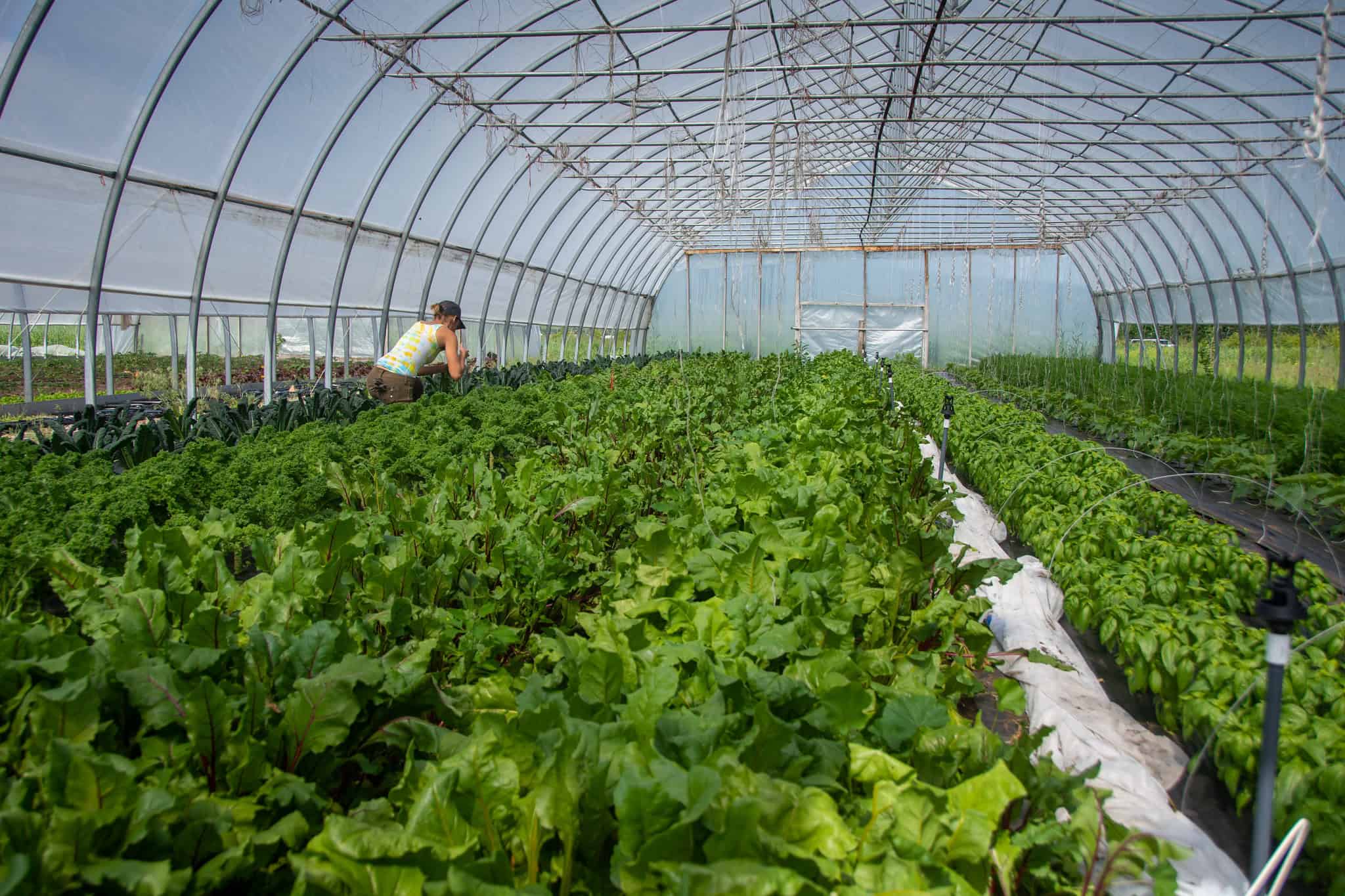
Anaerobic Soil Disinfestation for Soilborne Disease and Weed Management in Organic High Tunnel Baby Leaf Lettuce Production
Project Overview
High tunnels can extend growing seasons, improve yield, and provide an intermediate level of crop protection against insect pests and weeds. However, weed/pest/disease management within high tunnels remains a serious challenge, especially for organic growers.
One pre-planting technique that has gained significant attention as a natural disease/weed management strategy is anaerobic soil disinfestation (ASD), a technique where soils are amended with carbon, saturated with water, then covered to create an anaerobic (oxygen-free) environment within which anaerobic metabolites (including compounds that inhibit weed seed germination and pathogen viability) are produced during soil microbial decomposition.
This study analyzed the effectiveness of ASD in managing soilborne diseases and weeds within organic baby lettuce high tunnel systems.

Farmer Takeaways
- Anaerobic soil disinfestation may be an effective pre-seeding strategy for managing soilborne diseases (i.e. bottom rot) and weeds in organic high tunnel vegetable/lettuce production systems, with no negative impacts on lettuce yield and quality.
- Lettuce cultivar is a primary driver of yield differences, and farmers should select cultivars with a history of performing well within specific environmental conditions.
Project Objectives and Approach
Determine the effectiveness of ASD in managing soilborne diseases and weeds within organic high tunnel production systems
- Field trials were conducted over two production seasons (fall 2021 and spring 2022) at the University of Florida Plant Science Research and Education Unit in Citra, Florida.
- The three soil treatments included: (1) ASD, (2) Compost (6.8 Mg/ha Everlizer organic fertilizer and 22.4 Mg/ha yard waste compost), and (3) Control (6.8 Mg/ha Everlizer organic fertilizer only).
- For the ASD plot preparation, a diluted molasses solution was applied to the soil as the primary C source and tilled to a depth of 15cm. The ASD plot(s) were then irrigated until soil saturation, covered, and monitored for 8 days. Data was collected regularly on soil redox potential, temperature, volumetric water content, and pH.
- Scouting for disease symptoms was performed weekly, and weeds were assessed twice during each growing season.
Assess the impact of ASD on the performance of different baby leaf lettuce cultivars commonly grown in the Southeastern United States
- During the fall 2021 trial, four lettuce cultivars were assessed: (1) red oakleaf, (2) green oakleaf, (3) red romaine, and (4) green romaine. During the spring 2022 trial, an additional four lettuce cultivars were assessed, including variations of the four fall 2021 cultivars.
- At harvest, data was collected on fresh weight biomass, fresh weight yield, specific leaf area (SLA), specific leaf weight (SLW), and several lettuce quality attributes including leaf color.
Key Findings
Anaerobic soil disinfestation (ASD) prior to seeding may reduce disease incidence (i.e. bottom rot) in organic baby lettuce grown in high tunnels
- During the fall 2021 trial, none of the plants showed any disease symptoms. However, in the spring 2022 trial, bottom rot caused by Rhizoctonia solani was identified. Disease incidence of bottom rot was 93% and 87% lower in the ASD plots than in the Compost and Control treatments, respectively.
Anaerobic soil disinfestation may significantly reduce weed population density and total # of weeds compared to compost or control plots in organic high tunnel production systems
- Across both growing seasons, the ASD treatment resulted in a significant reduction in both broadleaf weeds and total # of weeds compared to the Compost and Control treatments. Other numerical reductions in # of grasses and sedges were observed for the ASD treatment, although not statistically significant.
Baby lettuce yield may be more significantly impacted by lettuce cultivar than by soil treatment (i.e. ASD, compost), with certain cultivars performing better across years than others
- In both the fall 2021 and spring 2022 growing seasons, no statistically significant effect of soil treatment was observed on lettuce fresh weight yield or leaf dry matter content. However, there was a numerical (non-statistically significant) difference in fresh weight yield, with the ASD treatment consistently outperforming the other two treatments.
- Across both growing seasons, the green oakleaf cultivar performed strongly and the red romaine cultivar performed weakly.
Resources
Vincent, I.R., E.N. Rosskopf, J.K. Brecht, N.S. Dufault, G. Sandoya-Miranda, and X. Zhao. 2024. Effects of Anaerobic Soil Disinfestation for Soilborne Disease and Weed Management on Baby Leaf Lettuce Performance in a High Tunnel Organic Production System. Agronomy 14:764.
Read MoreLocation
FloridaCollaborators
Erin Rosskopf, USDA
Jeffrey Brecht, University of Florida
Nicholas Dufault, University of Florida
German Sandoya-Miranda, University of Florida
Xin Zhao, University of Florida


Enhancing the Sustainability of Organic Specialty Crop Production Systems via Anaerobic Soil Disinfestation
Project Overview
Soilborne plant pathogens and root-feeding nematodes can severely limit yields in organic specialty crop systems. Conventional soil fumigants, although effective at eliminating these pests, can also destroy important soil microorganisms and are not permitted in USDA certified organic production systems. As such, there is a need for natural pest/pathogen management solutions in organic specialty crop systems.
Anaerobic soil disinfestation (ASD) is a NOP-compatible, soil-friendly alternative to fumigation in which decomposable organic material is tilled in, then the soil is covered with an air-tight tarp and drip-irrigated to saturation. The resulting burst of anaerobic activity inhibits crop pathogens and promotes a disease-suppressive soil microbiome when aerobic conditions are restored.
This study analyzes the soil health impacts and efficacy of ASD in managing key soilborne pests and pathogens in organic vegetable and strawberry production systems in Florida and Pennsylvania.

Farmer Takeaways
- Anaerobic soil disinfestation (ASD) may be an effective, economic, NOP-compliant method for managing/reducing soilborne pests, pathogens, and nematodes in organic specialty crop production systems, including vegetables and strawberries.
- Primary barriers of widespread implementation of ASD as a natural pest management method for organic specialty crop production systems include: (1) lack of knowledge and training, and (2) material cost. Information dissemination and farmer-to-farmer knowledge sharing is important for understanding the potential benefits and technical requirements of ASD.
Project Objectives and Approach
Evaluate the impacts of different organic carbon sources (cover crops, organic soil amendments) on the ASD process
- Replicated randomized trials were conducted at open field and high tunnel vegetable and strawberry production sites in Florida and Pennsylvania. The trials evaluated cover crops and organic amendments (wheat middlings, molasses, soybean meal, poultry litter, and combinations thereof) as organic carbon sources to support the ASD process.
- Anaerobic soil disinfestation (ASD) was performed for all cover crop/organic amendment treatments, and data was collected on soil redox potential (Eh), temperature, and moisture to evaluate whether adequate anerobic conditions were achieved.
Assess the short- and long-term impacts of ASD on soil ecology and microbiome dynamics in organic specialty crop systems, examining any consequent/interacting effects on nutrient dynamics, soilborne pests and pathogens, and overall soil health
- After the ASD treatment period (21-28 days), cash crops (i.e. strawberries, tomatoes) were planted in accordance with local growing practices and certified organic standards.
- Visual crop assessments, soil sampling, and biometric assessments were conducted at defined time intervals (every 30-45 days, depending on crop cycle) to evaluate any treatment effects on crop performance/quality, soil nutrient dynamics, and soilborne pathogens and pests.
- Crop samples were measured for fresh and dry weight, and tissue samples were collected and analyzed for nutrient content. At harvest, produce was analyzed for quality and yield.
Key Findings
Anaerobic soil disinfestation (ASD) may reduce the prevalence of nematodes and soilborne viruses in specialty crop production systems
- Significant treatment effects (ASD vs. Control) were observed for bacterivorous, fungivorous, omnivorous, and predatory nematodes. However, no treatment effects were observed for plant-parasitic nematodes, of which population sizes were consistently small.
- Notably, at one of the Pennsylvania high tunnel sites with a history of dagger nematode-transmitted viruses, none of the tomato plants grown in ASD-treated soil developed viral symptoms. Detection of virus-transmitting nematodes decreased significantly post-ASD (75% to 6%).
Anaerobic soil disinfestation (ASD) may lead to higher gross returns in organic specialty crop production systems (i.e. strawberry), despite higher labor and materials costs
- A financial analysis indicated that, for the strawberry trial, ASD treatments led to higher gross returns than the control in both growing seasons. The net return of the ASD treatments varied with the carbon and nitrogen application rates, as well as by season.
- No negative effects of ASD were observed in strawberry fruit quality attributes.
Location
Florida, PennsylvaniaCollaborators
Understanding Parasite Resistance in Organic Sheep Production Systems
Project Overview
Efforts to control gastrointestinal nematodes (GIN) in sheep using NOP-compliant materials and practices have had limited success. However, if genetic resistance to GIN can be identified and selected in animal breeding and breed evaluation, this could become a valuable additional tool for organic parasite management in small ruminants.
This study assessed the genetic mechanisms involved in both GIN resistance (the ability to completely resist infection) and GIN resilience (the ability to tolerate an infection without detriment to production) across several breeds of sheep in organic production systems.

Farmer Takeaways
- Different breeds of sheep exhibit different levels of immune modulators associated with GIN resistance or resilience; as such, the use of resistant breeds (i.e., Texel) in organic production systems can greatly reduce the need for deworming and support healthy lamb development.
Project Objectives and Approach
Understand the host mechanisms involved in GIN resistance/resilience by examining differences in immune response among susceptible, resilient, and resistant individuals and breed types.
- GIN resistant and GIN susceptible lambs from several breeds of sheep were exposed to an initial GIN infection, dewormed, and re-infected. The lambs were evaluated for seven weeks post-infection for infection measures, antibodies, and peripheral cell counts.
Identify genetic loci associated with GIN resistance/resilience.
- 5,000 DNA samples were extracted from GIN resistant, resilient, and susceptible lambs on 23 organic farms. These samples were analyzed for immune responses and used to identify genes that may regulate GIN resistance or susceptibility.
Work with farmers through extension and NSIP.
- A revised genetic evaluation system based on project findings was delivered to NSIP and Katahdin sheep breeders to enhance their capacity to meet the needs of organic producers.
Key Findings
There is an association between high fecal egg count (FEC) estimated breeding values (EBV) and compromised immune function in lambs.
- Lambs with a higher FEC EBV were less likely to survive to weaning and more likely to be killed by either parasites or disease.
Different immune cells perform different functions in GIN resistance/resilience and may be expressed variably between sheep breeds.
- Interleukin-13, an immune modulator, is involved in altering the mobility of the infective stage larvae of certain GINs.
- Monocytes, another type of immune cell, are involved in inflammatory responses and may reduce the energy output of GIN larvae.
GIN resistance has a genetic component, and may be linked to the EDIL3 gene.
- The EDIL3 gene was identified as a possible GIN resistance gene in sheep. EDIL3 plays a role in controlling inflammation (an immune response), and additional studies are needed to understand its full association with GIN resistance/susceptibility.
Location
MississippiCollaborators
Companion Plantings for Organic Management of a New Invasive Brassica Pest
This project leveraged agricultural diversity to mitigate the recent attack of the invasive yellow-margined leaf beetle (Microtheca ochroloma) on leafy brassica greens across the Southeastern United States. This new pest is reviled among farmers in Alabama, Florida, Georgia and South Carolina, is rapidly expanding its range northward as winters become milder. Unfortunately, the biology of M. ochroloma is not well known, and organic farmers have not found a viable tool for protecting their brassica crops. However, strong host plant preferences revealed by M. ochroloma suggest that it might be successfully manipulated with strategic combinations of attractive trap crops and repellant intercrops. Our project focused on identifying companion plants that reduce destruction by M. ochroloma in the absence of other viable tools. We tested three methods to control Microtheca ochroloma, including intercropping, trap cropping, and biological control via predator gut content analysis. Our purpose was to identify accessible strategies that limit damage from this pest while minimizing pesticide use on organic farms. First, we found that lemongrass and tomato companion plants may reduce herbivore populations on turnip greens while commonly employed companion plants like basil and marigold may actually backfire to attract herbivores, relative to crop monocultures. Predatory insects were highly correlated with herbivore populations; suggesting that they are more influenced prey availability than companion plants. Next, we found that mizuna is a strongly preferred host plant by M. ochroloma, relative to other Brassica napa hosts, but may only serve as an appropriate trap if pest spillover is managed. Last, we identified several generalist predators that commonly consume M. ochroloma that were unknown previously by screening predator guts for M. ochroloma DNA.
A Question of Balance: Optimizing Belowground Carbon Deposition by Limiting Crop Nutrient Levels
Project Overview
Building soil organic carbon (SOC) is an important component of organic agriculture. SOC improves soil structure, increases water retention, supports healthy plant-microbial interactions, and can serve as a tool to mitigate climate change by sequestering atmospheric carbon.
Common SOC-building management practices include cover cropping, compost/organic fertilizer application, and reduced tillage; however, recent studies have also indicated that SOC can be enhanced by adjusting crop resource availability in a manner that induces a physiological shift in plant C allocation, resulting in the deposition of carbon-rich exudates into the soil.
This study reviews the existing literature on belowground C deposition and posits several ways in which farmers might tap into the physiological responses of crops to enhance SOC.

Farmer Takeaways
- Maintaining N, P, and water availability at levels slightly less than optimal for aboveground crop growth can induce the deposition of surplus photosynthates belowground and contribute to the accumulation of soil organic carbon (SOC).
- ‘Optimal’ resource levels for inducing surplus photosynthate deposition belowground will likely vary by crop type, soil type, land-use history, and climatic conditions (i.e. temperature, precipitation). Additional studies are needed to elucidate site- and crop-specific C responses to resource deficiencies.
Project Objectives and Approach
Reviewing the Literature
Several studies assessing belowground C deposition and SOM accumulation across different cropping systems were reviewed.
Proposing Future Studies
In order to further understand the potential of these mechanisms to enhance labile, stable, short- and long-term SOM, several studies have been proposed. The researchers of this study propose that future research focus on measuring C fixation, aboveground and belowground biomass production, and root exudation for a variety of common crops maintained at fixed temperatures and N, P, and water levels.
Key Findings
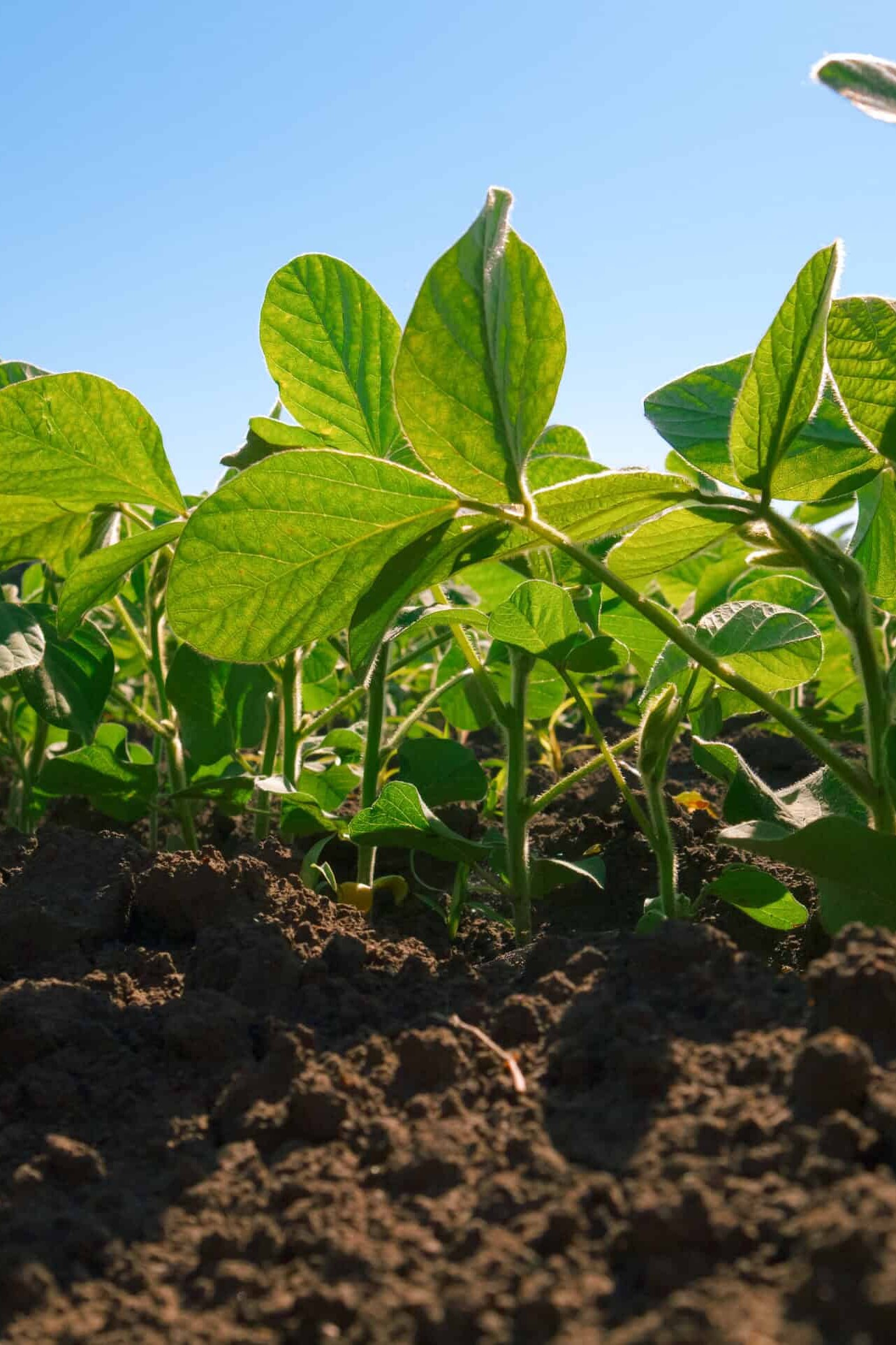
Carefully managing the availability of N, P, and water to maintain a deficiency for aboveground plant growth may result in the deposition of surplus photosynthate belowground as root exudates
- Limiting at least one of the resources necessary for aboveground plant growth can induce a shift in C resource allocation from aboveground to belowground structures, which can foster the release of carbon-rich root exudates into the soil.
- This practice may result in slightly lower crop yields than for systems with intense fertilization and irrigation; however, prioritizing SOC improvements should not be undervalued. Enhancing SOC levels and plant-microbial interactions will improve soil structure and fertility, water infiltration and retention, and nutrient cycling, all of which can provide long-term agricultural resiliency.
Incorporating leguminous plants into crop rotations may enhance the accumulation of mineral-associated soil organic matter (MAOM) by providing the N necessary for the generation of soil microbial biomass
- Accumulating soil microbial biomass, which is an important component of stable, mineral-associated soil organic matter (MAOM), requires substantial quantities of both nitrogen and carbon. Incorporating nitrogen-fixing leguminous plants into cropping systems can provide both of these nutrients and stimulate production of new microbial biomass, necromass, and SOM.
Resources
Prescott, C. E., Rui, Y., Cotrufo, M. F., & Grayston, S. J. (2021). Managing plant surplus carbon to generate soil organic matter in regenerative agriculture. Journal of Soil and Water Conservation, 76(6), 99A-104A.
Read MoreLocation
Collaborators
Yichao Rui, Rodale Institute
Francesca Cotrufo, Colorado State University
Sue Grayston, University of British Columbia, Vancouver